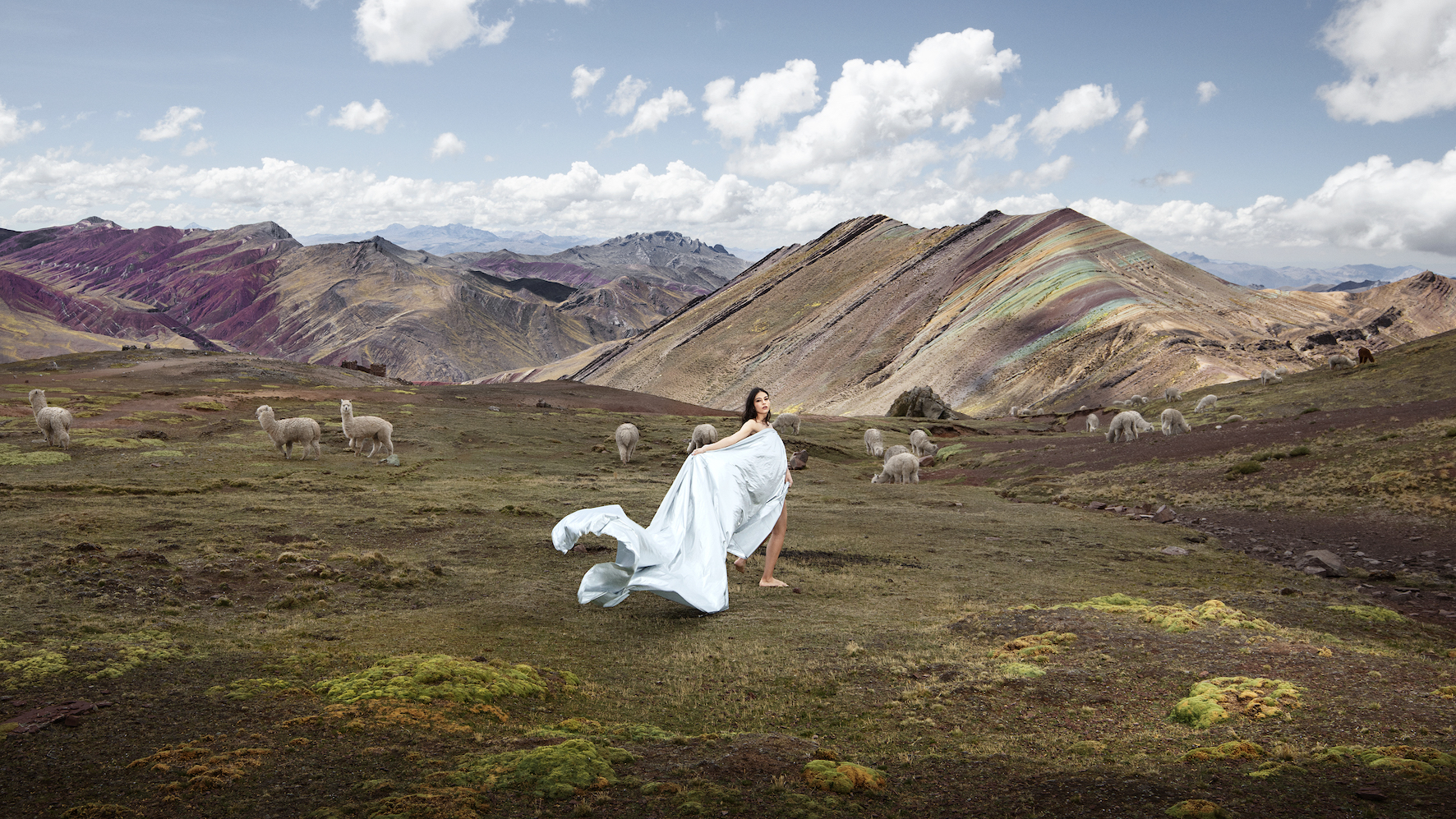
Isabelle Binder-Lindbergh is offering a new perspective on the world through a practice that merges flight, art and environmental awareness.
Isabelle Binder-Lindbergh works between worlds. A Monaco-based photographer, pilot and artist, she operates at the intersection of air and earth, using flight as a way of seeing as well as a means of access. From high-altitude landscapes in Iceland to remote regions of Peru, her work explores the invisible forces that shape the natural world—and humanity’s place within it.
Her lineage is inescapable. As the granddaughter of aviation pioneer Charles Lindbergh (who stunned the world when he made the first solo nonstop transatlantic flight from New York to Paris in 1927), she inherits one of aviation’s most iconic legacies. Yet her path is distinctly her own. “My work has undoubtedly been influenced by his writings, yet it remains entirely my own narrative approach,” she says.


“I did not know my grandfather personally, but his presence has been profoundly felt through my family—and especially through the letters he wrote to my grandmother, which I have carefully preserved,” she adds. “What resonates deeply with me is that in his letters my grandfather was already reflecting on landscapes in transformation.”
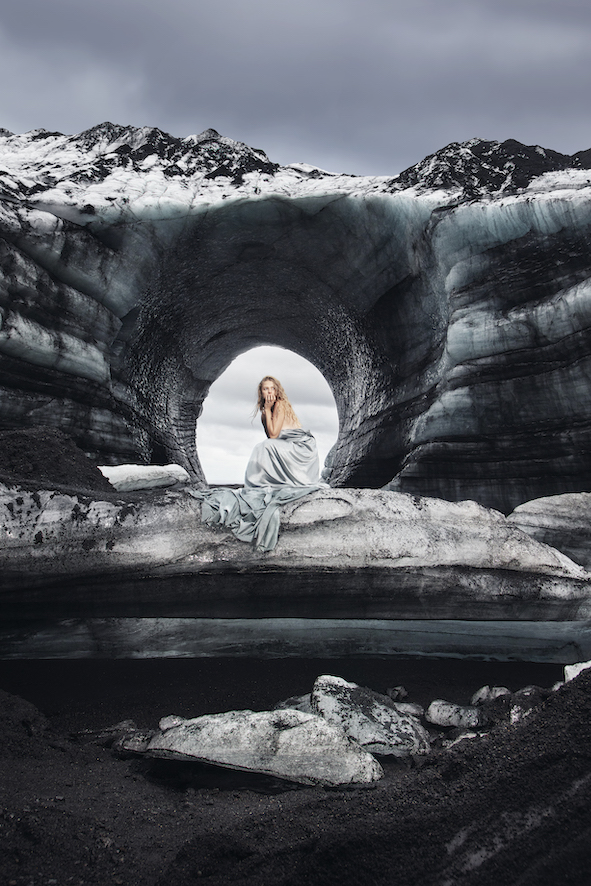
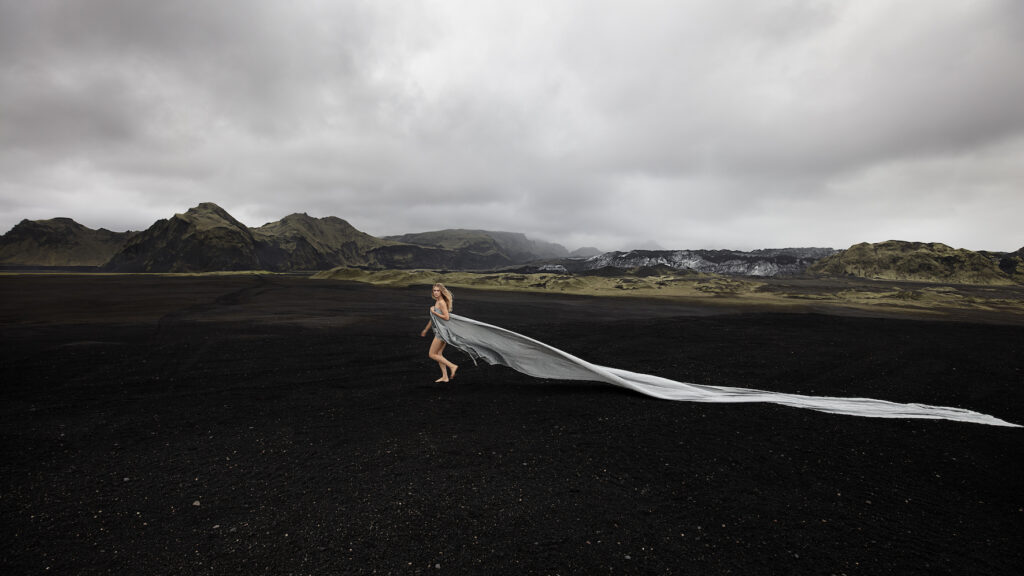
That perspective is evident in her signature motif: a 16 m silver veil, designed to “make the wind visible”. The veil is not a fixed element, but one that responds to its surroundings, requiring the model to read the environment—waiting for the right moment, moving with the wind so that it rises naturally.
Flight remains central to her work. As a licensed pilot, Binder-Lindbergh uses planes to access remote, extremely elevated locations that would otherwise be unreachable. “Flying completely transforms perception,” she says. “From above, landscapes reveal their structure—their lines, their tensions, their fragility. You begin to understand their balance in a way that is impossible from the ground.”
That perspective carries through into her photoshoots on the ground, where each session is guided by the landscape itself, and nature becomes the protagonist, rather than a background for the model. Often, she works in extreme environments, which requires careful planning around weather, light and conditions. “My work is deeply narrative,” she says. “It invites the viewer to travel, but also to question these landscapes—places that appear timeless, yet are constantly evolving.”
While flight provides access to remote landscapes, it also carries responsibility. She has witnessed environments change in real time—from collapsing ice caves in Iceland to shifting glacial formations—experiences that have reshaped the purpose of her work. “It is no longer purely aesthetic, but gains a deeper meaning,” she says.
Her latest exhibition Air, running until August 14th at Space Gallery in St Barths, spotlights these ideas and more, paying tribute to the harmony between nature and humanity through a specialised black-and-white carbon printing technique known as “piezography” —lending each photo immense depth and nuance. Meanwhile, Between Realms, a new collection that captures the moments where movement, light and landscape intersect, can be perused on her website.
As the centenary of her grandfather’s transatlantic flight approaches, Binder- Lindbergh is preparing a contemporary response that marries aviation, art and climate awareness. Her “Spirit of the Wind” initiative seeks to document atmospheric change while reconnecting audiences to the physical elements that shape the planet. “The wind is invisible, yet omnipresent. It shapes landscapes, guides flight and brings the veil to life,” she says. “Spirit of the Wind seeks to make this invisible force tangible.”