Our wine expert and famed wine collector tackles one of the most difficult questions any wine lover will face.
There are few rituals in wine more overused than decanting, and few more misunderstood. Some bottles need it; some benefit from it; some are ruined by it. Over the years, I have learnt that the decanter is not a badge of seriousness. It is simply a tool, and like any tool it can be used intelligently or badly.
That is the premise of these confessions. I am not interested in decanting for theatre, or because a polished piece of crystal looks reassuring on a dining table. I am interested in what actually helps the wine. Sometimes that means giving a young Bordeaux two hours of air. Sometimes it means leaving an old bottle well alone. And sometimes it means resisting received wisdom altogether.


Opening a bottle does almost nothing
One of the oldest myths in wine is that simply pulling the cork and leaving the bottle upright somehow “lets the wine breathe.” In practice, it does very little. The surface area of wine exposed at the neck is tiny, so oxygen exchange is minimal. There can be a case for opening a bottle briefly to let any obvious bottle stink or reduction blow off, but that happens in minutes, not hours. If a young, structured wine really needs air, opening it at lunchtime for serving at dinner does not meaningfully prepare it. It is, more often than not, wishful thinking.
That matters because it leads to a false sense of readiness. Someone pulls the cork on a tight young claret six hours early and assumes the job has been done. In reality, the wine may be almost exactly as closed and severe as it would have been if opened just before pouring. If the wine needs air, then it needs actual contact with air, either in a decanter or over time in the glass.
What decanting is actually for
At its root, decanting serves two purposes. The first is to remove sediment. The second is to expose the wine to oxygen. Everything else is ornamental.
Sediment is the simpler case. Older red wines, and certain fortified wines, throw a deposit. There is nothing wrong with sediment, but there is no pleasure in drinking it. Standing the bottle upright and decanting carefully solves that problem neatly.
Aeration is more complicated. When wine is exposed to air, two things happen. Volatile aromatic compounds evaporate and become easier to smell, and oxygen begins to react with phenolic and other compounds in the wine. For young, tannic wines this can make them feel smoother and more open. For reductive whites, it can tease out fruit and texture. But for old or delicate bottles, the same processes can strip fruit and flatten aroma. That is why decanting is never a rule. It is a judgement.
The Audouze method
One of the most famous counter‑arguments to traditional decanting comes from François Audouze, the veteran French collector best known for serving very old Bordeaux and Burgundy. His method, often called slow oxygenation, is simple: open the bottle four or five hours in advance, extract the cork very carefully, stand the bottle upright, and then do nothing. No decanter. No swirl. No tasting. Just time.
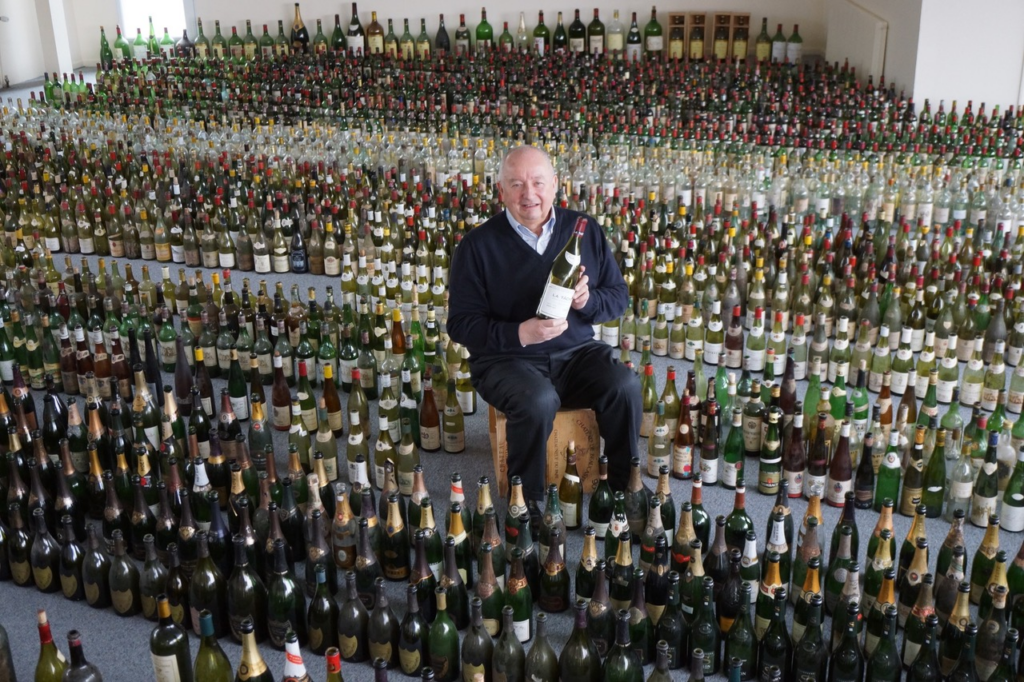
Audouze believes this gentle exposure to oxygen at the neck of the bottle revives old wines more effectively than decanting, and preserves their aromatics more faithfully. I have attended a number of his dinners and masterclasses where he has used the method. It is intellectually appealing, and delivered with immense conviction. But I have to confess that I have never found it nearly as miraculous in practice as it sounds in theory.
Where a bottle has been merely closed or sullen on opening, I can see the attraction. Where a bottle has started out genuinely problematic, however—oxidised, corked or simply tired—I have not seen the Audouze method perform resurrection. My own impression is that force of personality often does as much work as oxygen in persuading a room that a wine has come back to life. That does not make the method worthless, but it rests more on conviction than on anything demonstrably scientific.
Aeration and double decanting
If a wine really does need air, there are only so many ways of giving it some. The most straightforward is the decanter itself. Pour a young, tightly wound wine into a broad‑based decanter and you increase the surface area exposed to oxygen immediately. That can be very helpful with structured reds such as young Bordeaux or Nebbiolo.
Double decanting is the more practical collector’s trick. The wine is poured out of the bottle, usually with more vigour than one would use for a very old, fragile bottle, then the bottle is rinsed and the clear wine poured back in. It is useful when a wine needs air but you still want to present and serve it from the original bottle.
I use double decanting most often for young Bordeaux or Barolo. It can be ideal for tastings or dinners, where you want the wine to show at its best but do not want a line of anonymous decanters on the table. But I would never use the same treatment for a mature claret from a great old vintage. Fragile bottles require gentle handling and, very often, far less oxygen than people think.
The decanter itself: function or theatre?
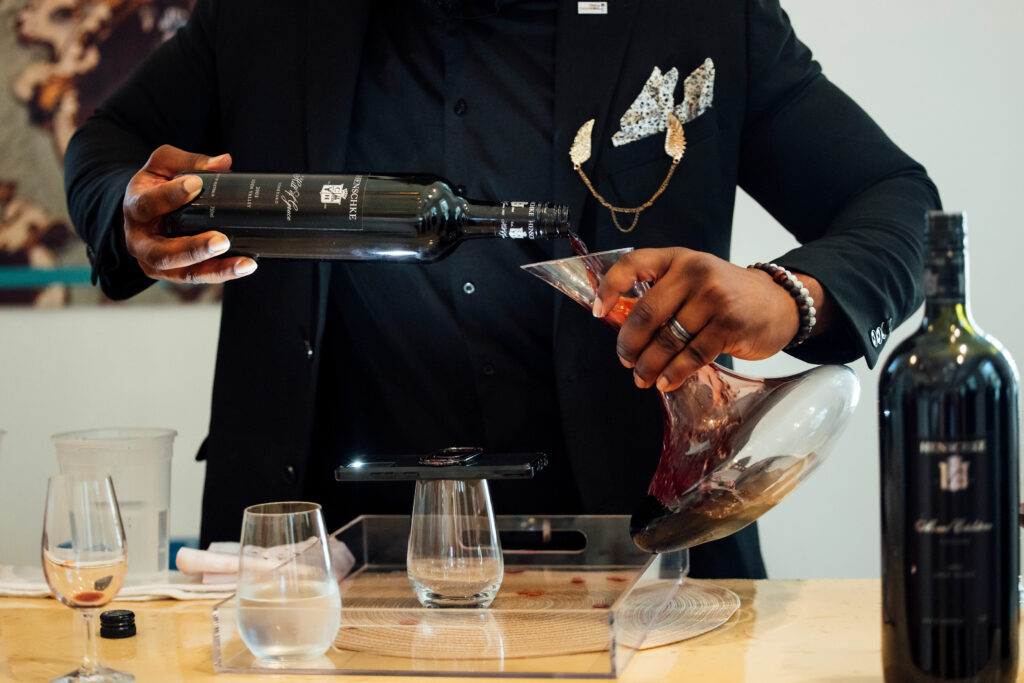
Collectors can spend absurd amounts of money on decanters, and the industry has been only too happy to encourage the belief that ever more elaborate designs somehow improve the wine. In truth, the functional differences are fairly limited. The two features that matter most are the width of the base, which affects surface area and therefore aeration, and the ease of pouring, which matters when you are trying to keep sediment out of the glass.
Beyond that, a great deal of decanter design is theatre. Swan‑necked, duck‑shaped and dramatically sculptural decanters may look marvellous, but for most wines they do little that a simple, broad‑bottomed decanter cannot. Glass versus crystal is largely an aesthetic and tactile choice, not a meaningful oenological one. For serious wine service, practicality matters far more than spectacle. If a decanter improves anything, it should be the wine in the glass, not merely the ambience in the room.
Age matters most
If there is one factor that overrides almost all others, it is age. Young wines are resilient. They are built on fruit, tannin, acidity and often oak, and can absorb oxygen beneficially. Older wines are a different matter. Their beauty often lies not in force but in nuance: perfume, tertiary complexity, softness of texture, subtle shifts in register. Those things are much easier to lose than to gain.
That is why I am instinctively cautious with mature bottles. Not because older wines should never be decanted—there are sommeliers and writers who argue for gentle decanting even with venerable bottles—but because oxygen is rarely reversible. If a young wine has had too little air, you can wait. If an old wine has had too much, there is no going back.
Bordeaux: yes when young, case by case when old
Young Bordeaux is the classic case for decanting. Great claret in youth can be forbidding: tannic, compact, cedar‑scented, severe. Give it air and it often changes dramatically, becoming more generous, more legible and more pleasurable. I nearly always decant young Bordeaux, and I am perfectly happy to give it one or two hours, sometimes more.
Old Bordeaux is another matter altogether. Here, there is no universal answer. Some old bottles need only to be separated from their sediment and then served immediately. Others improve with a little time in the glass. Some can take a short decant. Some are killed by it. With mature Bordeaux, I decide only after opening the bottle. The wine tells you what it can bear.
Youth invites confidence. Age demands humility.
Nebbiolo and Brunello are not the same
I always decant Nebbiolo from Piedmont. Barolo and Barbaresco may be pale in colour, but they can be uncompromisingly structured, with fierce tannins and a great deal locked inside them on opening. Air helps. In my experience, Nebbiolo tends to reveal far more of itself once it has been decanted.
Tuscany’s venerable Brunello di Montalcino is different. I do not decant Brunello. Last year, I was travelling in Italy with one of the world’s most famous Master Sommeliers, who insisted on decanting Brunello. Later, when we visited the famed Brunello estate Biondi‑Santi, estate manager Giampiero Bertolini told him bluntly: “No, you never decant Brunello. It’s sacrilege.” That line has stayed with me.
Perhaps sacrilege is too theological a word for wine service, but I understand the feeling. Great Brunello can be structured, certainly, but Sangiovese has a finer, more delicate tension than Nebbiolo. Too much air can blur the very thing that makes it compelling.
Burgundy: red no, white yes
No region makes me more categorical than Burgundy. I never decant red Burgundy. Not sometimes. Not cautiously. Never.
The reason is simple. Fine red Burgundy lives on nuance. It changes in tiny increments in the glass, and that is part of the pleasure. I would far rather let a great Pinot Noir unfold over half an hour in the bowl of a glass than push it prematurely through a decanter and risk flattening its detail. If a bottle needs time, I give it time in the glass.
White Burgundy is different. Here, I often decant, especially younger and more tightly wound bottles. A brief decant can help a serious Chardonnay shake off reduction, find its shape and, just as importantly, come to the right serving temperature. White Burgundy is one of the clearest examples of a wine that many people wrongly assume should never see a decanter, when in fact it often benefits from one.
Sweet wines
Sweet wines deserve more attention in this conversation than they usually get. I never used to decant them. Instinctively, I assumed their richness made decanting unnecessary. Over time, I have revised that view, at least in part.
Old Sauternes can benefit from a short decant. The best mature bottles are not simply sweet; they are layered, savoury, spiced and extraordinarily complex, and sometimes those dimensions need a little air before they fully emerge. A brief decant can help.
Sweet Riesling is another matter. I do not decant sweet Riesling. Those wines already possess such aromatic precision and such a fine balance of sweetness and acidity that I rarely see any gain in exposing them to extra oxygen. If anything, I worry that decanting softens their focus.
Sparkling wines: never again
Sparkling wines are the category many discussions of decanting simply ignore. For me, the answer is straightforward. As a rule, do not decant them.
The reason is obvious enough. The bubbles are not incidental. They are part of the wine’s identity. Pour sparkling wine into a decanter and you speed up the loss of carbon dioxide, which means you strip away one of the defining characteristics of the wine itself. It may still smell interesting. It may even taste vinous. But it is no longer properly sparkling.
I learnt this the hard way with a highly-sought after bottle of Krug 1988. Foolishly, I persuaded myself that because the Champagne already had much age, the mousse would be gentle anyway and the wine might benefit from being treated more like a still wine. It did not. The decanter killed the Krug. Never again.
Temperature matters as much as oxygen
One of the quiet saboteurs of wine service is temperature. A wine that is too cold can seem mute and unyielding. A wine that is too warm can feel loose, alcoholic and imprecise. This matters because people often blame decanting for what is really a temperature problem.
That is especially true with white wines. A serious white Burgundy served straight from a cold refrigerator may seem shut down, when what it really needs is ten minutes and a degree or two of warmth. Likewise, an old red left sitting in a hot room may seem to tire in the decanter when the true culprit is heat rather than air.
Decanting should never be considered in isolation. Temperature and oxygen work together. Get both right and a wine can sing. Get either wrong and you may blame the wrong variable.
Lewis’s rules
| Wine style | My view | Why |
| Young Bordeaux | Decant | Needs air; often improves dramatically |
| Old Bordeaux | It depends | Judge bottle by bottle after opening |
| Nebbiolo from Piedmont | Decant | Air helps unlock tannin and aromatics |
| Brunello di Montalcino | Do not decant | Sangiovese is too delicate; air can blur it |
| Red Burgundy | Do not decant | I never decant red Burgundy |
| White Burgundy | Usually decant | Helps with reduction, shape and temperature |
| Old Sauternes | Sometimes decant briefly | Can bring out hidden complexity |
| Sweet Riesling | Do not decant | Already precise and fully articulated |
| Champagne and sparkling wine | Do not decant | You lose the bubbles and with them the point |
The final confession
The longer I collect wine, the less interested I become in universal rules. Wine is too various for that, and bottle variation too real. But personal rules are another matter. Every collector ends up with them, because experience leaves its mark.
Mine are these. I decant young Bordeaux. I always decant Nebbiolo. I usually decant white Burgundy. I sometimes decant old Sauternes. I never decant red Burgundy. I never decant Brunello. I do not decant sweet Riesling. And after killing an older bottle of Krug in a decanter, I do not decant sparkling wine either.
Decanting, in other words, is not a gesture of refinement. It is an act of judgement. And if there is one confession worth making, it is that the most useful thing a collector can bring to the table is not a decanter. It is restraint.
Lewis Chester DipWSET is a London-based wine & rare spirit collector and writer, member of the Académie du Champagne and Chevaliers du Tastevin, co-founder of Liquid Icons and the founder of the Golden Vines® Awards. He is also Honorary President and Head of Fundraising at the Gérard Basset Foundation, which funds diversity & inclusivity education programmes globally in the wine, spirits & hospitality sectors. The Golden Vines® 2026 will take place in London, UK between 6-8 November 2026, recognising the world’s best fine wine estates as voted by hundreds of fine wine professionals. Please register your interest for tickets on the website: liquidicons.com/work/golden-vines-awards.