
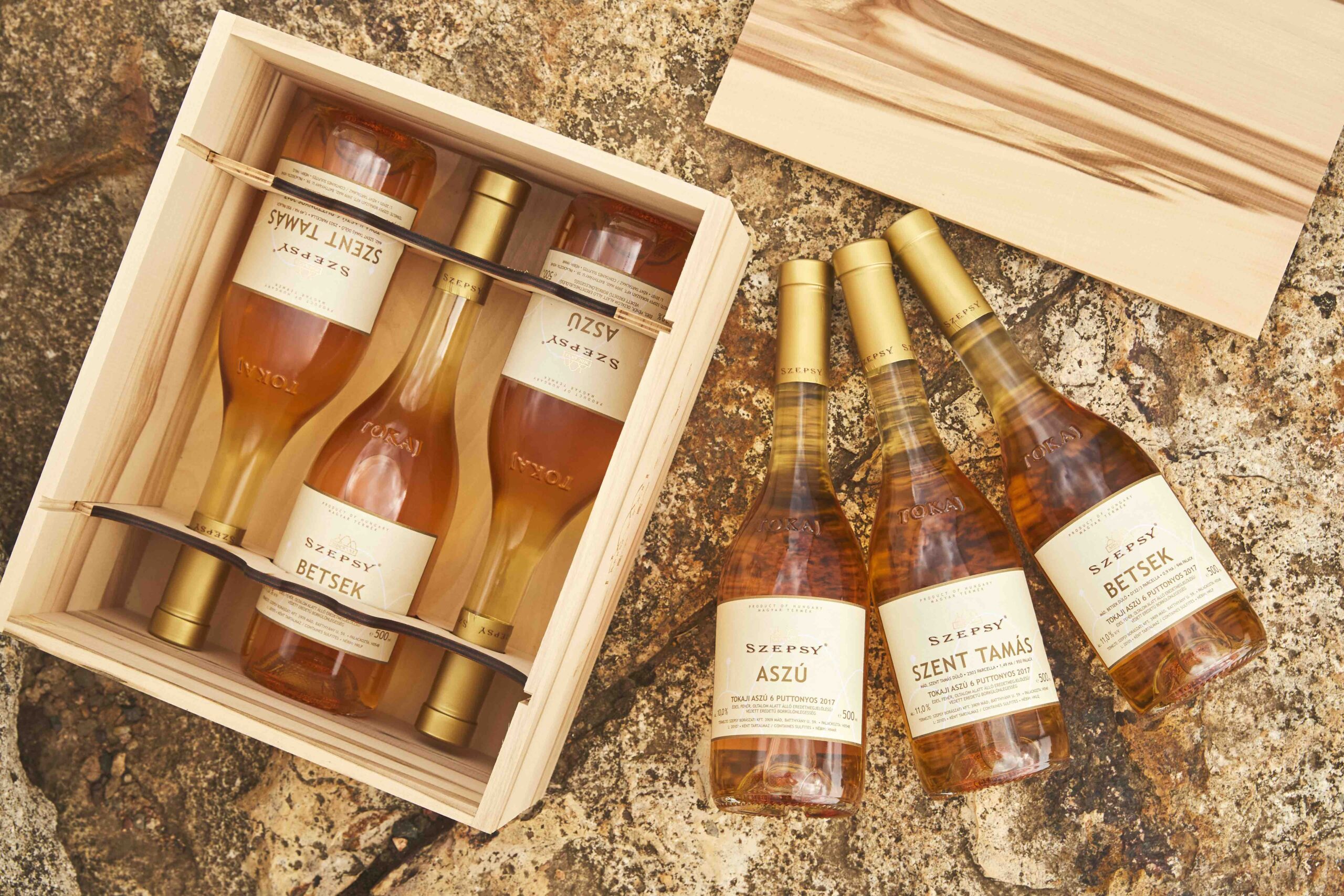
Chartering the legacy of this Tokaj vineyard, carved in volcanic stone.
Tokaj’s singular journey, and the odyssey of the Szepsy family within it, begins with the land—a region forged by volcanic drama and renowned for wines of luminous minerality and persistent tension. The Szepsy family’s written legacy dates to 1631, when Szepsy Laczkó Máté, chaplain to the Rákóczi family, documented the winemaking process for Tokaji Aszú. His account preserved the method that defines the Tokaji style to this day. While the technique of using aszú (botrytised) grapes predates this written record, Szepsy Laczkó Máté’s legacy established the foundation for the region’s legendary sweet wine.
Merchants, Globalisation, and the Golden Age
In the golden centuries of Tokaj’s ascent, its wines became currency among Europe’s diplomatic and royal courts. As early as the 1600s, Tokaji Aszú and Eszencia filled royal cellars and were exchanged as gifts between monarchs. Their value rivalled precious metals—famously said to be worth more than gold. Such was their allure that Catherine the Great stationed a Cossack regiment solely to escort annual shipments from Tokaj to St. Petersburg. Bottles of Imperial Tokaji were poured at coronations and banquets, symbols of prestige and indulgence.


Foundations of Trade: Jewish Merchants and Tokaj’s Golden Era
Polish and German Jewish merchant dynasties forged vital wine routes, enabling Tokaji’s rise to global renown. The town of Mád, with its grand merchant houses and magnificently restored synagogue, preserves this legacy. High sugar ensured Tokaji survived arduous journeys, cementing its desirability from St. Petersburg to Spain.
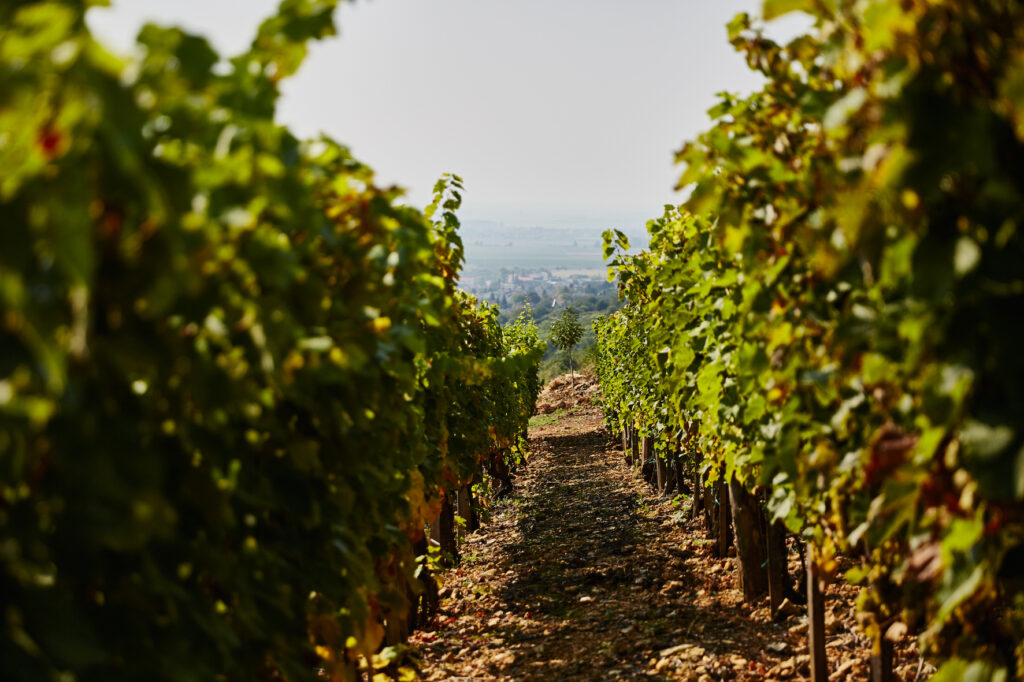
The World’s First Classified Wine Region
As Tokaj’s reputation soared, it set a global benchmark for wine regions. In 1737, the Hungarian Parliament declared Tokaj a protected appellation, implementing the world’s first official vineyard classification system—dividing its crus into first, second, and third growths based on terroir, quality, and historic performance. This visionary act not only formalised Tokaj’s commitment to excellence but created the template upon which future regions, from Bordeaux to Burgundy, would later build their own hierarchies.
The Shadow of Communism and the Battle for Terroir
Communist collectivisation destroyed Tokaj’s intricate viticultural patchwork, replacing noble clones with anonymous, high-yielding vines. Like many families, the Szepsys were dispossessed. When communism fell in 1989, father and son began the painstaking journey to recover their true terroirs.Today, 83% of the family’s vineyards lie within Tokaj’s historic first-growth crus—a remarkable leap from the fragmented holdings of the past. Out of 418 classified vineyards across the region, only 52 were ever recognised as first growths, underscoring the exceptional heritage the Szepsys have reclaimed. Through mapping, field selection, and decades of replanting, they restored land and genetic biodiversity—redrawing Tokaj’s possibilities. “Unfortunately, most local winemakers still rely on communist-era clones, making it incredibly difficult to reach the quality standards demanded by fine wine connoisseurs,” asserts Szepsy Jr.
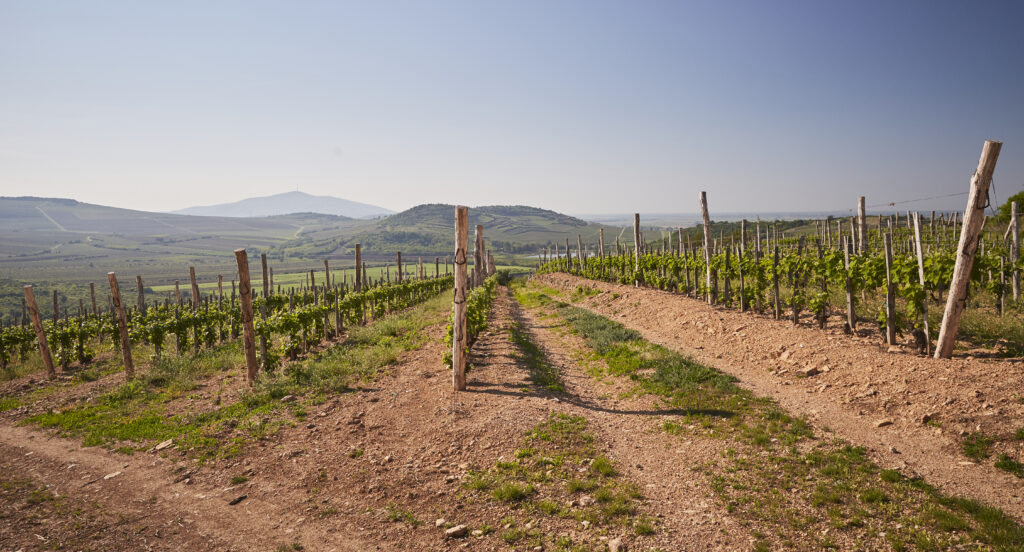
A Family Shaped by Change—Rewriting the Vineyard Map
Every decision at Szepsy marries intuition with cutting-edge precision agriculture, in partnership with the University of Debrecen. “We’ve mapped every plant since 2008. Parcels critical for wine quality are equally vital to the genetic selection programme,” explains István Szepsy Jr. Vineyard architecture varies by parcel—Guyot, low-head, terraced systems—all executed by hand. Yields are tightly controlled at 4.2 tonnes per hectare, prioritising old-vine Furmint and its crystalline reflection of Tokaj’s volcanic soils.
Family and Estate: Recent Transition
Recently, the Szepsy estate has quietly completed a profound generational transition. After suffering a stroke in March 2019, István Szepsy Sr entrusted daily management to his son, daughters, and son-in-law. With more time on his hands, he has also developed a devotion to Arsenal Football Club. Though no longer at the helm, Szepsy Sr remains a technical force, now driving research and innovation as “a research institute within the winery.” His health setback hastened the next generation’s integration and ensured the continuity of both expertise and ethos.

The Science and Art of Volcanic Terroir
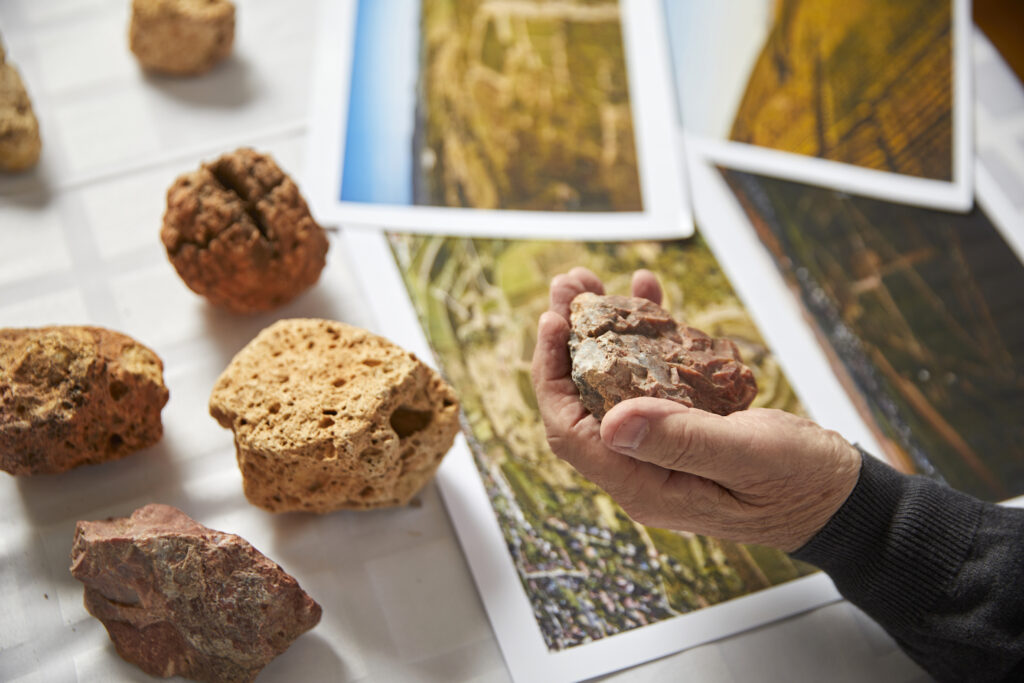
Szepsy’s plots encompass some of the world’s most extraordinary soils, with volcanic diversity delivering electrifying minerality and rare aromatic depths. Uncompromising crop thinning, reduced yields, and parcel-by-parcel vinification articulate Tokaj’s untold nuances. This pursuit established the blueprint for modern Tokaj: single-vineyard, crystalline Furmint, and the iconic Aszú, emblematic of Hungarian ambition.
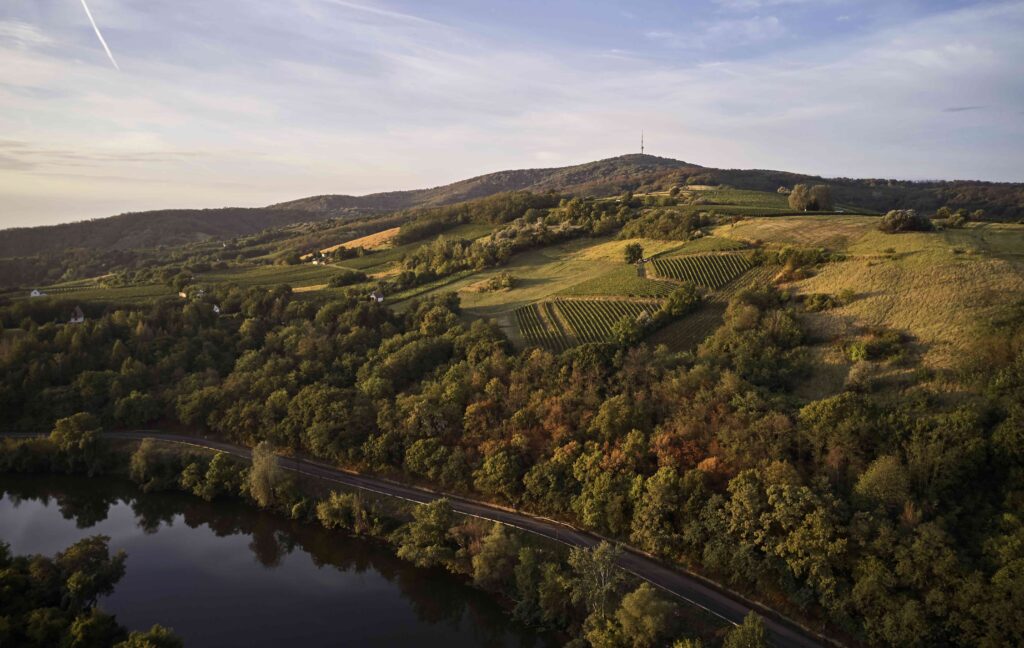
Their top terroirs—Szent Tamás, Nyúlászó, Percze, Hasznos, Urbán—originate from varied geologies. Andesite bedrock produces taut, elegant Furmint with high acidity and stony precision. Pink rhyolite brings power, breadth, and saline lift. “Furmint excels in these meagre soils—low pH, scant water, abundant minerals, and little humus,” Szepsy Jr explains. The presence of zeolite and bentonite impacts vine stress, disease resilience, and wine longevity.
Quiet Innovation—Precision in the Cellar
Technical acumen meets restraint in Szepsy’s cellar. “We never add anything to the grapes or juice after pressing—everything is one hundred percent natural. However, I use mother yeast to inoculate, prepared two weeks before harvest,” says István Szepsy Jr. “The world watches Tokaj more closely than ever. It’s our duty to show what’s possible if you trust the land.” Malolactic fermentation is allowed but never forced; however, Szepsy Jr occasionally introduces selected bacteria in new oak barrels to guide the process—though, as he notes, “only rarely”.
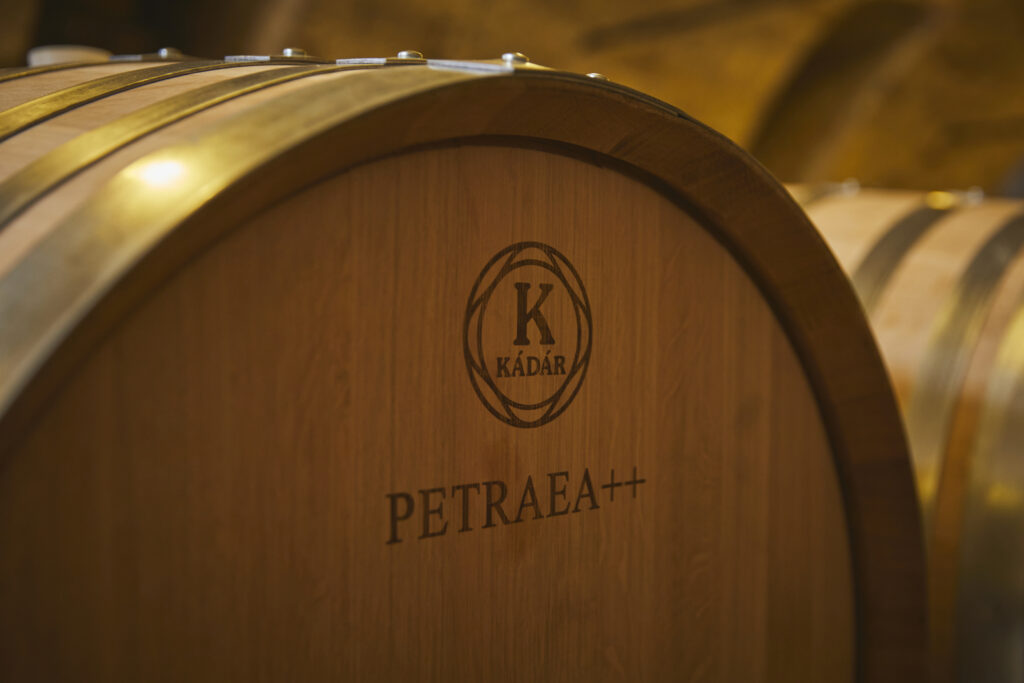
All top wines ferment and age in 300-litre barrels made from Hungarian Quercus petraea, sourced from volcanic-soil forests. This creates a tangible link between terroir and élevage. Eszencia, Szamorodni, and Aszú are crafted with utmost precision. Eszencia—free-run juice from aszú berries—often requires five to six years to finish fermentation, resulting in a wine of remarkable sweetness and rarity.
The Dry Wine Revolution: Szepsy’s Vision
In 2000, Szepsy Sr produced Tokaj’s first commercially significant dry Furmint—a seismic break from tradition, establishing dry wine as Tokaj’s new vanguard. Before Szepsy, Tokaj was globally synonymous with sweet, botrytised wine. Although isolated dry wine experiments existed, Szepsy’s clarity of purpose, yield control, and terroir-focus set a new benchmark.
“Dry Tokaj was a complete revolution,” declares Szepsy Jr, “and none had ever attempted it at this standard.” Today, dry and off-dry wines account for two-thirds of all Tokaj production—the region’s economic and qualitative salvation. Szepsy’s dry Furmint has become Hungary’s fine wine ambassador, likened to Premier Cru Burgundy for its power and minerality.
Defining Dry vs. Sweet: Style & Impact
Clarity is essential: Tokaj’s dry wines (Furmint, alongside single-parcel expressions such as Szent Tamás, Hasznos, Urágya, Percze, Urbán) and sweet wines (Aszú, Eszencia, Szamorodni) are equally expressions of greatness.
“Both sweet and dry are essential signatures of Szepsy,” says Jr, “and both demonstrate Hungary’s true fine wine potential.” Sweet wines rely on botrytis, searing acidity, and sugar; dry whites highlight volcanic minerality, controlled yields, and fermentation technique. Szepsy’s innovation lies in mastering both categories, elevating Tokaj’s global reputation.
Quiet Innovation: Large Format Bottlings
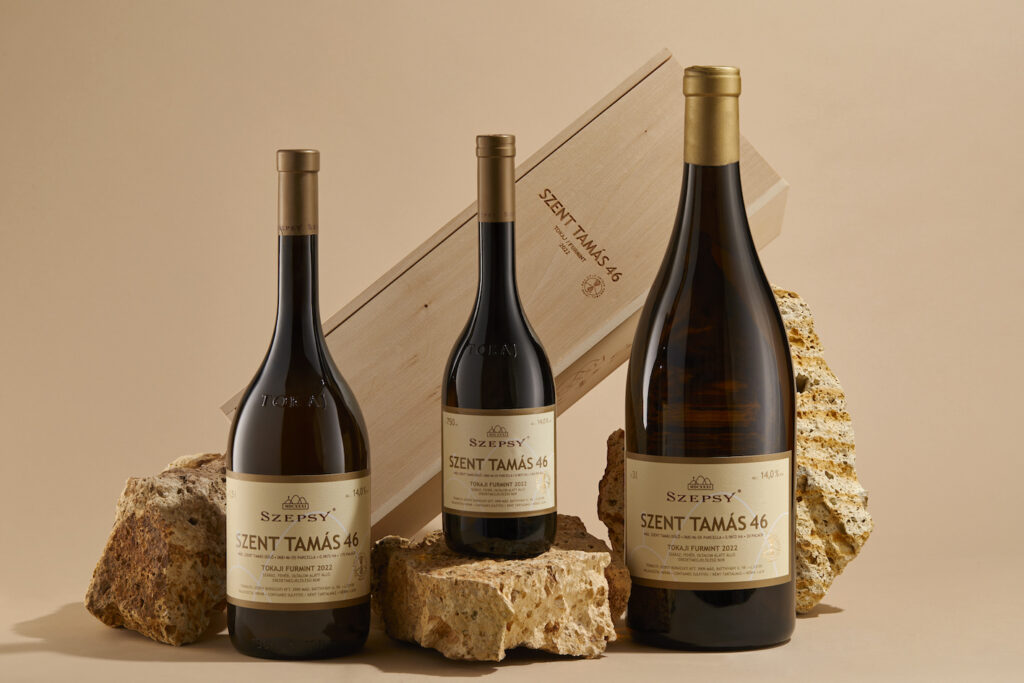
István Szepsy Jr has achieved a regional milestone by securing, for the first time in Tokaj’s history, official permission to bottle wines in large formats—magnums and Jeroboams. This change, formalised with local authorities after a decade of advocacy, underscores Szepsy’s commitment to brand-building and global collector appeal. Bottles are sourced via Saverglass, using premium moulds, and add cachet, ageability, and luxury status to the Szepsy brand.
Tasting Tokaj: The Szepsy Experience
Szent Tamás Furmint: Szepsy’s flagship single-vineyard dry Furmint, praised by Jancis Robinson as “the Montrachet of the East”. Burgundian winemakers have brought Szent Tamás to blind tastings, mistaking it for top Meursault. The 2017 vintage, “an epic vintage for Tokaj,” is laser-focused: white blossom, lime zest, gunflint, and pronounced mineral edge over orchard fruit, with an intense, stony finish. The spice-laden 2022 further exemplifies dry Furmint’s power and refinement, promising ageing potential.
Szamorodni: This historic Tokaj style, made from whole clusters, contrasts Szamorodni’s electric freshness with Aszú’s opulence. The 2017, a blend of Szent Tamás and Betsek, delivers vivid apricot and orange zest matched by piercing acidity and balanced sweetness. With time, Szamorodni develops complex layers of earth, mushroom, and dried citrus—a fresher, yet ageworthy, Tokaji.
Tokaji Aszú 6 Puttonyos: An enduring symbol of sweet wine. Among several vintages, the 2017 stands out—apricot, honeycomb, and botrytis on the nose, with marmalade and dried fruit anchored by almond and citrus. Opulent sweetness and vibrant acidity combine for a mouthfeel that is rich, refreshing, and quintessentially elegant.
Eszencia: Produced only in rare vintages, Eszencia is legendary at 2.5% ABV and 570g/litre sugar. Tasted in situ from a still-fermenting 2024 barrel: silken texture, sultana, saffron, tea, dried mango, and wild honey—sugar and acidity perfectly balanced, with a lingering echo of spice and ancient earth.
Ákos Forczek and the Modern Ascent
Ákos Forczek, founder of wine merchant Top Selection, played a decisive role in raising Szepsy to global fine wine status. Importing the 1997 Aszú—just 750 litres—he connected Szepsy’s wines to leading UK sommeliers and opinion leaders. He introduced dry Furmint and Aszú by the glass in Britain’s top establishments, championing cru-level recognition for Szent Tamás. Soon echoed by critics like Jancis Robinson, Forczek’s advocacy positioned Szepsy as the contemporary face of Tokaj for discerning palates.
From Crus to Icons — The Wines
The Szepsy portfolio now features seven rigorously terroir-specific dry wines, the classic Szamorodni, signature Aszú, and—at its apex—Eszencia. Each bottle is an ode to patience and devotion. “Single-vineyard wines are the top ones… the blend must always be complex, but single-vineyard wines are more artisanal and expressive of cru character,” the family asserts. Production remains microscopic: for instance, Szent Tamás Furmint (2,500 bottles), Szamorodni (10,000 bottles), Aszú (up to 8,000 bottles in selected vintages), and Eszencia (sometimes less than 200 litres)—distributed to collectors and elite restaurants in over 20 countries.
Redefinition, Prestige, and the Future
While much of Tokaj still pursues volume, Szepsy’s mission is relentless terroir definition and sustainable excellence. The family was instrumental in founding the Mád Circle—a society for cru-level producers—and continues to pioneer research for modern regional wine classification. “Winning the 2022 Golden Vines® Best Producer in Europe and Hall of Fame awards was a giant leap in prestige—if a normal step is one brick, Golden Vines was several,” reflects István Szepsy Jr. For Szepsy, true success is measured not in trophies or scores, but by global collectors and sommeliers who seek Tokaj’s authentic voice.
Building Legacy in Every Glass
The Szepsy name now stands as Tokaj’s beacon—transforming adversity into opportunity, innovation into enduring legacy. Their guiding ambition: to refine clones, deepen their terroir understanding, and ensure that each bottle poured is a testament to centuries of resilience and renewal. “Quality,” insists Szepsy Jr, “depends on recognising high-quality plots, grapes, and timing in the vineyard and cellar. Tokaj can now prove itself anywhere in the world given the chance.” For collectors, sommeliers, and wine lovers, Szepsy offers not merely prestige—but the living, evolving legacy of one of Europe’s greatest regions, reborn with every glass.
Lewis Chester DipWSET is a London-based wine and rare spirit collector and writer, member of the Académie du Champagne and Chevaliers du Tastevin, co-founder of Liquid Icons and the founder of the Golden Vines® Awards. He is also Honorary President and Head of Fundraising at the Gérard Basset Foundation, which funds diversity & inclusivity education programmes globally in the wine, spirits & hospitality sectors. The Golden Vines® 2026 will take place in London, UK between 6-8 November 2026, recognising the world’s best fine wine estates as voted by hundreds of fine wine professionals. Please register your interest for tickets on the website: liquidicons.com/work/golden-vines-awards.