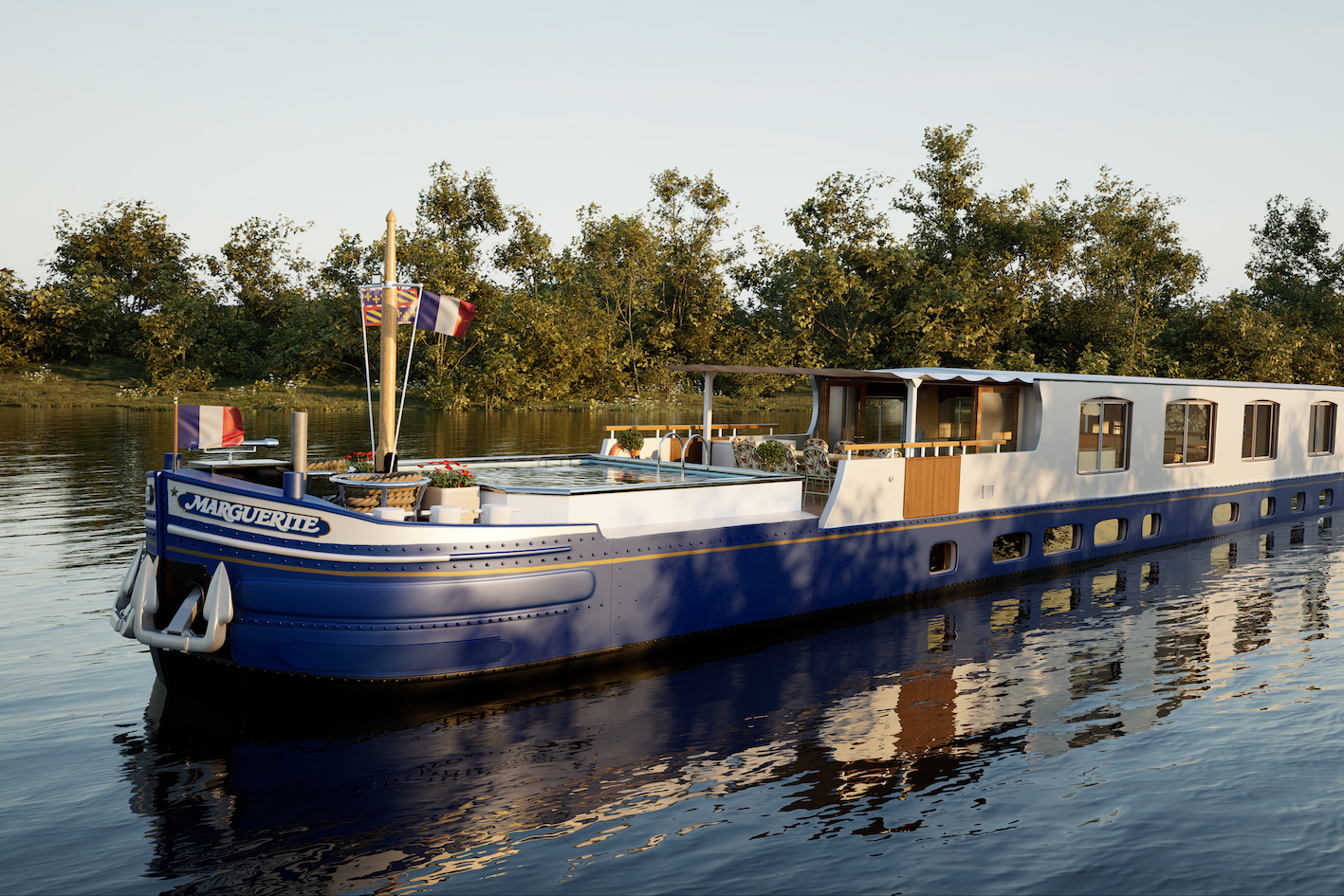
Designed for just eight guests, Marguerite cruises Burgundy at a leisurely pace, opening doors to grand cru vineyards and experiences usually off limits to visitors.
It’s late afternoon in Burgundy and the world is passing by at little more than walking pace. From the deck of Marguerite, the newest addition to Les Bateaux Belmond’s fleet, there is time to notice the details: church spires rising above villages, little ports dotted with boats and stone houses half-hidden among vegetation that remains remarkably green despite the summer heat. There is nowhere we particularly need to be; getting there slowly is rather the point.
We have just returned from a morning exploring when a plate of warm gougères appears. Nobody ordered them. Earlier, someone in our group had mentioned the savoury cheese pastries for which Burgundy is famous. Chef Neil Churchill had apparently overheard, gone to the market for the cheese, and made a batch for our return. It is a tiny gesture that tells you rather a lot about Marguerite.


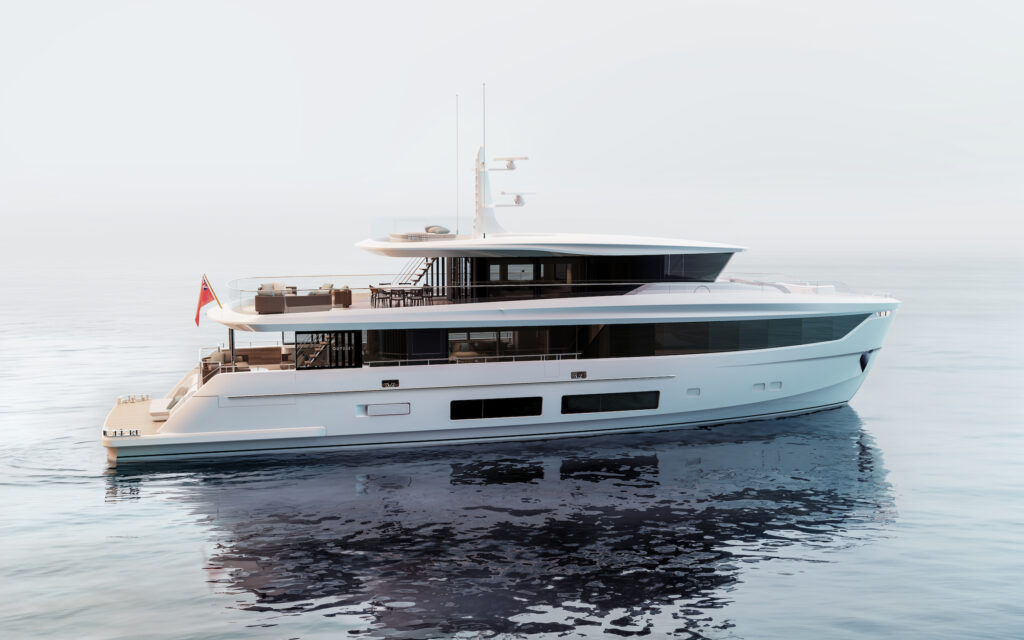
Launched in August following a transformation of the former Amaryllis, the boat is the latest arrival in Belmond’s collection of French river vessels, with Robb Report among the first media invited onboard. Designed for just eight guests across four cabins, Marguerite has been conceived as what Belmond calls a floating villa: a private base from which to explore Burgundy by water.
It arrives at an interesting moment for travel. After years of racing between destinations, slow travel increasingly offers the opposite proposition: going fewer places and understanding them better. Barging takes that concept almost literally. Marguerite moves through one small part of France slowly enough that cycling can sometimes rival it for speed —something one group apparently put to the test. That is also part of its charm. Burgundy stops being somewhere to tour and becomes somewhere to live, albeit temporarily and exceptionally well.
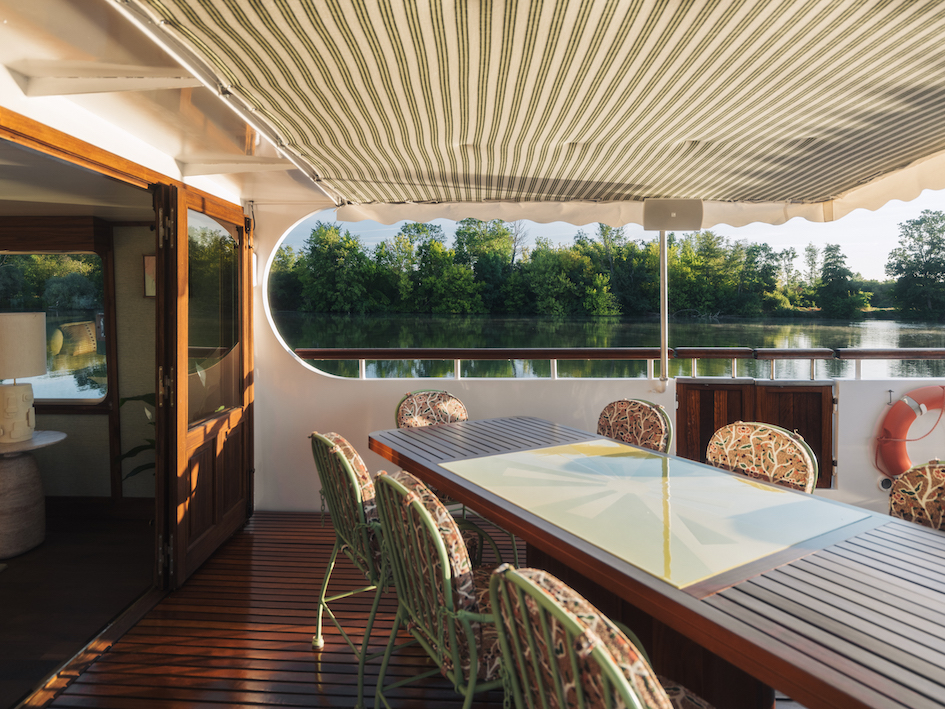
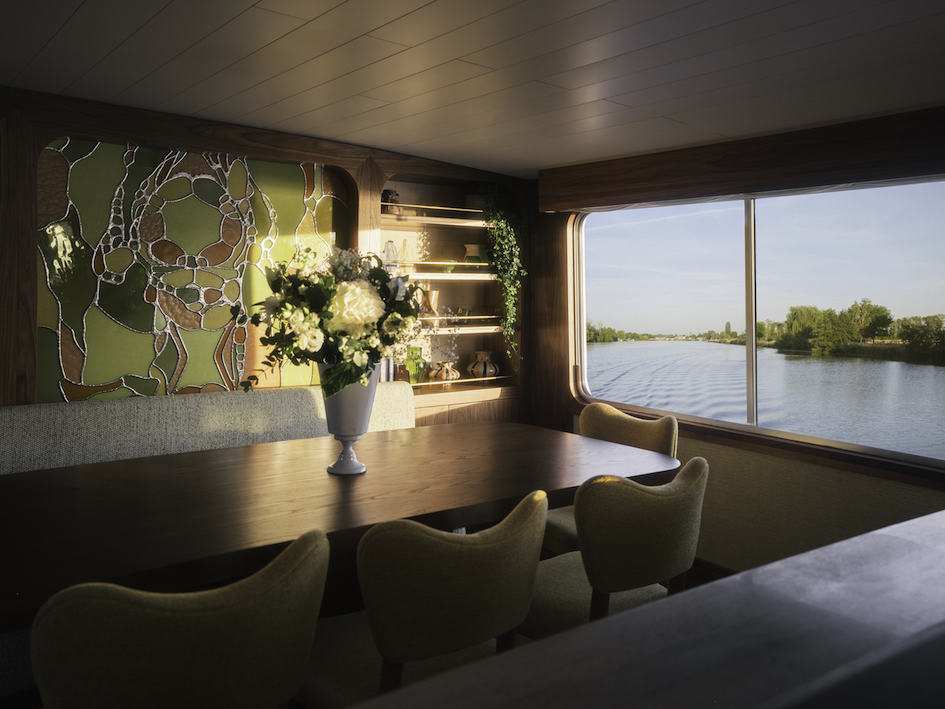
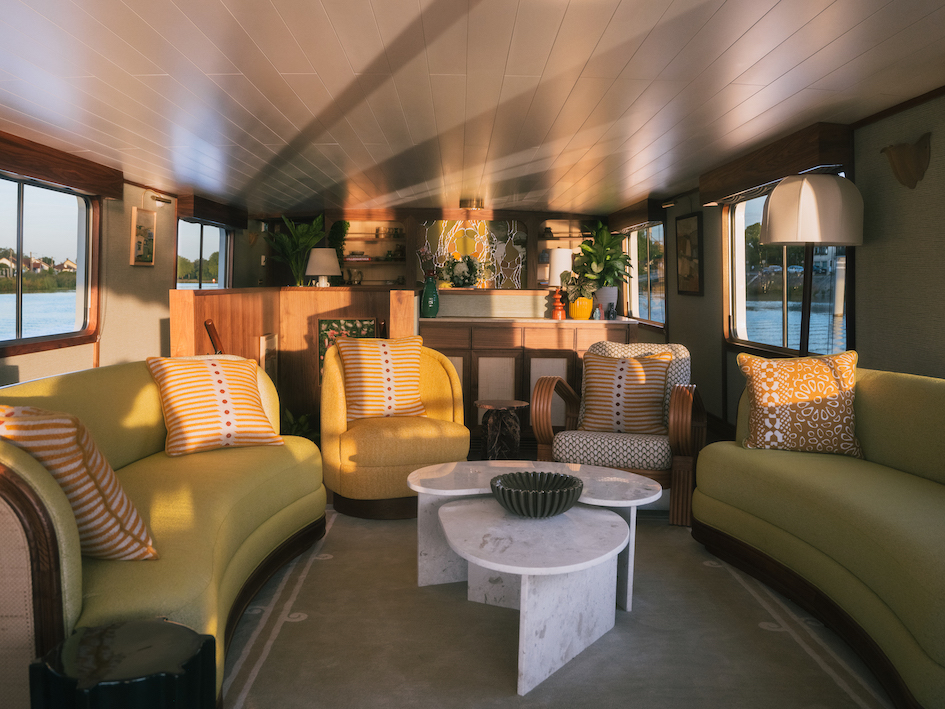
There are, of course, plenty of reasons not to leave the boat. Its redesign takes inspiration from the golden marguerite fields after which it is named, with soft yellows, floral details and flashes of stained glass throughout. French antiques sit alongside contemporary pieces, while the open-plan salon offers a comfortable place to watch the world go by or disappear with a book. Plants are abundant, softening the contemporary interiors and bringing a little of the surrounding landscape inside. Outside, the highlight is a heated plunge pool, beside the table around which much of life onboard revolves.
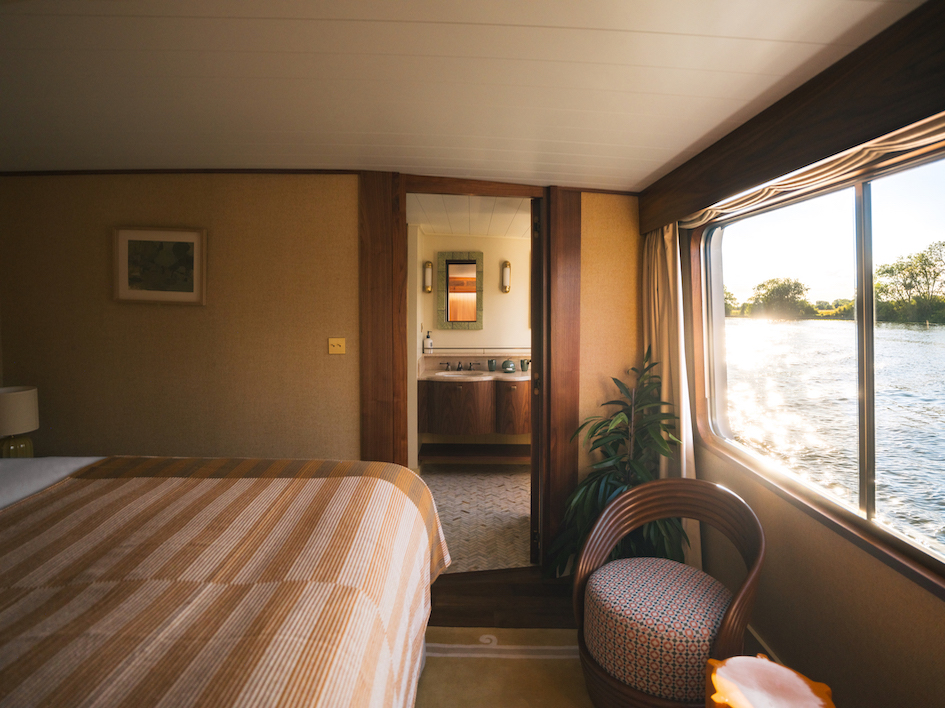
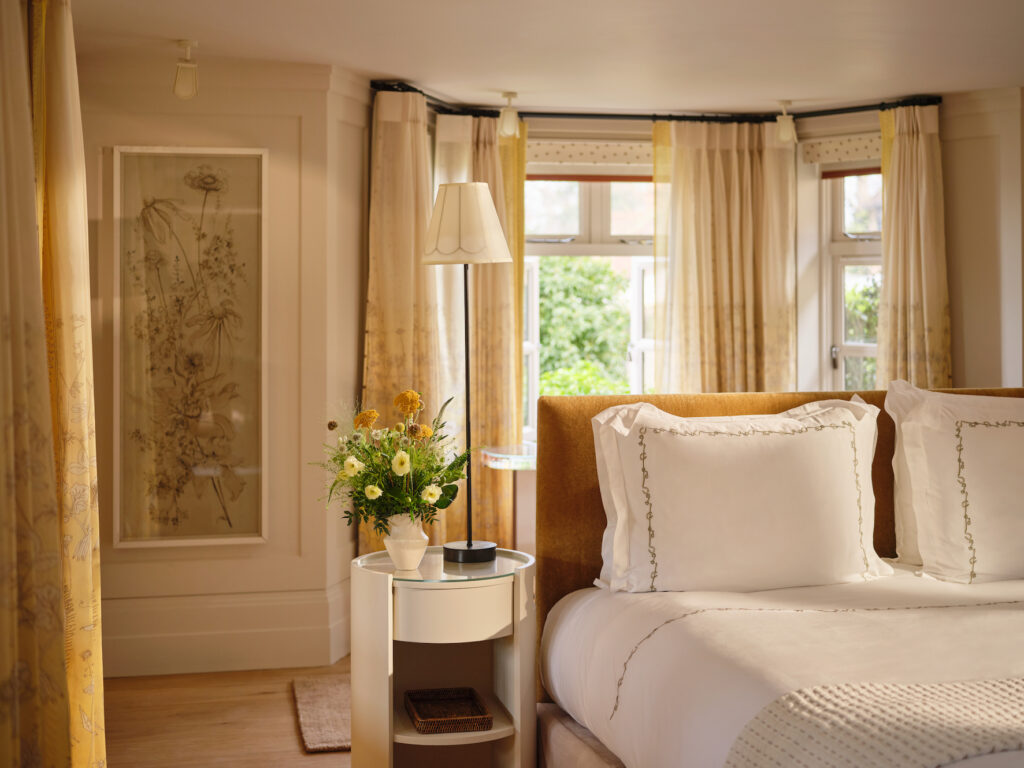
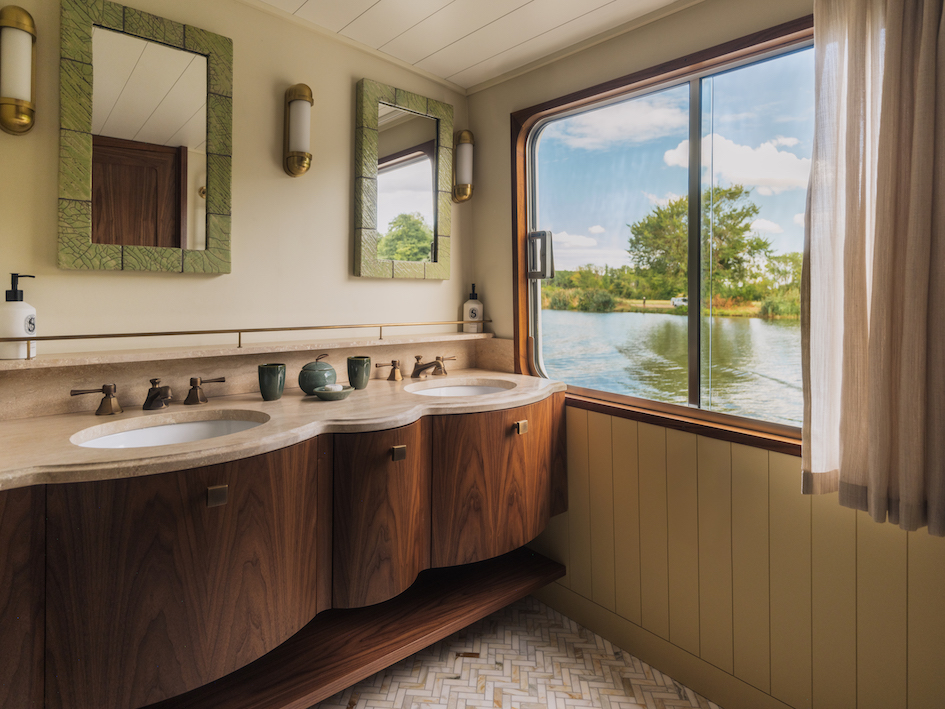
There are four cabins, each with its own character. One has a standalone bath; another, on the upper deck, has large windows overlooking the river. Mine, on the lower deck, feels especially romantic, with oval portholes just above the waterline and an alcove with a writing desk tucked beside one of them. Individual artworks and patterned fabrics give each a country-house feel, while the modern bathrooms are stocked with beautifully scented Diptyque products.
Food is central to life onboard. Marguerite’s menus have been created by Dominique Crenn, the French chef behind three-Michelin-starred Atelier Crenn in San Francisco, who returned to France to develop the programme with Belmond. Crenn is adamant that this is not an exercise in transporting her California restaurant onto a boat. “I’m not here to do my food from San Francisco,” she says. Instead, she wants to tell Burgundy’s story through what grows and is produced here.
That narrative is also deeply personal. Crenn describes the food as carrying traces of her grandmother’s cooking in Brittany, adapted to Burgundian ingredients and whatever is freshest at the market. During our trip, that translates into dishes that include her caviar-topped egg accompanied by savoury madeleines, three-local-cheese ravioli, chicken prepared two ways, and her interpretation of blue lobster.
Churchill and the onboard team shop locally for ingredients, allowing what they find to influence the menu. Breakfast brings bowls of fruit, continental platters, hot pastries, and eggs cooked to order. Lunch tends to arrive family-style: perhaps a goat’s cheese tart alongside a fourtomato salad, fresh prawns and local ham. By late afternoon, a cheese board might appear, each selection accompanied by a tale from the friendly and attentive crew.
Dinner is a more formal four-course affair. Starters of fresh gazpacho or crab salad might be followed by branzino on a bed of vegetables or perfectly cooked beef with mushrooms, then cheese and a pomegranate soufflé or the chef’s take on Eton mess.
Crenn herself embraces the same spontaneity. During our voyage, she describes finding an exceptional ham at a market and turning it into her version of a jambonbeurre, piled with cheese, mustard, cornichons and plenty of butter. Two days later, after we had disembarked, we opened the snacks packed for our airport journey to find the crew had returned to the same market, bought the same ham and recreated her sandwiches for us.
That instinct to personalise extends well beyond the kitchen. Burgundy is arguably the world’s most coveted fine wine region, where some vineyards amount to tiny parcels of land and bottles from the most celebrated producers can be extraordinarily difficult to acquire. Here, access depends heavily on relationships. Marguerite’s team has spent years cultivating them, opening doors that money alone cannot.
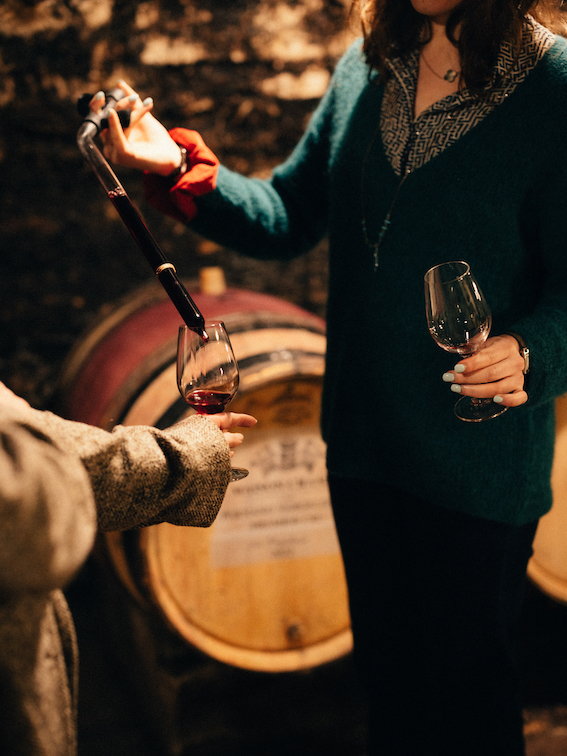
We see this clearly at Domaine Drouhin-Laroze, a family-run estate in the village of Gevrey-Chambertin which we visit during harvest, the most frenetic moment in the Burgundian wine calendar. As we watch on, crates of freshly picked grapes arrive, passing along a human sorting line where anything deemed imperfect is removed by hand. Christine Drouhin, part of the fifth generation of the winemaking family, leads us through the process herself, stopping to see her son Nicolas at work in the tank room before opening a selection of premier cru and grand cru wines for us to taste. The highlight is a Chambertin, the pinot noir grand cru famously favoured by Napoleon.
Then there is Château du Clos de Vougeot. Visitors can buy a ticket to explore this 12th-century landmark, once associated with the monks of Cîteaux. Our visit takes a different turn. Upstairs, we are ushered behind the ropes into a former billiards room normally closed to the public, where a private lunch has been arranged for guests of Marguerite. “All tourists come here but we wanted to do something special,” our guide explains.
Guests sit around a long table for a four-course feast of local favourites—parsley ham mille-feuille, chicken with fresh tarragon, fine cheeses and almond tart—with paired wines. The château also has special glasses crafted for its twice-yearly blind tastings, with one side gently sloped to better appreciate the aromas. The wines opened are so rare that each label is seen only once.
Belmond intends the private lunch to join Marguerite’s regular itinerary for the 2027 season, reserved for this boat rather than the wider fleet. The team is developing other Marguerite-exclusive experiences too, including a potential private cooking class.
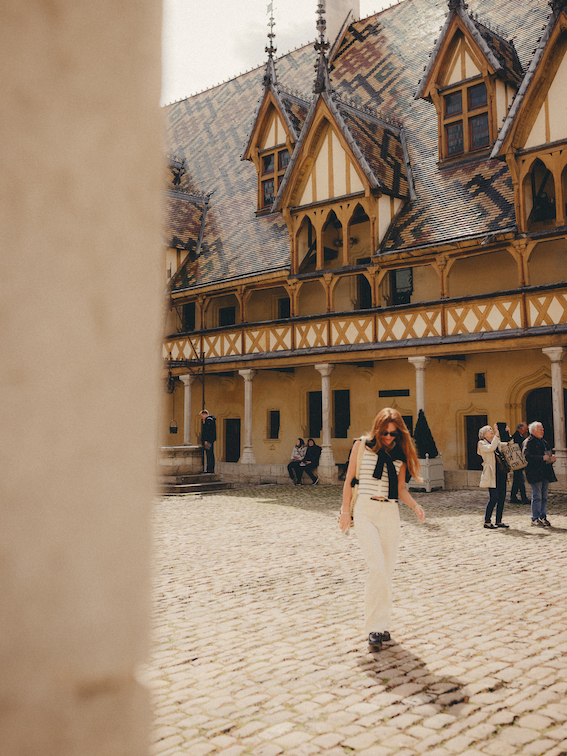
Exclusivity in Burgundy comes through people and the local relationships that open otherwise closed doors. It also means knowing whom to call when plans change. And plans do change. This is barging, after all, and the waterways have their own ideas. During our journey, low water means Marguerite has to alter course. Rather than losing part of the day, our team reshuffles the programme, leaving time for an impromptu visit to Beaune and its extraordinary Hospices de Beaune, the medieval charitable hospital with its distinctive glazed-tile roof. When the weather improves later in the day, our cycling excursion is moved too, and we spend a delightful afternoon speeding along country paths on electric bikes, weaving between vineyards and stopping to watch pickers at work during the harvest.
Perhaps that is what Marguerite does best. It gives you time to watch grapes arrive during harvest, not just taste the wine they will become. Time for a chef to overhear a conversation about gougères and bake them for your return. Time to sit beside the pool and watch another riverside village appear, then disappear. By the end, it no longer feels like travelling slowly. It simply feels like seeing Burgundy properly.
Prices for a one-week charter on Marguerite, A Belmond Boat start from €85,100