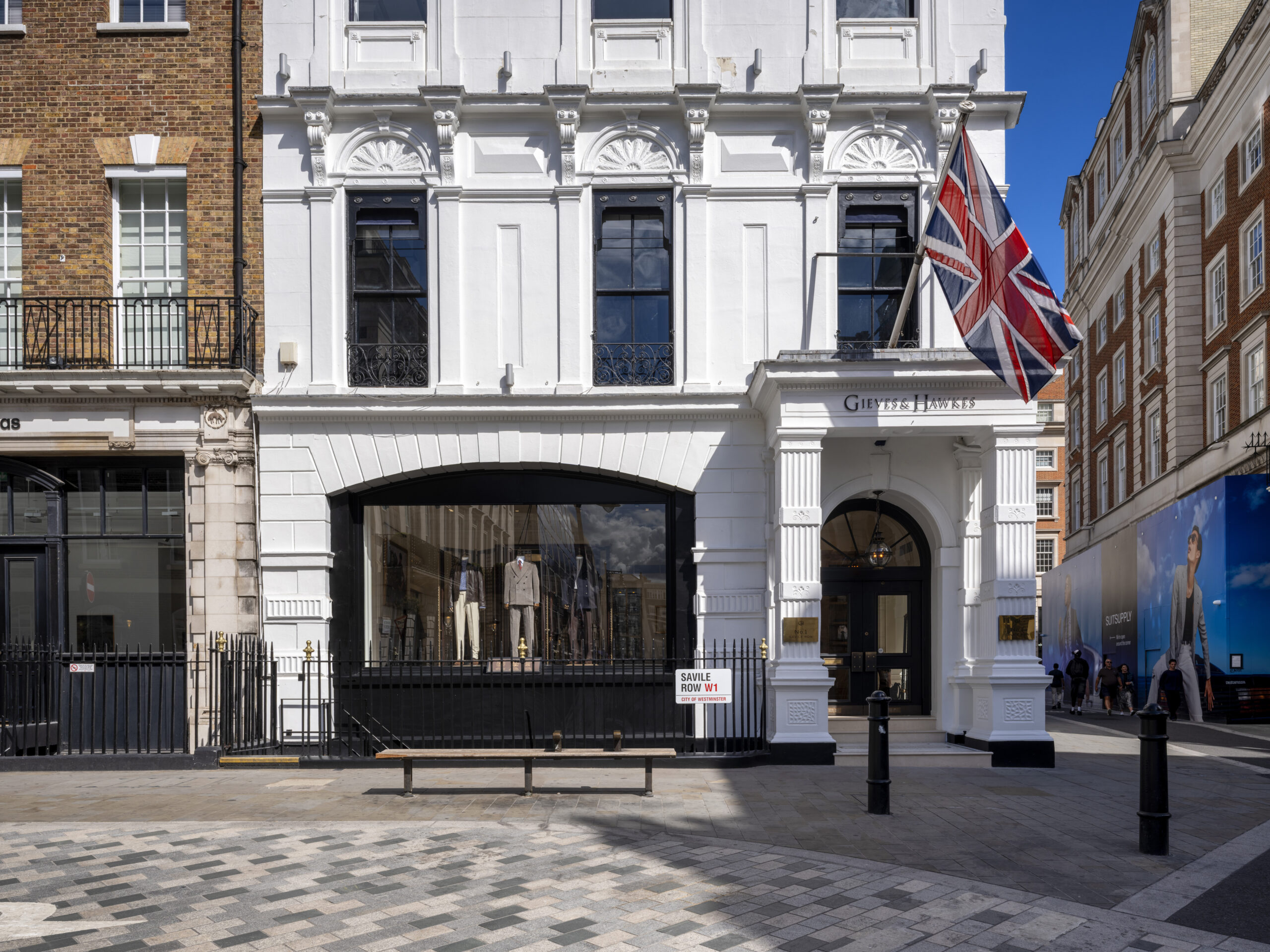
No.1 Savile Row is arguably British menswear’s centre of gravity.
Even to the menswear debutante, the words No. 1 Savile Row pack gravitas. To the sartorial cognoscenti, this particular address is one of style’s major nucleuses. As such, the newly refurbished 7,000 sq ft flagship is a major new chapter not just for one of the country’s great tailoring houses, but for British bespoke tailoring itself.
A quick rewind, to some of the house’s historical milestones, to bring this development into context. In the middle of the 19th Century, James Gieve— whose name would eventually appear above the door alongside that of Thomas Hawkes—converted a small vessel into a travelling tailoring workshop, sailing from Portsmouth to the Black Sea during the Crimean War to supply British naval officers besieging the Russian fleet at Sevastopol.


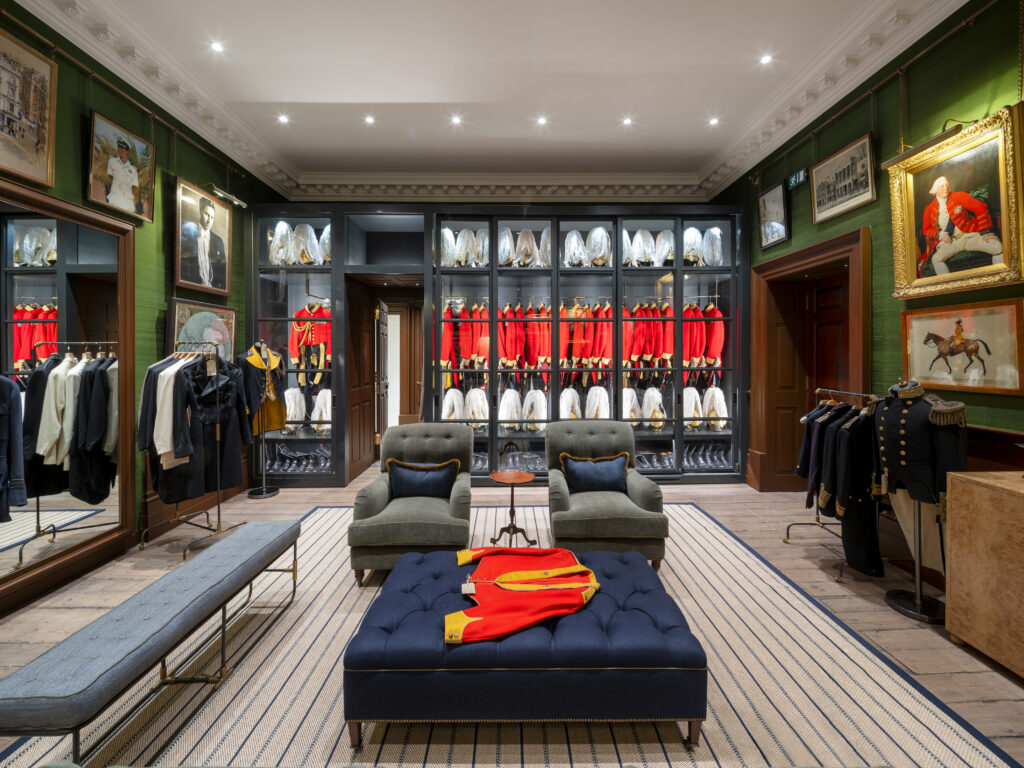
James Watson Gieve invented, in the 1930s, what might be deemed an early precursor to the modern sartorial app: the ingenious “Dress Indicator”, a pocket reference dial designed to tell naval officers which formal attire and uniform components were required for particular occasions. In effect, it was an early piece of wearable technology: a small mechanical solution to the perennial British problem of knowing precisely what one ought to wear.
The military flavour inherent in the house’s bespoke heritage—imperious shoulders, slanted pockets derived from the hacking jacket, a centre vent originally suited to riding, a waistcoat designed to work with higher trousers—is, naturally, fully available these days (or often adopted on a modular basis). And yet—whilst still renowned for its made-to-measure and bespoke military uniforms, and in proud possession of a host of Royal Warrants—the house has nonetheless modernised.
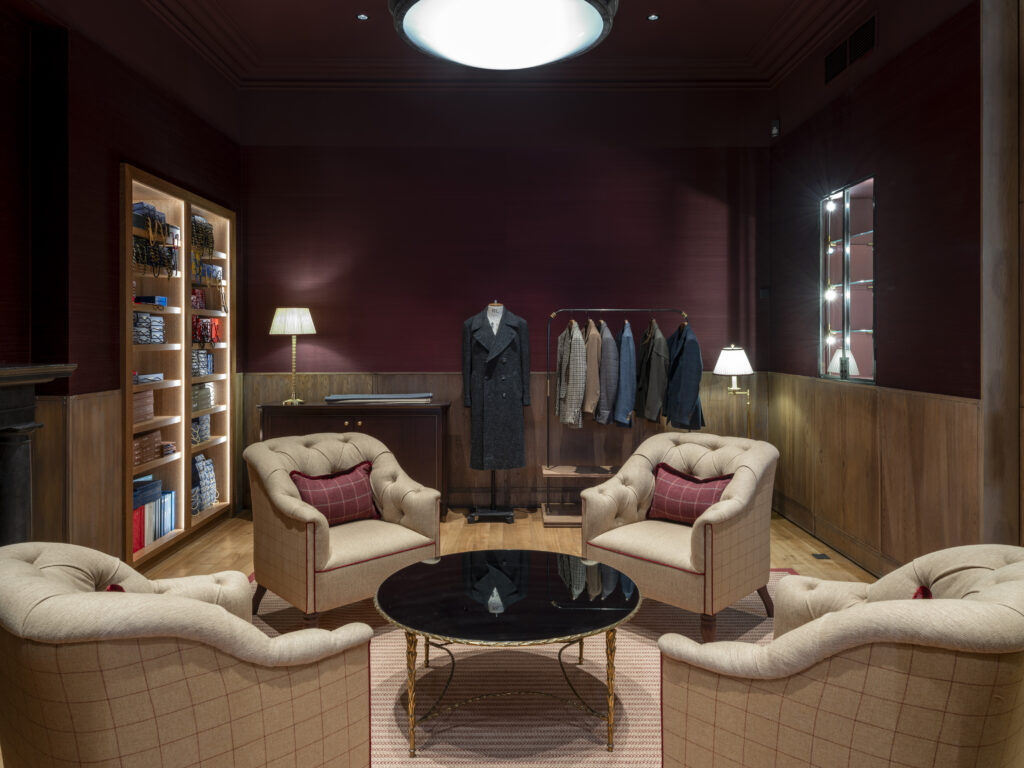
Its cutters and fitters are these days among the most versatile in London, willing to inject as much or as little of that battlefield bravado into suiting for the modern civilian as the client wishes for. Military discipline, country pragmatism, Savile Row elegance, Neapolitan (and therefore structure-free) breeziness, metropolitan eccentricity: tick whichever boxes you want.
The comprehensive range of off-the-peg garments, meanwhile, offers subtle doffs of the cap to the house’s illustrious history—and its role in defining British tailoring as we know it—while simultaneously injecting a modern sensibility that will also modernise any modern gent’s wardrobe. The Pherson coat in check virgin wool and cashmere is a fine example, as is the Newton suit in Donegal brown lambswool.
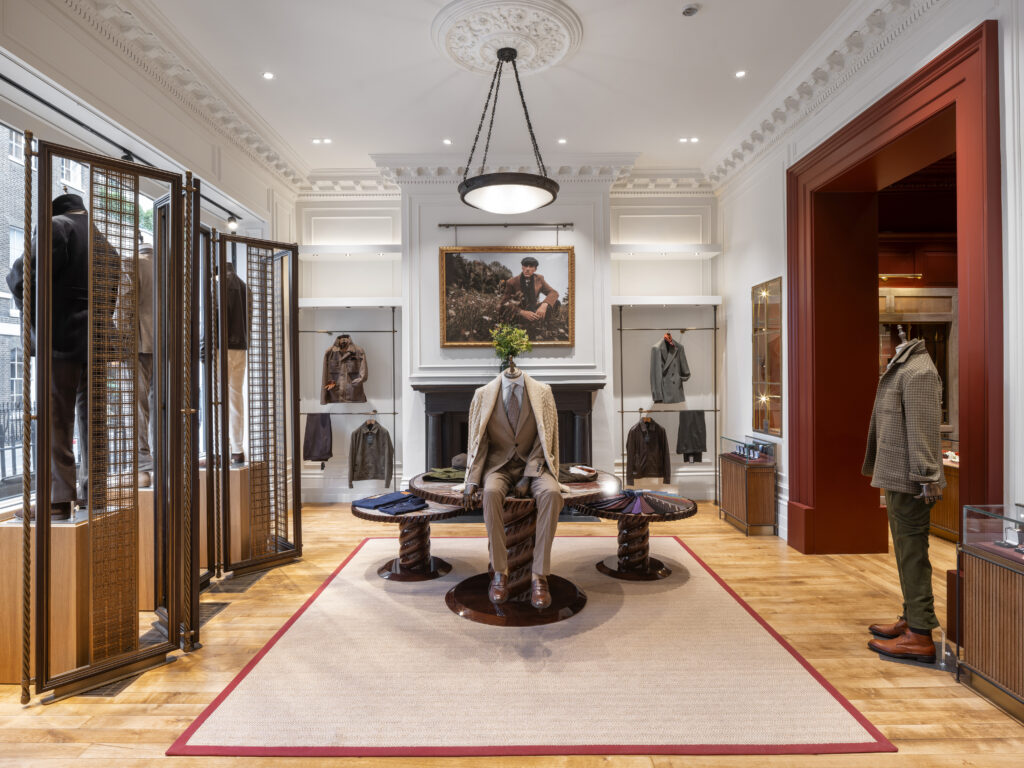
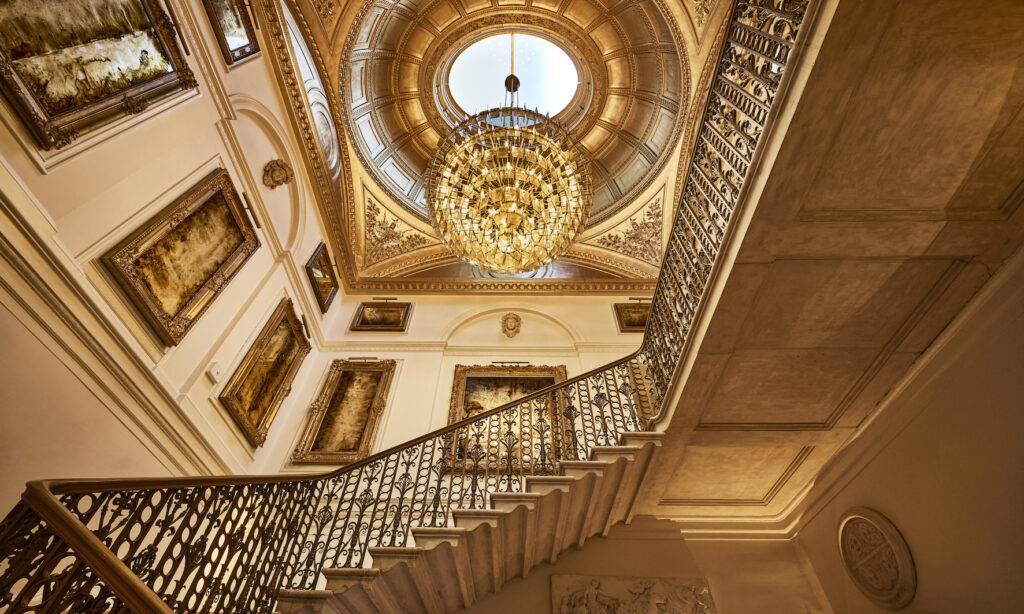
The revamped look at Number 1 Savile Row, meanwhile, follows an extensive refurbishment by London-based interiors mavens Argent Design. The Grade II listed building has been enhanced—think restoration and renovation in delicate interlay—with its original panelling, timber floors and plaster cornices and beading carefully preserved, while the interiors have been given a more contemporary character. Exquisite joinery, edgy (but not too edgy) furniture and display pieces incorporating rope motifs familiar from British naval uniforms combine with premium materials from stone to timber via metalwork and upholstery—all sourced, designed and manufactured in Britain.
An expanded Made-to-Measure department, meanwhile, offers a more generous setting for the modern client, while the historic Robert Gieves Room has been transformed into an archive and exhibition space. Curated with Adam Ellis Studio, this space brings together artwork, imagery and ephemera tracing the house’s evolution from its origins in 1771 to the present day.
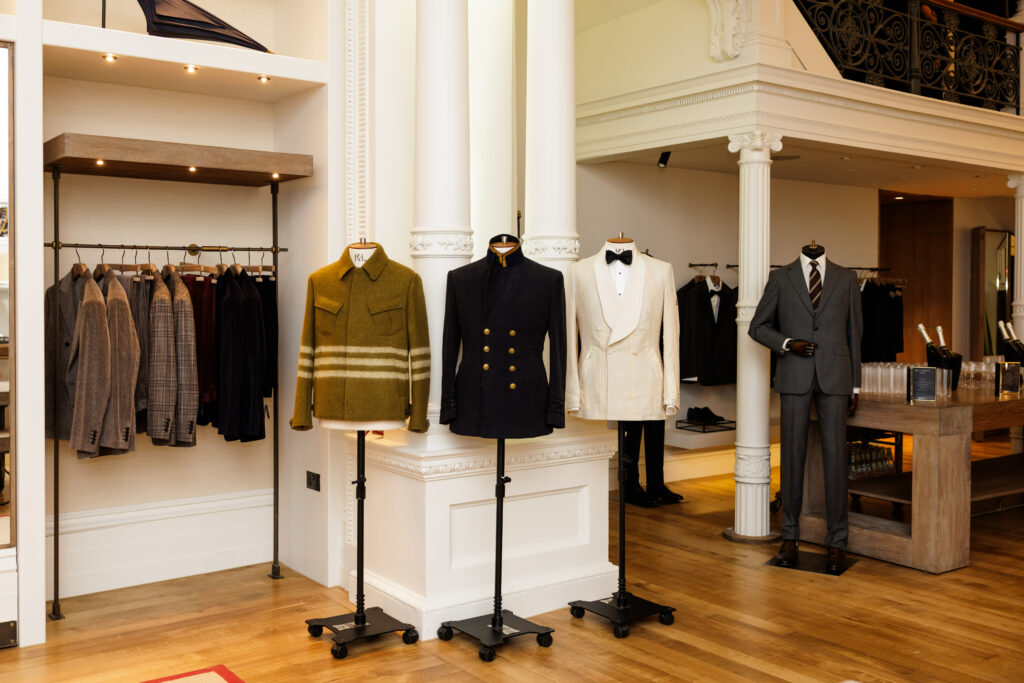
“No. 1 Savile Row has been the home of Gieves & Hawkes for generations, so it was important that this refurbishment felt like an evolution rather than a reinvention,” explains Jason Gerrard, Gieves & Hawkes’ Managing Director. “It celebrates what makes the house distinctive: British craftsmanship, exceptional tailoring and genuine integrity, while recognising our responsibility as custodians to preserve those values for the next generation.”
Indeed, Gieves & Hawkes has dressed sailors, soldiers, statesmen, stars and all sorts of other distinguished gentlemen; it has moved between uniform and civilian life, country and city, ceremony and everyday wear. What other British menswear house can claim such a direct connection with the evolution of the national wardrobe?
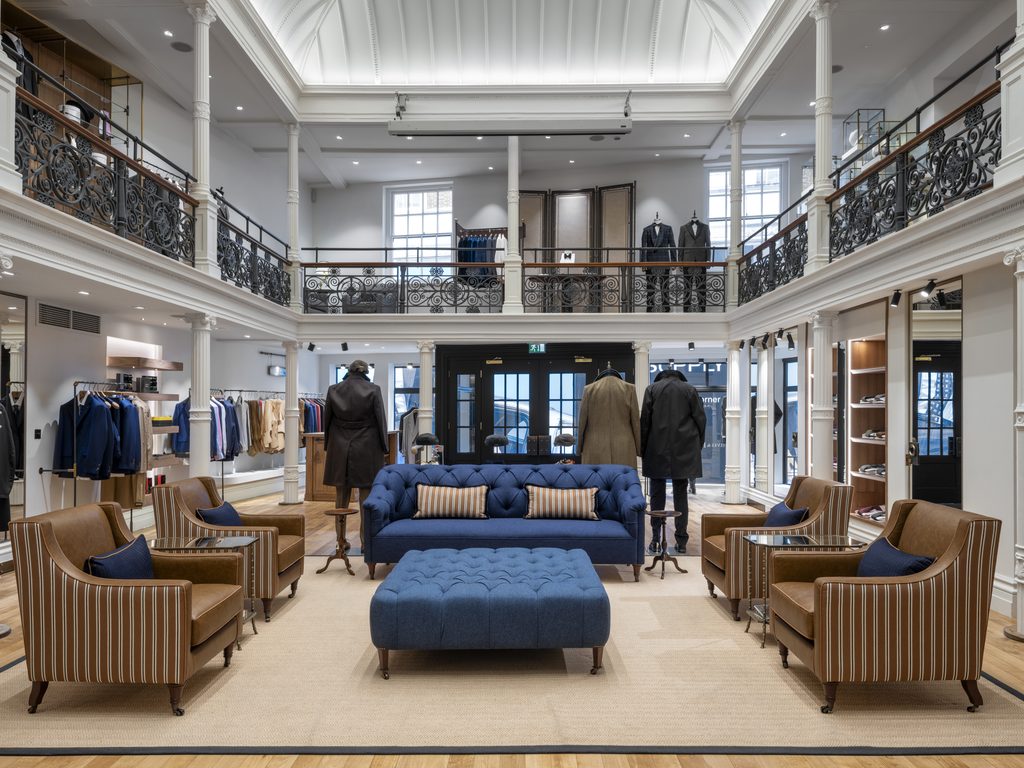
Rarely do heritage—two-and-a-half centuries of it in this case—and modernity sing in such sweet harmony. gievesandhawkes.com
Photography by Joas Souza and Heather Shuker