
At Enrique Olvera’s Polanco landmark restaurant, the spirit of the neighbourhood cantina meets the precision of a two-Michelin-star kitchen.
It takes a brave chef to serve an elegantly presented dish only to then ask you to put it into a tortilla and make a taco out of it. Comfort food is what we all crave, but packaging it from a messy taco Tuesday into a refined dinner takes skills: Pujol has them.
Olvera opened Pujol in 2000, and in the quarter-century since, it has become the address against which modern Mexican cooking measures itself. The current menu, however, draws its inspiration from somewhere far less grand. The house calls the cantina one of Mexico City’s great waiting rooms, a place where you order a beer and the peanuts simply appear, followed by a tostada, a bowl of soup, perhaps a taco, until the table holds far more food than you asked for. Pujol borrows this type of generosity and rhythm, then dresses both for dinner.


The evening begins with a glass of Cielo, a Mexican sparkling wine with the taut, mineral poise of a high-altitude Trentodoc, and a fair indication of how seriously the cellar takes its home soil. Crudités from Mexican orchards follow, and with them the first glimpse of a playful kitchen. Small ingredients do the heavy lifting here: a whisper of dill brightens the guacamole beyond recognition, while bocoles arrive in the guise of blinis, crowned with caviar and sour cream.
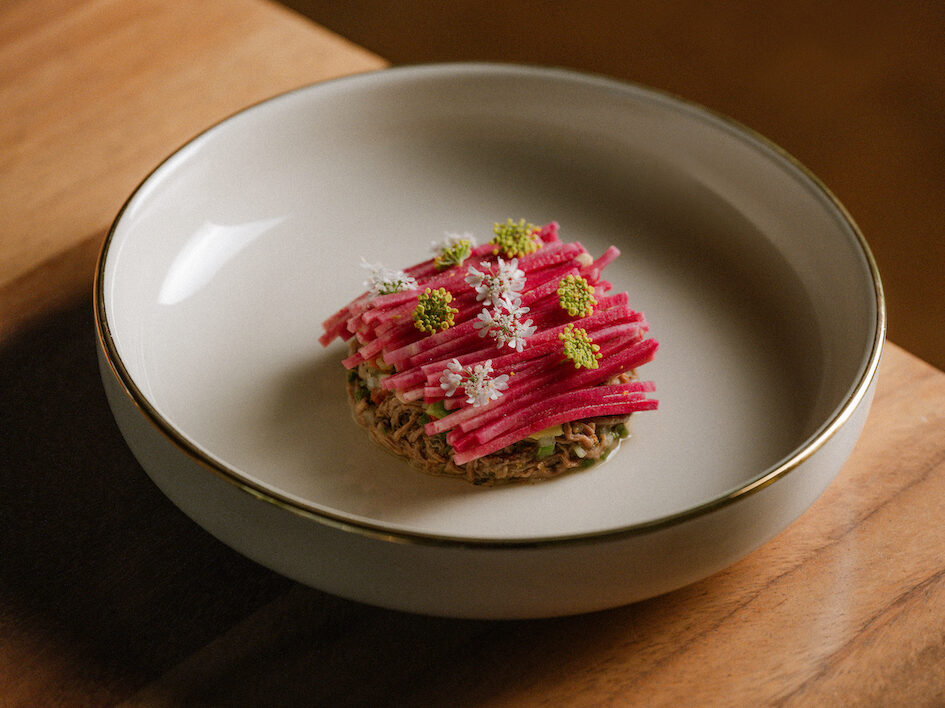
The spicy steak tartare, sharpened with lime, is a riot of flavour, yet it becomes oddly, wonderfully comforting once scooped up with house-made chips. The Russian salad, by contrast, is an exercise in restraint, offering only the most elegant hint of stone crab. The salpicón comes strewn with flowers, as pretty as anything served in Polanco, and the classic tortilla soup is reimagined with lobster medallions, the sweetness of corn meeting the salinity of the sea in a single spoonful.
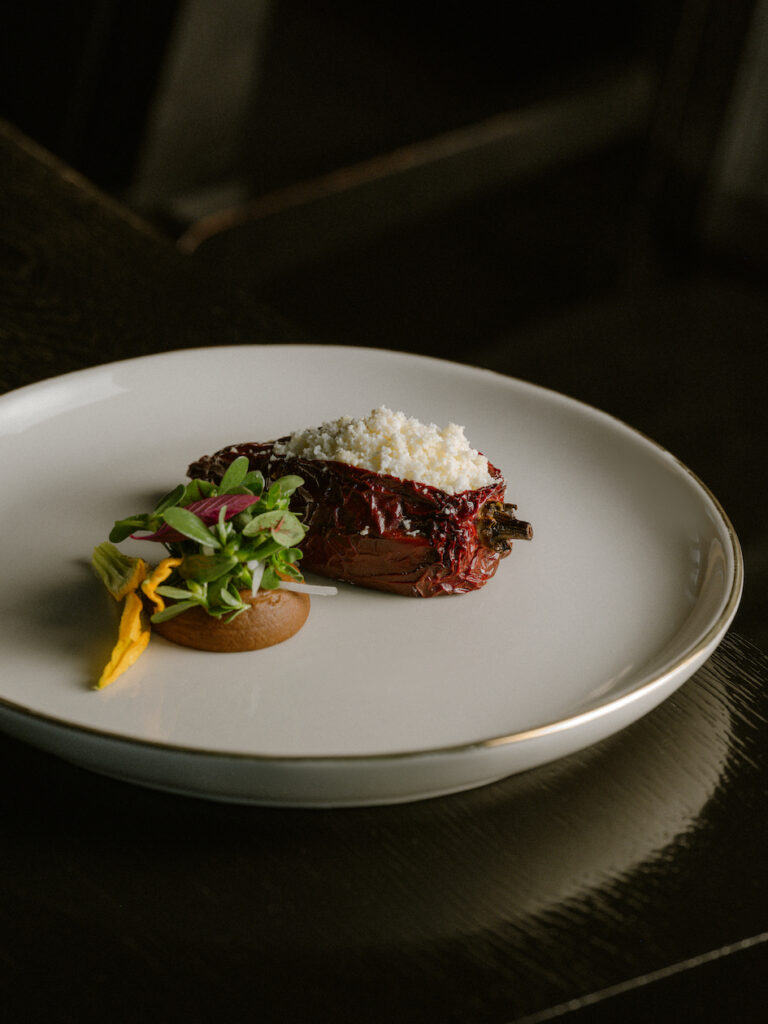
If one dish alone justified the journey, it would be the chile ancho stuffed with squash blossoms and ranchero cheese. Corn, beans and cheese arrive in waves, each layer more articulate than the last. Do not leave without it.
The pork belly chicharrón takes its depth from its own rendered fat, lifted by a vivid salsa verde and a purslane salad, and finds an unexpected partner in a Mexican Chardonnay, a pairing which should prompt any wine lover to revisit their assumptions about the country’s whites. It is one of many such moments in a pairing devoted entirely to the best of Mexican drinking, ranging from wine to beer and mezcal.
Then comes the mole, the dish no visit to Pujol is complete without. Of the roughly 300 versions said to exist, the kitchen presents two from Oaxaca: the celebrated mole madre, an aged mother sauce matured and replenished over years, and mole Xico. Together they are dense, dark and resonant with chocolate, a lesson in how time itself can be an ingredient.
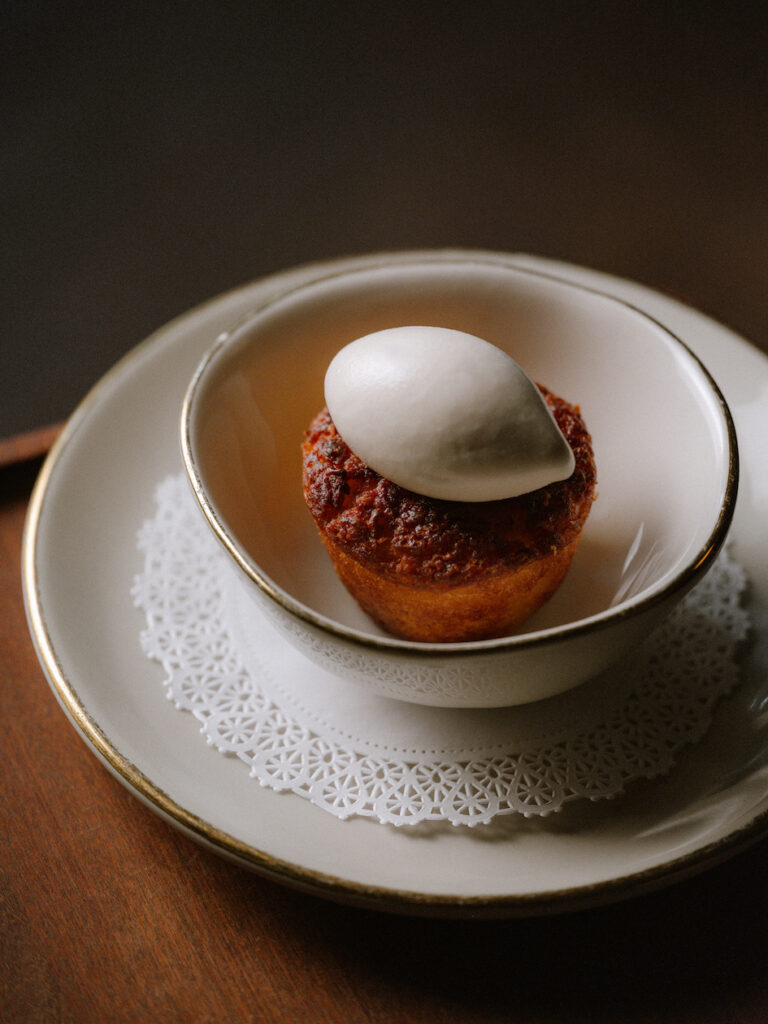
And then dessert, which may well be the finest of its kind. Corn is among the most satisfying of crops to chew, and its natural sweetness makes it a near-perfect foundation for a pudding. Paired with cajeta ice cream, the burnished goat’s-milk caramel of central Mexico, it is quietly, completely irresistible.
For all its accolades, Pujol never shouts. It is simple and classy, drawn from the extraordinary richness of the Mexican kitchen, and focused, above all, on flavour. Over the years, Olvera has made it a world-class institution and a true landmark of the city, and as a diner it is difficult to ask for anything more: a rich gastronomic heritage, the easy relaxation of comfort food, and an explosion of taste only the very finest masters can deliver. Like the best cantinas, it is the place you want to be, tortilla in hand, an unpretentious local pour at your elbow, in very good company.