In a 3.8‑hectare vineyard in Pirque, a Franco‑Chilean composer is quietly making Piedra Sagrada: an ungrafted, massal‑selection Cabernet from a tiny Maipo hillside, kept secret for seven vintages before the 2016 was hailed as a new global benchmark and, in Le Figaro, as “the Chilean wine gem the whole world wants to taste”.
On the table in front of us in Marco Perez’s apartment in Santiago, the line‑up looked orthodox enough: seven vintages of a small‑production Cabernet Sauvignon from Pirque in Maipo, the cradle of the grape in Chile. In the glass, the wines did something very different. One – the 2016 – in particular seemed determined to pretend it was not Cabernet at all: translucent colour, a perfume more often associated with Barolo or old Burgundy, tannins as fine as cocoa powder and an almost endless, dancing finish. Served blind to a room of sommeliers, you could call it Grand Cru Burgundy and few would challenge you.
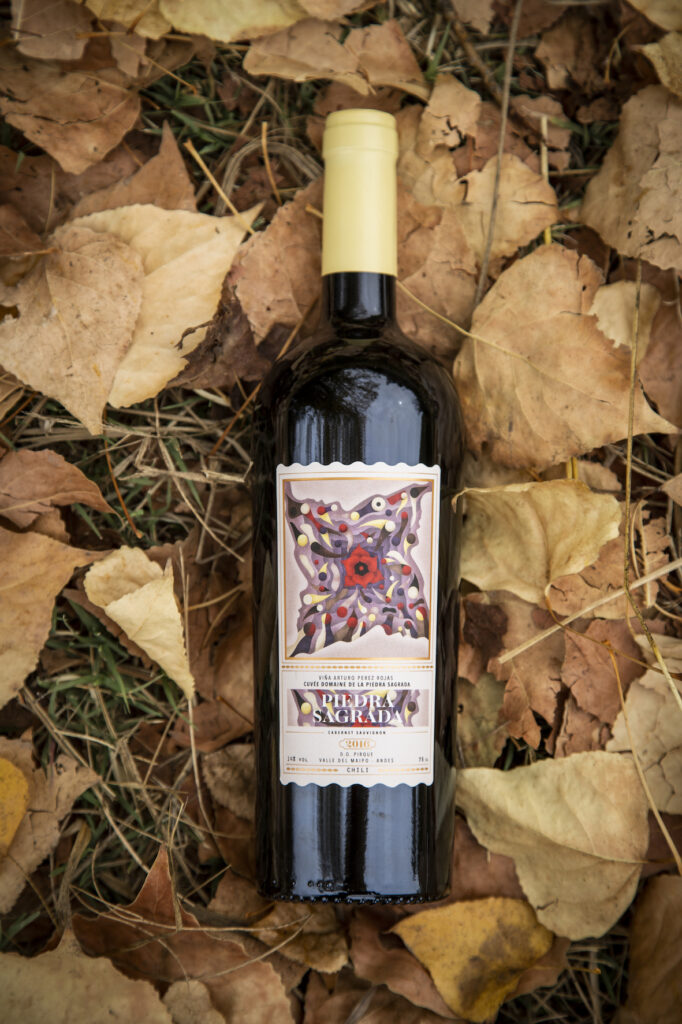
The irony is that 2016 is the vintage that has thrust Piedra Sagrada into the international spotlight as a benchmark for Cabernet Sauvignon – named one of Decanter’s Wines of the Year 2025 with 98 points and described as “a wine of incredible character and poise that offers an unexpected, superb rendition of Cabernet Sauvignon, truly communicating the uniqueness of the Piedra Sagrada terroir”. Jancis Robinson had already given the estate’s debut 2014 vintage 18/20 when it was still not commercially available.


Today, Piedra Sagrada is presented, quite accurately, under the tagline “Chile, like never before”: a 3.8‑hectare, family‑run, ungrafted Cabernet estate in Pirque producing just 3,000–8,000 bottles a year, now cited alongside some of the world’s most significant original‑rootstock vineyards. The paradox at the heart of this hillside is simple enough to state and exceptionally difficult to achieve: this is a 100% Cabernet Sauvignon that defies Cabernet convention, insisting on tasting first and foremost of the place it comes from.
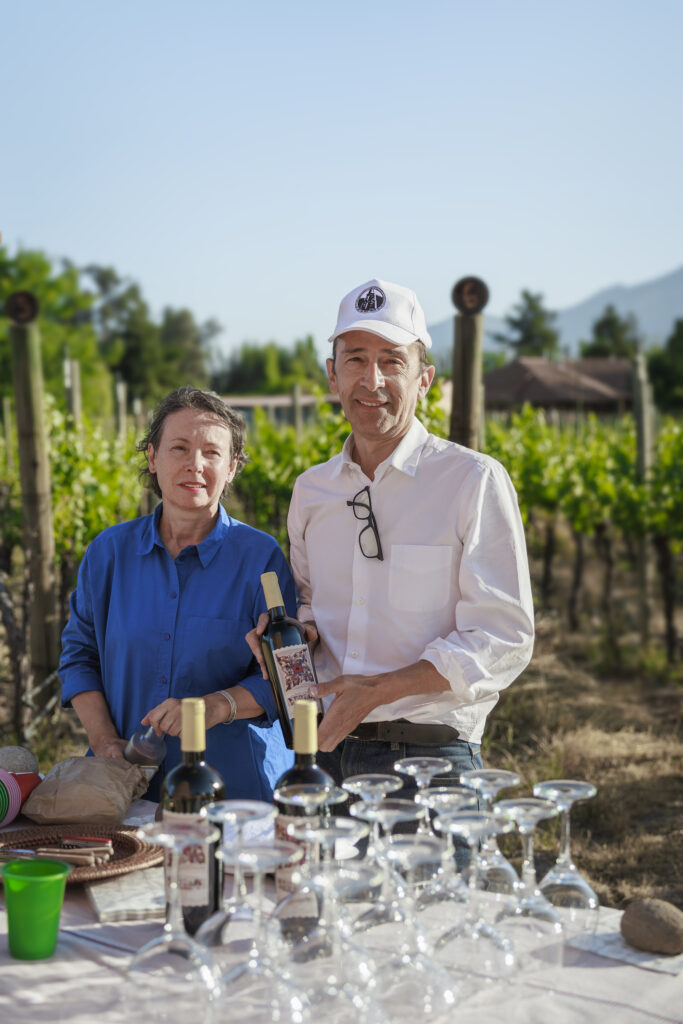
The inheritance
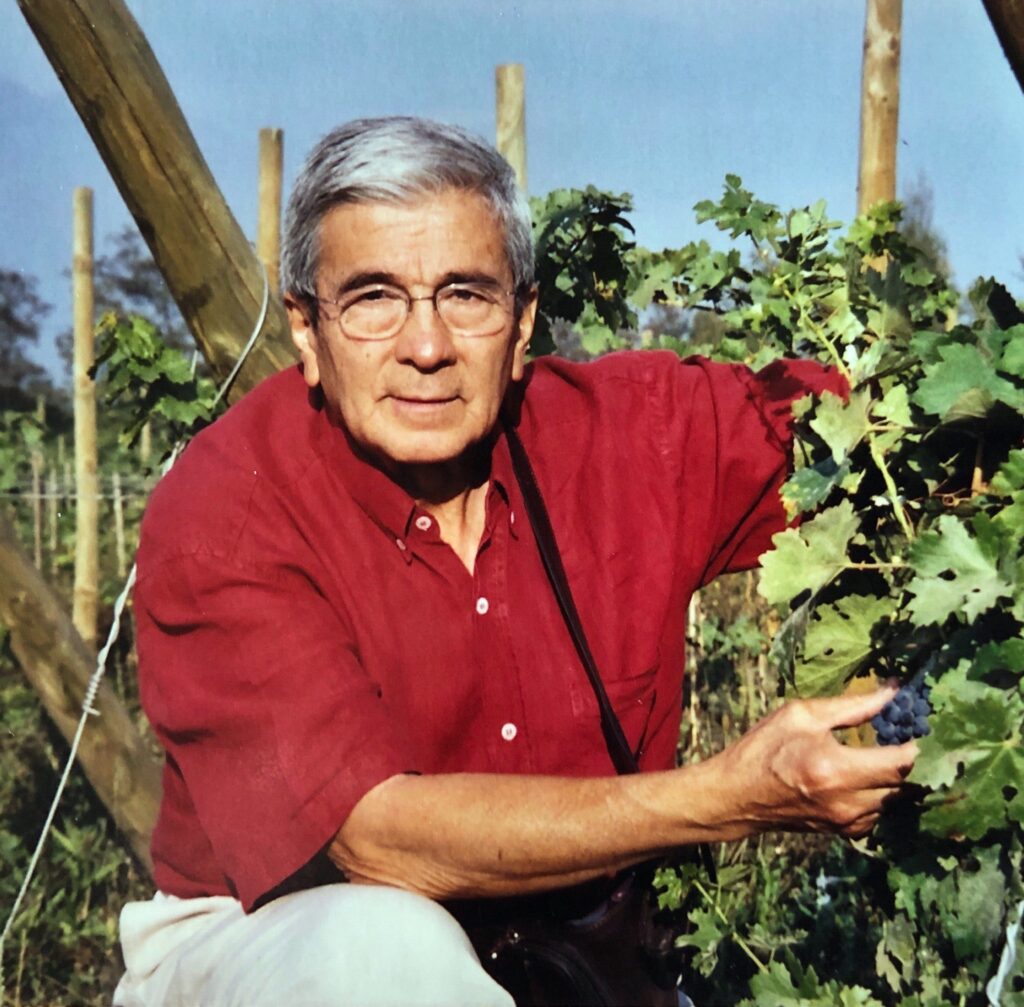
Piedra Sagrada is, in the most literal sense, a wine of inheritance. The vineyard was planted in the early 2000s by the late Arturo Pérez Rojas, a Chilean agricultural engineer, oenologist and economist who served as Secretary of State for Viticulture during Salvador Allende’s reformist government from 1970 to 1973. His brief was to shift Chilean wine from anonymous bulk to bottled quality; he was convinced that Chile could become one of the world’s great fine‑wine regions.
After the 1973 coup that killed Allende and left Pablo Neruda dead twelve days later, the danger for those close to the government was real. Arturo left for France, actively wanted there by the wine establishment, but the effect was the same as exile: a man who believed he could help transform Chilean wine into one of the world’s finest expressions of terroir found himself building a new life in Europe instead.
He spent almost four decades there, becoming not just a Chilean oenologist abroad but a fully qualified French oenologist and agronomist. Marco, his youngest son, describes this as “a double wine culture”: Chilean by birth and instinct, French by training and daily practice. In a 1973 letter to Pérez Rojas, Neruda wrote that “vines and wine are one of the vital centres of Chile… in your initiative I see this territorial blessing, its cultivation, its work, its art and its science”. Piedra Sagrada reads, now, like the delayed fulfilment of that blessing.
Planting in Pirque
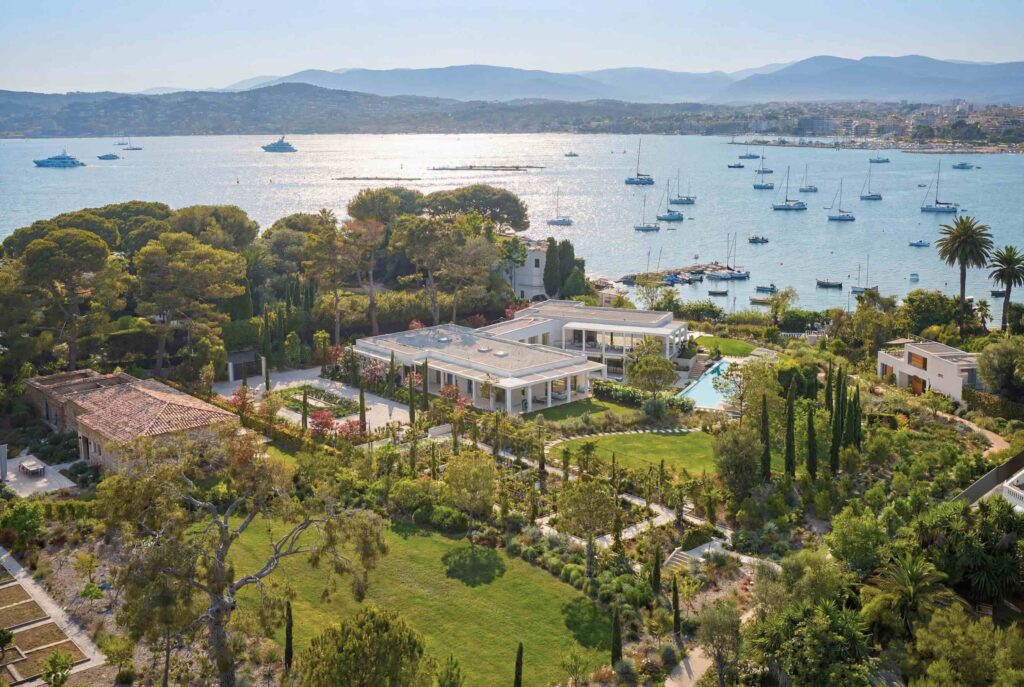
With the turn of the millennium approaching, Arturo’s sister‑in‑law offered the family the chance to buy a modest 4.5‑hectare plot in Pirque, about 50km south of Santiago. Arturo arrived imagining a house. Instead, he saw a vineyard.
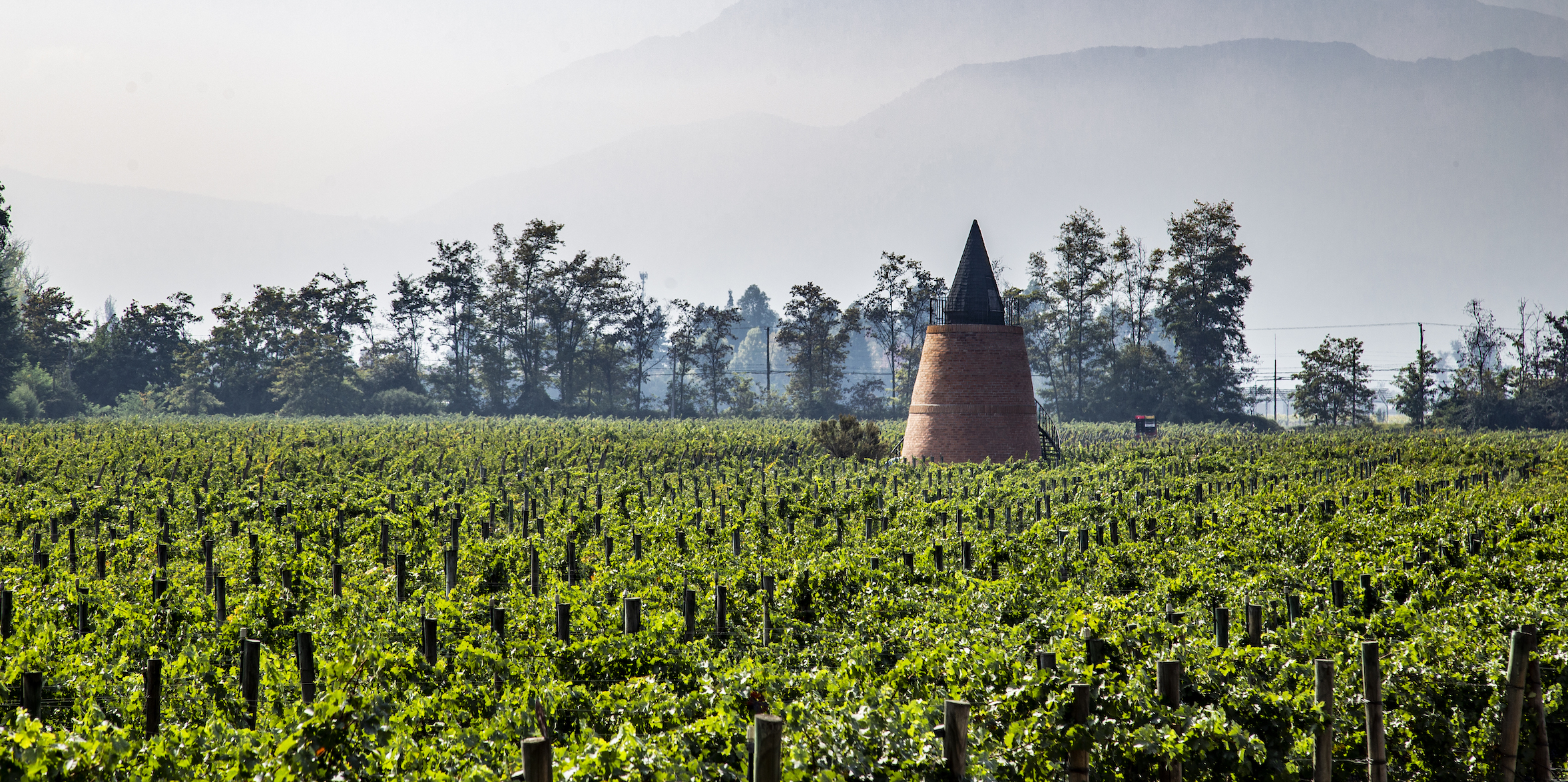
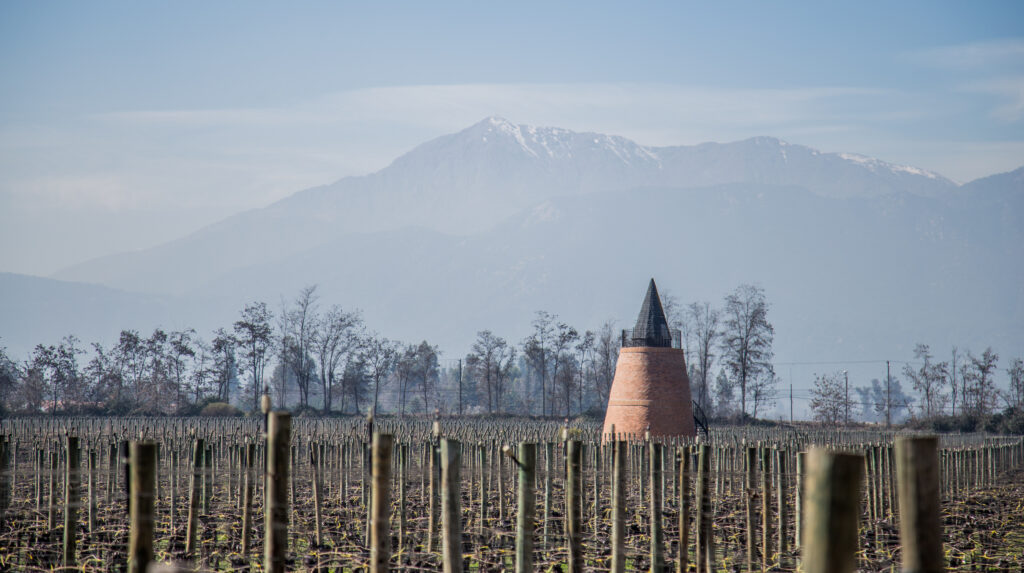
The 3.8 hectares he ultimately planted sit on what geologists identify as the oldest of four glacial terraces, parallel to the Andes at around 650 metres, with a thin, poor topsoil of silt over rounded glacial stones, veins of clay and pockets of iron. He drilled a deep well so that irrigation would draw from the same underground river that runs beneath the site, installed frost‑control sprinklers long before climate change made such measures fashionable, and settled on a high‑density, massal selection of Cabernet Sauvignon planted on its own roots.
The sacred stone
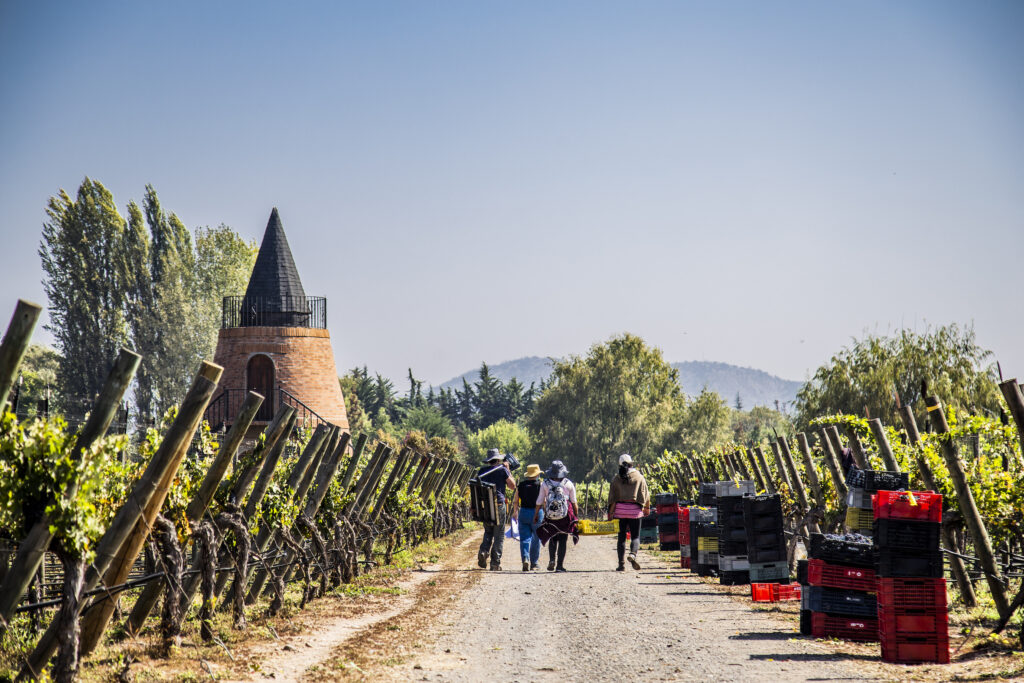
While building a small symbolic tower in the middle of the vineyard – a nod to the Bordeaux landscape that had sheltered him – workers unearthed a boulder bearing what looks like an ancient face‑like carving. The family now believes it to be a piedra tacita: a sacred stone used by pre‑Columbian peoples as an altar for ancestral rites. Its presence gave the vineyard its name, Piedra Sagrada.
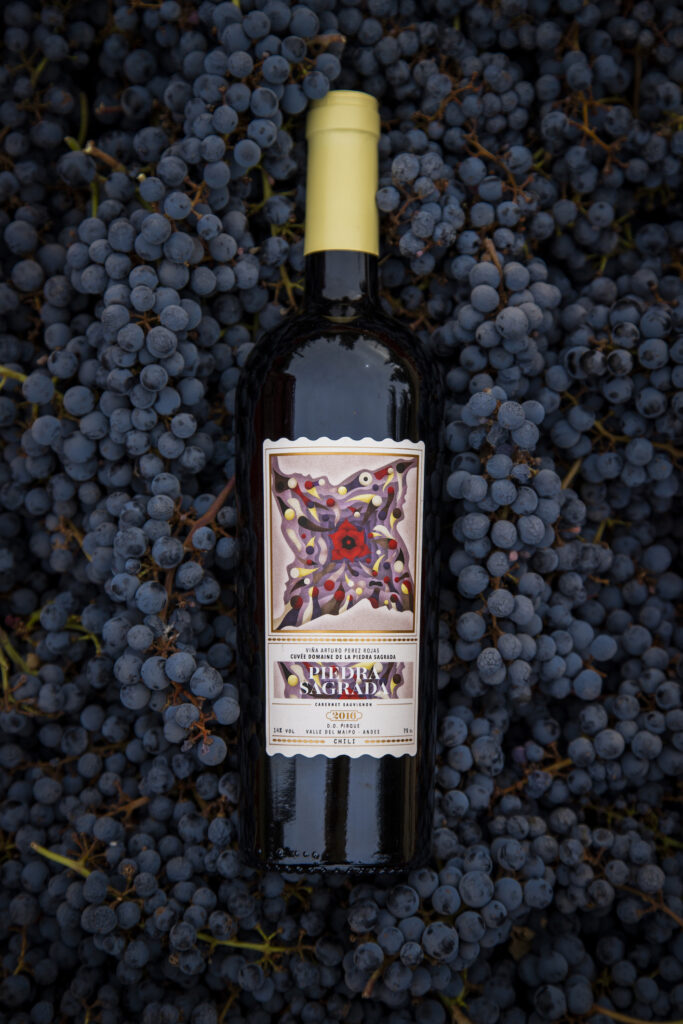
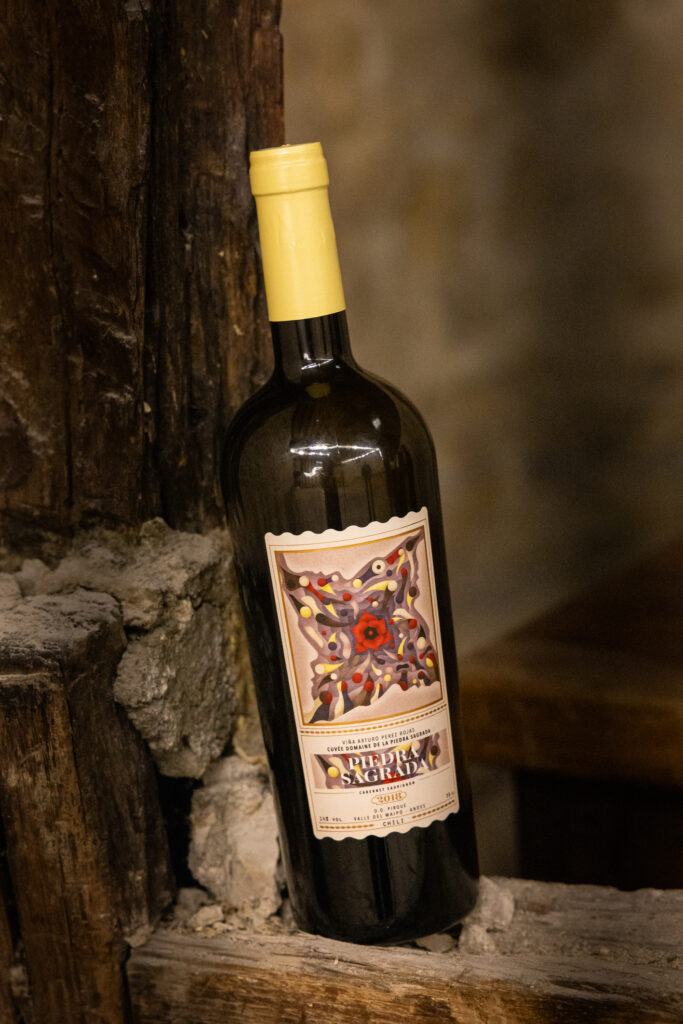
The sense of return runs through the label as well as the land. The white band that wraps around each bottle carries Arturo’s profile, gazing towards a stylised cut‑out of the Chilean coastline – the country he left in 1973 and spent a lifetime trying to serve from afar. It is a simple piece of design, but it turns every bottle into a small act of restitution: the son bottling the wine the father never lived to make.
Arturo’s first harvest was in 2005, but for nearly a decade the fruit went into other cellars, including for a time Concha y Toro. Those were years of learning and fine‑tuning. The vineyard was subdivided into seven plots according to vine behaviour and fruit profile, reinforcing Arturo’s conviction that this unassuming hillside possessed singular potential. He died in 2013, two weeks before what would become Piedra Sagrada’s first vintage.
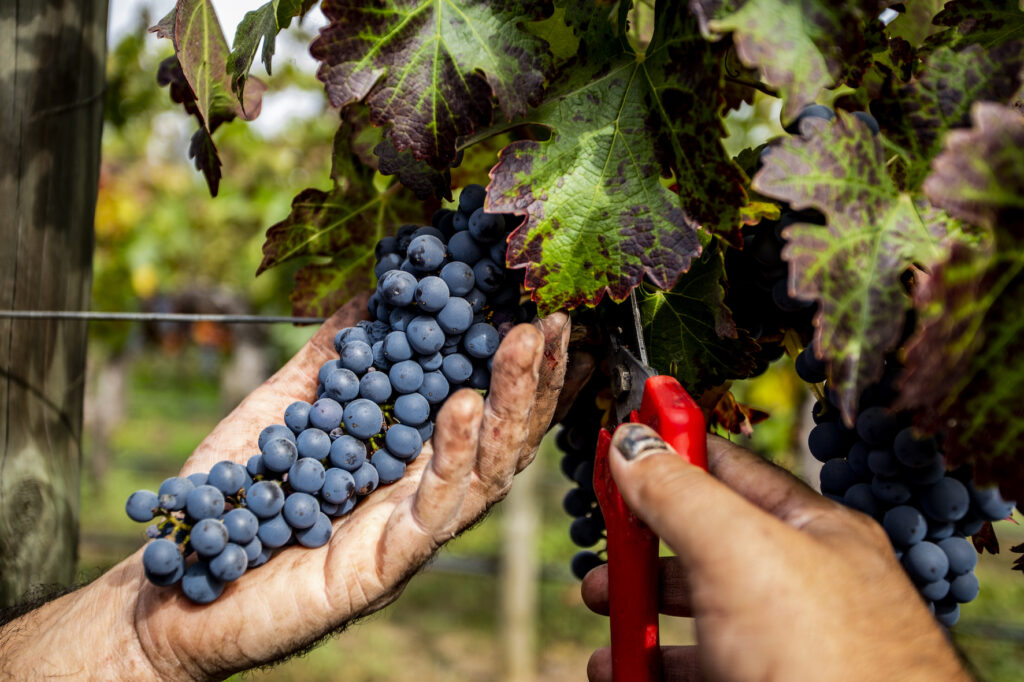
The composer who came home
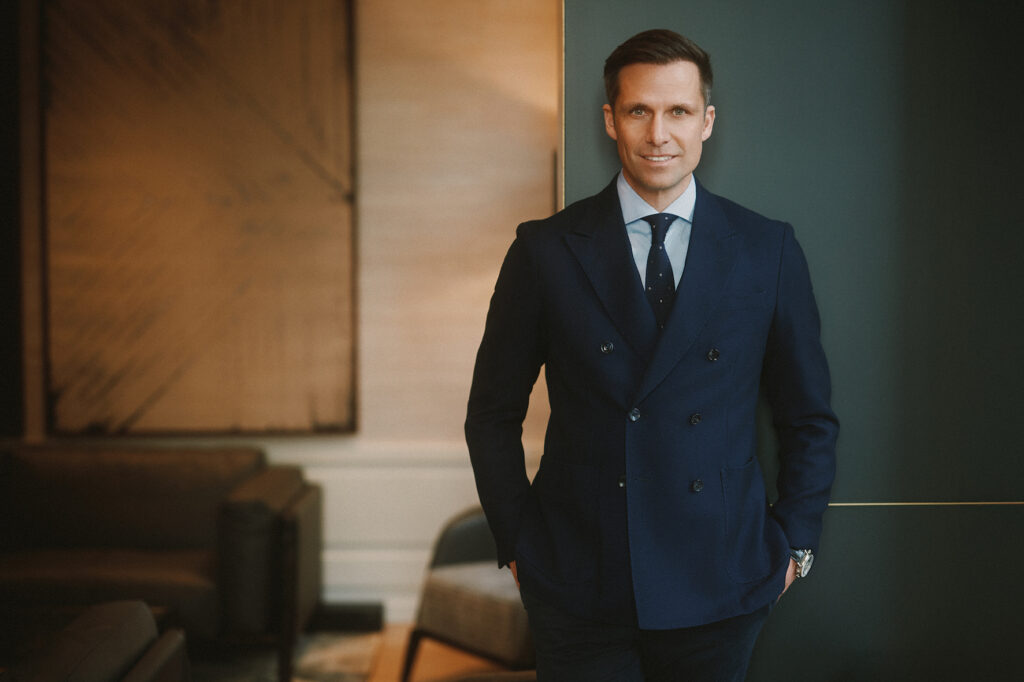
His children – Arturo and Lorena, ER physicians in Switzerland; Marcela, an architect; and Marco, a classical composer and former orchestra manager – suddenly found themselves owners of a vineyard they barely knew. Marco, the youngest, had perhaps the least obvious profile for a vigneron on paper and the most appropriate one in practice.
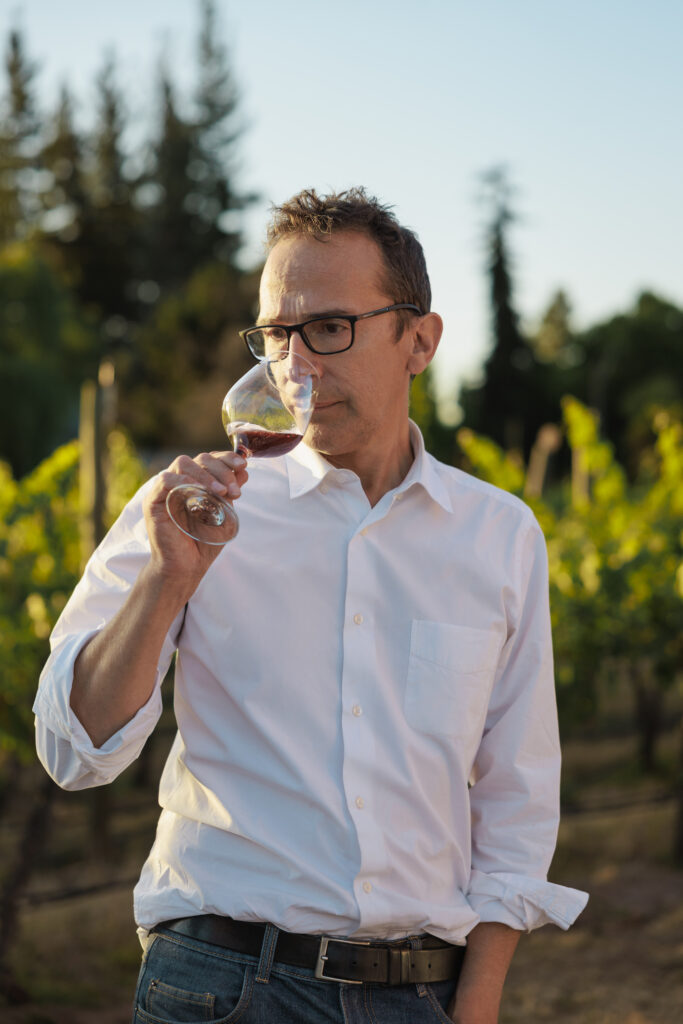
Born in Chile but raised and educated in France, he studied mathematics and contemporary composition in Paris, worked at institutions such as IRCAM and ran orchestras and festivals from Montpellier to Biel‑Solothurn. His orchestral works, including Edades Ciegas, Atacama and Piedras Ancestrales, are performed in major concert halls. When the siblings arrived in Pirque after their father’s death, the first people to greet them were not neighbours but “friends” offering to buy the small, “unproductive” vineyard at a knock‑down price. “That made me furious,” Marco says. “We didn’t sell. And we decided to make wine.”
Verdier’s role
The problem was that none of the siblings had ever worked a vine. Arturo had taught them to taste – and to believe that Chile had enormous potential but did not yet know how to use it – but never to prune or pump over. Marco turned to Éric Verdier, a French consultant with a reputation for a forensic palate and a long friendship with Arturo.
“I was lost,” Marco recalls. “Éric told me: ‘Walk the vineyard.’” Verdier agreed to consult without ever setting foot in Pirque, relying instead on samples and his ability, as Marco puts it, to “understand everything” from the glass.
From 2014 to 2021, the family produced wine in complete secrecy, refusing to commercialise a single bottle. “For seven years, we made wine without selling it,” Marco says. “We just had people taste it blind.” The aim was not a launch but an understanding: of the land, the vines and what exactly Arturo had seen in this steep little corner of Pirque.
The vineyard as orchestra
Up to 2022, Marco led a double life, splitting his time between his work in European orchestras and the vineyard. “At some point I started mixing up my emails,” he laughs. “I had to give up conducting and Switzerland, but I continue to compose.” Life in the vines, he insists, is not so far from life at the desk: “I write one bar, then another… It’s the same in the vineyard, with the same sensations.”
If his CV looks unusual for a vigneron, his way of talking about vines makes the connection clear. The ungrafted Cabernet is all massal selection, not clonal; more than 25,000 vines, each subtly different. “Our vineyard is like an orchestra,” he says. “Each vine is a different instrument.”
Seven micro‑plots
The score they are playing is written deep in the ground. Piedra Sagrada sits on the highest and oldest of four glacial terraces, with a thin skin of silt over rounded stones, clay and iron. Drainage and oxygenation are excellent, encouraging roots to push deep rather than linger near the surface.
Within the 3.8 hectares, the vineyard is divided into seven micro‑plots. In plots one to five, the soils are classic Maipo: stony and well drained, with the main difference being how close the bolones sit to the surface. The shallower stones radiate warmth and hurry the fruit along; the deeper they lie, the slower and cooler the ripening. These parcels, as Marco puts it, “give the skeleton” – the structure and tannin – to the final blend.
The cold hole
Plots six and seven are different. Here the soil is sandier and richer in iron, the stones lie deeper, and an underground river runs eight metres below, carrying meltwater from the Andes. Irrigation is barely needed. The vines are more vigorous, the grapes ripen two to three weeks later, and much of the wine’s lift and perfume comes from these rows.
That same river creates Piedra Sagrada’s biggest threat. Cold air pooling above it, combined with a slight dip in the ground, turns plots six and seven into what a meteorologist called a “trou à froid” – a cold hole where temperatures are around 5°C lower than in the rest of the vineyard. Frost is an almost year‑round possibility, which makes Arturo’s decision to install overhead sprinklers on such a small property look prescient. Add in April harvest days that can begin close to freezing and end near 40°C, and you begin to understand both the freshness of the wines and the fragility of the project. Production can swing between 3,000 and 10,000 bottles, with yields often below 22 hl/ha.
A cellar in flux
For the last two years Piedra Sagrada has been vinified and aged in the cellar of the family’s consulting oenologist, Álvaro Reyes, in Curicó – a two‑hour drive south of Santiago. The set‑up is compact but well equipped; what troubles Marco is distance, not equipment. “We are nervous,” he admits. “We sleep badly when the wine is far away and not entirely under our control.”
He and his wife Laurence travel with the grapes, staying on site through harvest and fermentation, tasting constantly and supervising every gentle pump‑over. The house style borrows its frame from classic Médoc. Each of the seven plots is vinified separately with native yeasts in small stainless‑steel vats, then aged in French oak, with everything done as gently as possible – no added enzymes or nutrients, no heavy extraction, no filtration, and just a single restrained pump‑over per day.
The unfinished winery
The long‑term plan is to bring everything home. Before he died, Arturo had begun digging a gravity‑flow cellar directly under the vines in Pirque; around 900 square metres of underground space are already there. The project is on hold while the family prioritises the vineyard, but the vision is clear: a multi‑level, pump‑free winery where grapes arrive by hand, ferment in small tanks and run by gravity into barrel and bottle without ever leaving the land that grew them.
The vine material is as singular as the provisional cellar. All the Cabernet is ungrafted and massal‑selection; the family is now working with the University of Talca to propagate its own plant material from existing vines, since the original nursery source is no longer known. It is a resolutely analog approach in a country where modern viticulture tends to favour clonal homogeneity.
Recognition abroad
Unsurprisingly, the estate’s stance on original‑rootstock vines has not gone unnoticed in Europe. Piedra Sagrada was singled out in the 2026 UK edition of The Compendium, in a feature on “The Return of the Ungrafted Vine”, as foremost among Chilean estates capitalising on their pre‑phylloxera heritage; its 2017 was praised as “a brilliant varietal Cabernet Sauvignon… graceful, polished and refined, with sculpted tannins, Pinot Noir‑like grace”.
The estate is also now part of Francs de Pied, the association for ungrafted vineyards created in 2022 by Loïc Pasquet of Liber Pater, which already counts more than 350 members and has launched a candidacy to have ungrafted vine culture recognised as UNESCO Intangible Cultural Heritage. Piedra Sagrada’s 2018 will be poured at the group’s gala dinner in Monaco – a small but telling sign that the 3.8 hectares in Pirque are seen by this fraternity as a peer, not a curiosity.
Tasting through the vertical, there is a recurring sense of intensity and definition that recalls other great wines from own‑rooted vines: slightly heightened concentration and a very direct sense of site, without excess weight. In 2016 and 2022 in particular, that combination of power and transparency is unmistakable.
The second father
Verdier’s influence runs quietly through all of this. In the 1980s he famously detected an off‑note across a swathe of top Bordeaux wines, later traced to varnish molecules from freshly treated cellar walls – an episode that earned him both respect and a few closed doors. At Ausone, proprietor Alain Vauthier once told Marco that, in his view, there were three key figures in Bordeaux thirty years ago: Robert Parker, Michel Rolland and Éric Verdier. “Parker was the genius of classification, Rolland the genius of blending,” Vauthier said. “Éric was the mystery.”
At Piedra Sagrada, Verdier has become, in Marco’s words, “the second father of the project”: the one who pushed the family to make wine at all, insisted they bottle under their own label, and still helps him understand, from a distance, what this particular hillside wants to say each year.
The secret vintages
Our tasting in Santiago was the first time Marco had ever lined up every vintage from 2014 onwards in one place: a complete vertical of the estate’s history, from the debut year through to the most recent wines in bottle.
The first vintage, 2014, is the wine that convinced them to keep going: poised, finely stitched, with a cool dark core, polished tannins and a quiet, graphite‑like finish. 2015 is marginally warmer and broader, with redder fruit and the same powdery tannin line.
The paradox of 2016
2016 is different. It was a difficult year in the region – rain, awkward picking windows, low yields – and yet here the vineyard produced something almost weightless. In the glass, the wine is paler than its siblings; on the nose, it leans towards cherry, raspberry and blood orange, with lifted floral and herbal notes. On the palate, it hovers rather than sits. The tannins are extremely fine, almost powdery, and a cool mineral line draws the flavours into a long, precise finish.
In blind tastings, experienced tasters have called it Pinot Noir, Barolo, even mature Bordeaux, but never Cabernet. This is where the Piedra Sagrada paradox becomes clearest: a 100% Cabernet that, in its best years, “pinotes” – behaving like Pinot Noir in texture and transparency, without ever losing its identity.
The later wines
2017 and 2018 show the range of the site in less dramatic conditions. 2017 opens with dark berries and dried Mediterranean herbs, plus a faint medicinal note over discreet oak; the palate is supple, ripe and cool on the finish. 2018 feels straighter and more classical, with redder fruit, tobacco and spice – often the vintage that most reassures drinkers coming from Bordeaux or Napa.
Two years – 2019 and 2020 – do not exist in bottle. In 2019, Marco was not satisfied with the quality and sold the grapes; in 2020, Covid travel restrictions and the family’s inability to be physically present in Curicó led them, again, to sell rather than vinify.
The currently unreleased 2021 and 2022 suggest that the story is still only beginning. 2021 has a deeper robe and a more architectural feel. 2022, which Marco cites as one of the wines he would most like to show as a pure expression of the estate, somehow marries 15% alcohol with a strikingly vertical, refreshing line of acidity and tannin. Alongside 2016, it was the other standout of the vertical.
Who gets to drink it?
In February this year, Le Figaro described Piedra Sagrada as “the Chilean wine gem the whole world wants to taste”. The effect, Marco says, was immediate: the next day he opened his inbox to find around fifty emails from collectors around the world asking how they could secure bottles.
Piedra Sagrada is, by design and by necessity, a rare wine. Depending on frost and selection, the family produces between roughly 3,000 and 10,000 bottles a year, with current pricing around €150 in Europe and considerably more in Brazil. Chile is not the primary market. Europe and Brazil take the majority of allocations, and in Europe the family handles import and distribution itself, selling directly to private clients, collectors and a short list of restaurants.
Against speculation
The surge in attention also forced the family to confront an uncomfortable fact: bottles had begun appearing in auctions in Shanghai and Tokyo, traded like shares rather than opened at table. In response, Marco instituted a waiting‑list system via the estate’s website. Potential buyers sign up; he decides personally who to sell to, and in what quantity. Purchases are capped at twelve bottles per person. “We want to avoid speculation,” he explains. “We want the bottles to go to those who support us, not to speculators.”
“Not everyone will drink Piedra Sagrada,” he says, without arrogance. “Not because of the price, but because there are so few bottles. We want them to go to people who will take the time.”
Emotion, not competition
It would be easy, confronted with this much back‑story, to over‑romanticise Piedra Sagrada. The facts are compelling enough without embellishment: a father who spent his life promoting other people’s wines and never made his own; a small, frost‑prone vineyard on a glacial terrace in Pirque planted with ungrafted Cabernet; a son who leaves a career in European classical music to tend it; a consultant who once brought Bordeaux to its knees over varnished cellar walls; seven secret vintages made in silence and then, suddenly, headlines calling it the wine the world wants to taste. The whole story can feel, at times, as if it had been scripted rather than lived. For anyone who has read or watched Drops of God, the parallels are hard to miss: a father who spends his life championing other people’s wines yet never makes his own; children scattered abroad who inherit not just a cellar but a philosophical quest; and, in Verdier, a kind of real‑world counterpart to the manga’s larger‑than‑life master tasters – a figure who appears rarely, says little, but quietly shapes everything.
What keeps the story grounded, in the glass and in conversation, is the way Marco talks about what he is trying to achieve. He is not particularly interested in scores, league tables or stylistic comparisons. He quotes Béla Bartók approvingly – “competitions are for horses and cyclists” – and adds, simply, “I distrust scores”. The measure of success, for him, is whether a bottle of Piedra Sagrada moves you in the same way that a great performance of Beethoven might: a moment of intensity that puts time on hold.
In the middle of the vineyard, the ancient piedra tacita Arturo unearthed still sits where it was found, a carved basin whose original purpose nobody can definitively explain. Around it, ungrafted vines from the early 2000s sink their roots ever deeper into the fourth terrace of a glacial fan. Above them, for now, the winery is two hours away in Curicó; one day, if fortune permits, the gravity‑flow cellar Arturo imagined will finally be completed under their feet.
In a wine world that still tends to measure Cabernet Sauvignon against Bordeaux or Napa, Piedra Sagrada offers something rarer: a tiny, fiercely independent, family‑run vineyard in Pirque where a composer, an unfinished cellar and a sacred stone have conspired to create a wine that insists on being judged not by what it is supposed to be, but by what it makes you feel – a wine of return, exile and homecoming made tangible in the glass.
Lewis Chester DipWSET is a London-based wine & rare spirit collector and writer, member of the Académie du Champagne and Chevaliers du Tastevin, co-founder of Liquid Icons and the founder of the Golden Vines® Awards. He is also Honorary President and Head of Fundraising at the Gérard Basset Foundation, which funds diversity & inclusivity education programmes globally in the wine, spirits & hospitality sectors. The Golden Vines® 2026 will take place in London, UK between 6-8 November 2026, recognising the world’s best fine wine estates as voted by hundreds of fine wine professionals. Please register your interest for tickets on the website: liquidicons.com/work/golden-vines-awards.