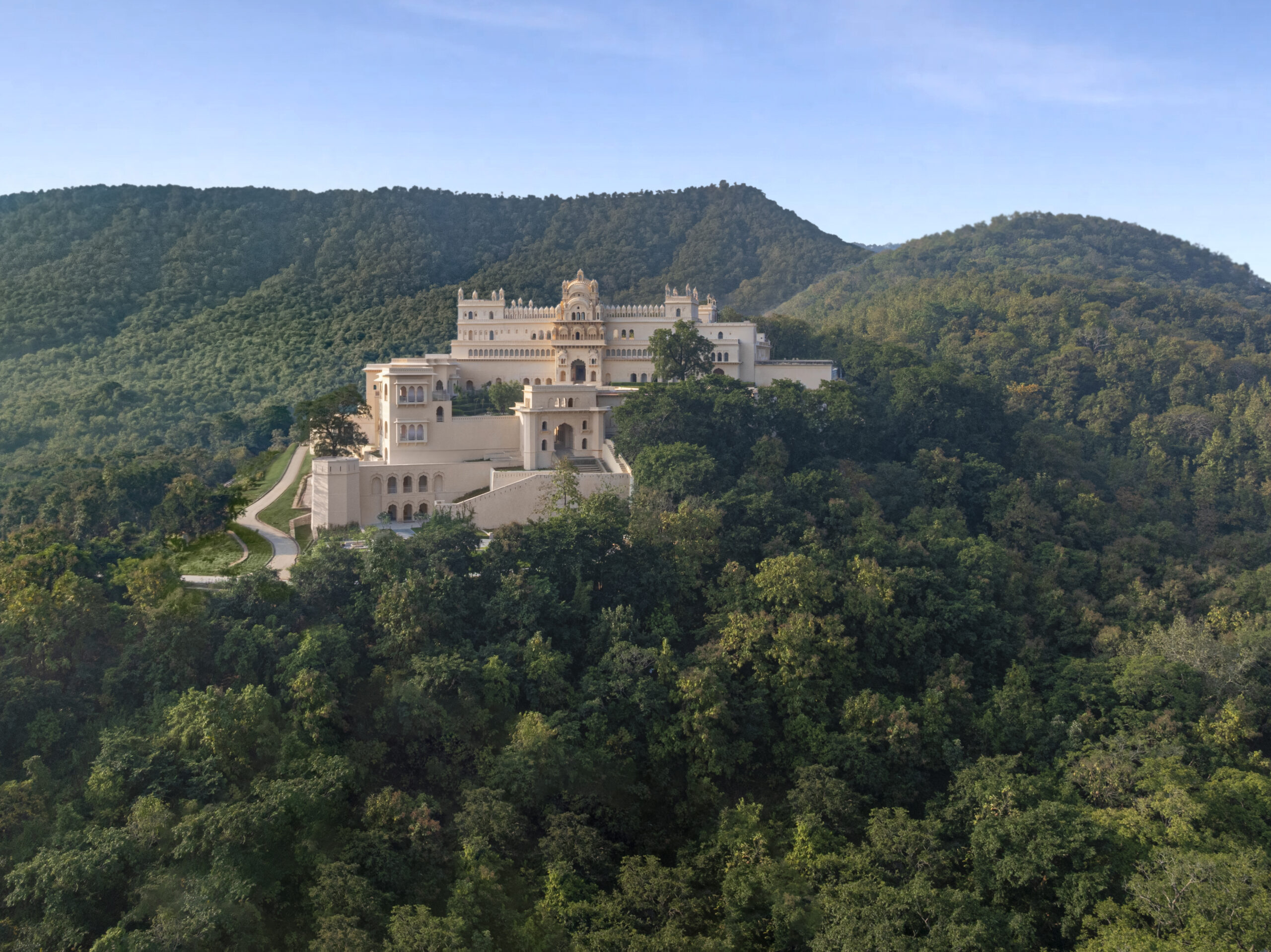
A magnificently restored, 350-year-old fort-palace provides a regal base from which to explore the wilderness of Panna National Park.
An Indian tiger safari experience throws up a compelling philosophical question: what exactly constitutes a successful safari excursion?
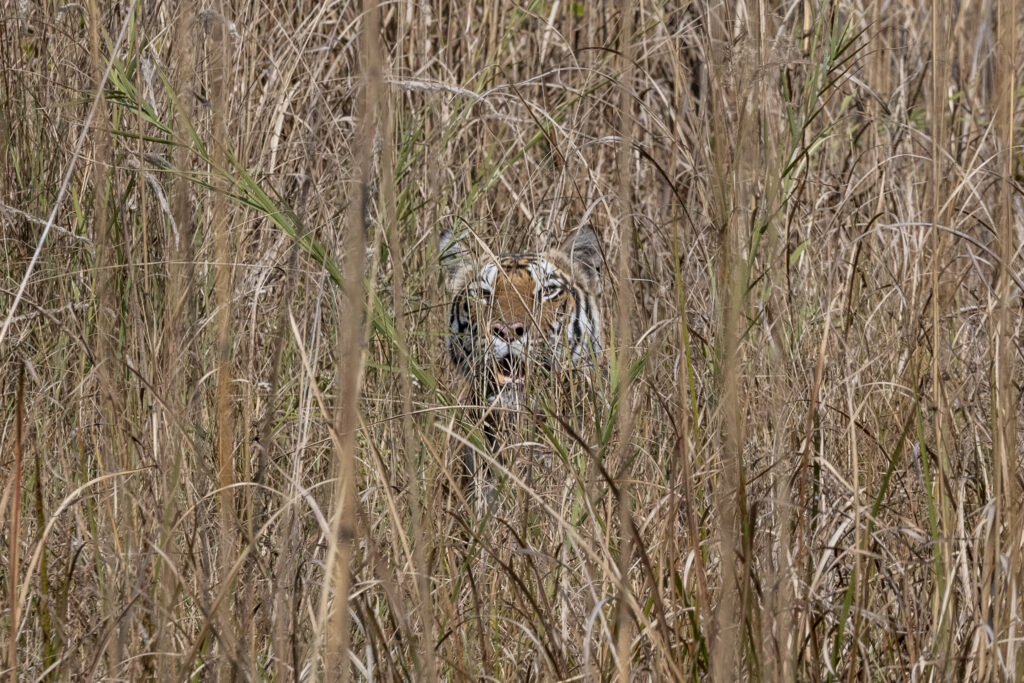
The three game drives I undertake in Panna National Park, following two extraordinary encounters with Royal Bengal tigers at Bandhavgarh—all part of an eight-night, tailor-made itinerary organised by Abercrombie & Kent—yield not a single sighting of orange and black stripes. And yet, were I to embark on another Indian safari itinerary tomorrow, Panna is somewhere to which I’d make a beeline.


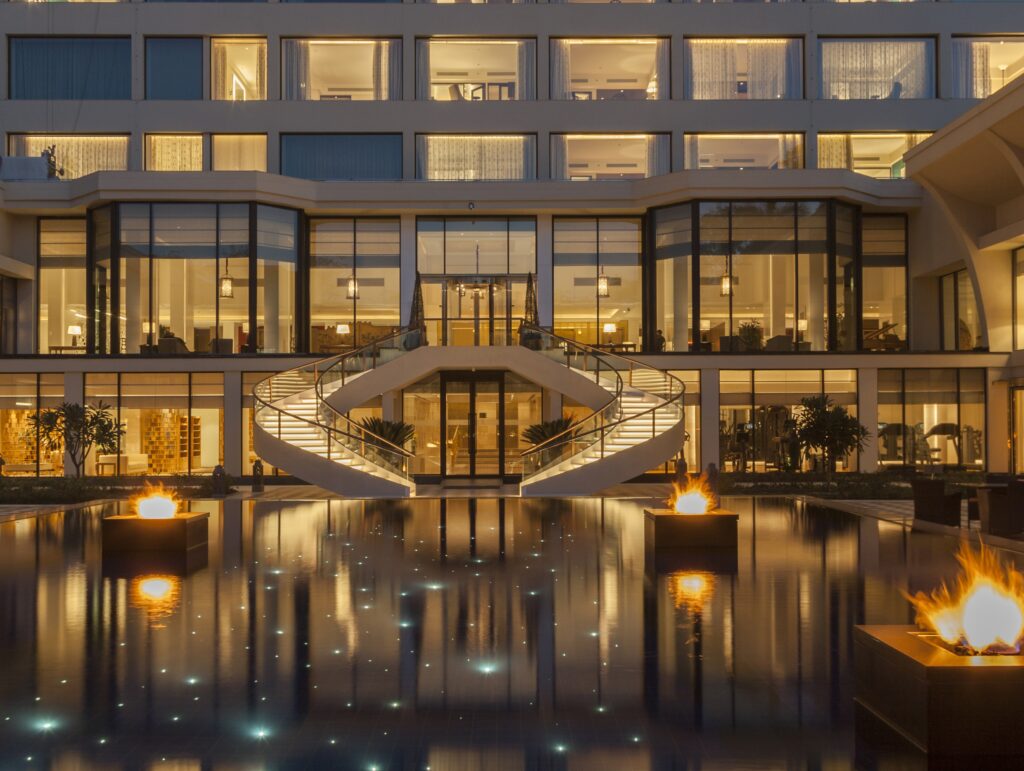
This has a great deal to do with the hospitality proposition. The Oberoi Rajgarh Palace, Khajuraho, a 350-year-old former fort-palace painstakingly transformed into a 65-room luxury retreat, is a spectacular addition to the Indian hospitality landscape. Its inclusion in Oberoi Hotels’ New Luxury Triangle journey brings yet another dimension to an itinerary whose principal appeal is the sheer diversity of experiences encompassed within it.
The experience of staying on the fringes of tiger territory here could scarcely be more different from that offered by the tented environs of The Oberoi Vindhyavilas, Bandhavgarh. The Oberoi Rajgarh Palace is not the only former seat of Indian royalty to have found a second calling as a five-star hotel: but it is a particularly sybaritic, and opulent, example of the genre.
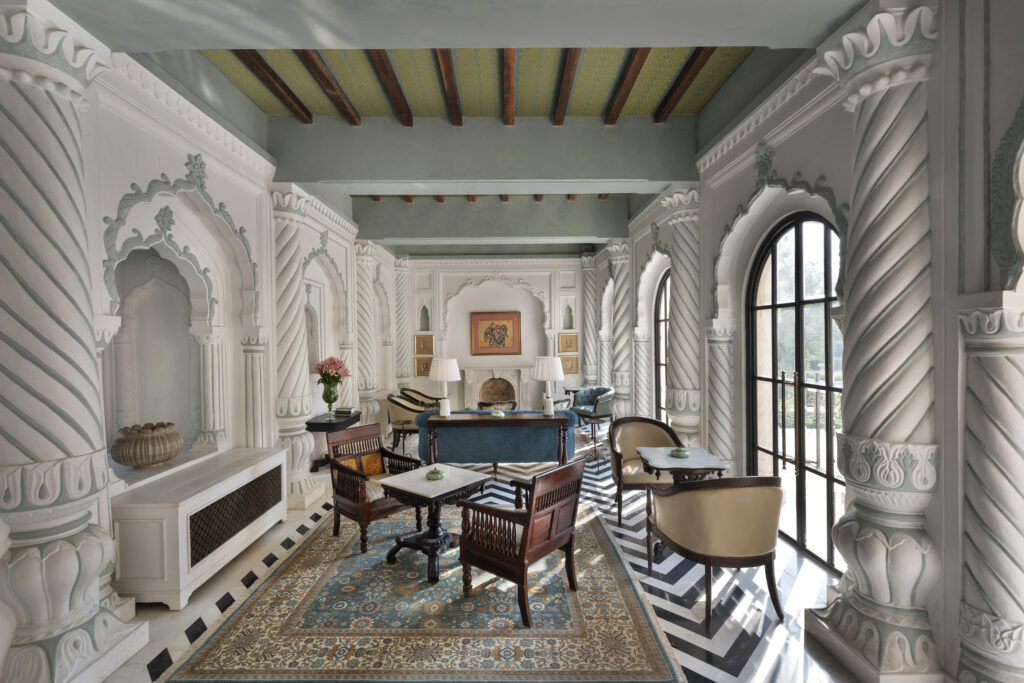
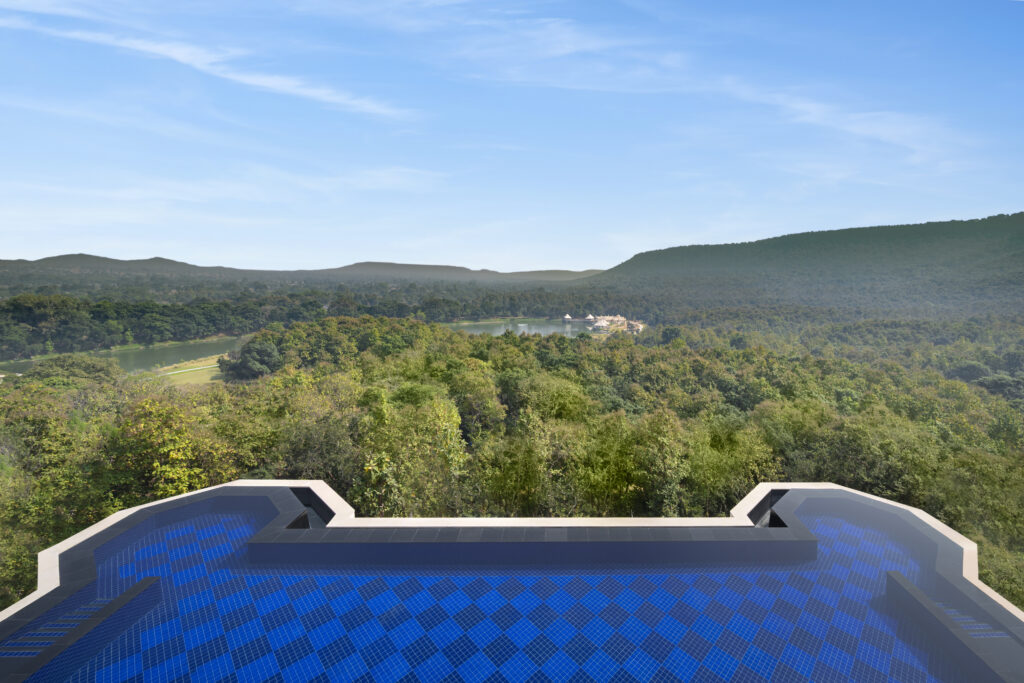
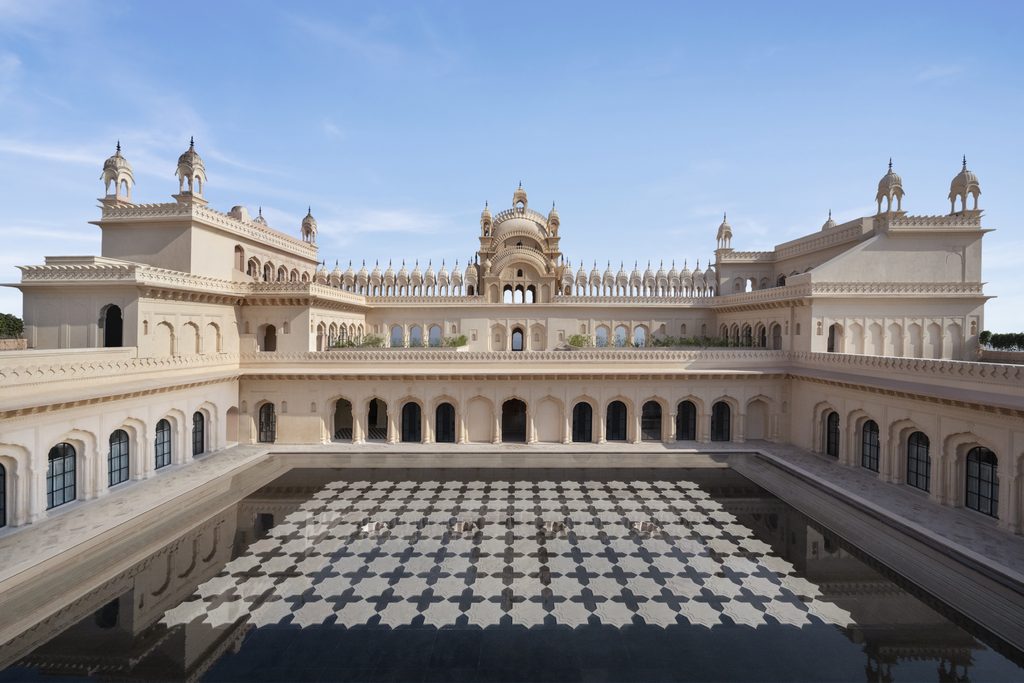
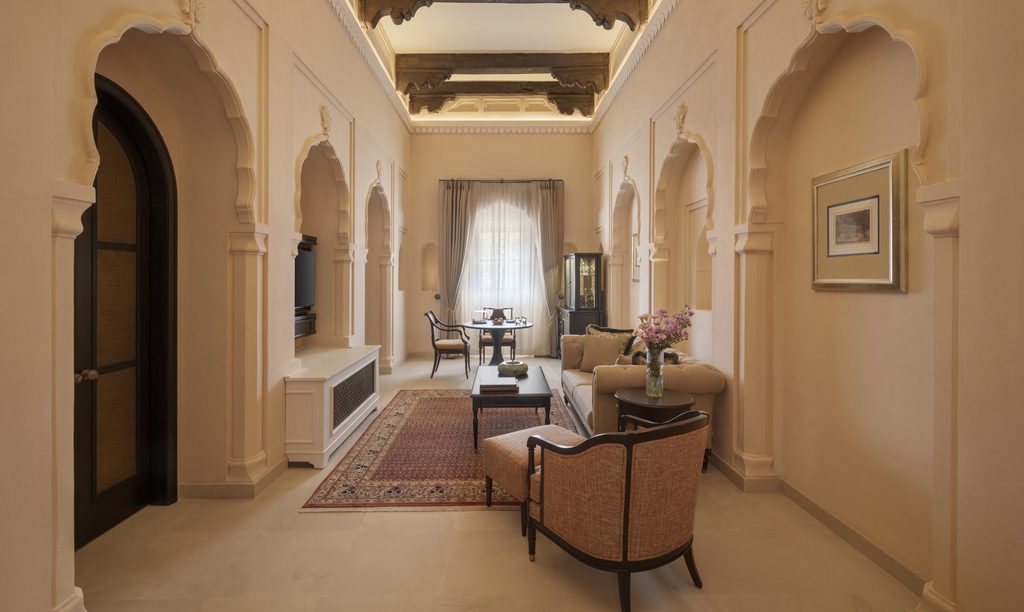
Its forested hilltop setting is as integral to the property’s appeal as the architectural pedigree of a sandstone fortress which once served as a royal residence under Maharaja Chhatrasal. The ornate interiors and period detailing of its suites provide a glorious counterpoint to the rugged terrain beyond, while the scale and grandeur of the original palace imbue the property with a sense of grandeur and theatricality that no new-build can replicate.
The wider region, meanwhile, is replete with architectural and cultural—as well as biological—interest. Khajuraho’s UNESCO-listed group of temples, constructed during the reign of the Chandela dynasty around a millennium ago, is celebrated for the extraordinary intricacy of its stone carvings, whose narrative depictions encompass everything from spiritual devotion and mythological narratives to scenes of everyday life and (euphemism alert!) human intimacy. A conservative society, in centuries past—as my guide for the afternoon points out—this part of India was clearly not.
As for the wildlife component of the itinerary, the principal draw lies in the forests, valleys and plateaus of nearby Panna National Park. The topography here is markedly different to that of Bandhavgarh. The terrain encompasses three distinct plateaus of the Vindhya range, Madla, Hinota and Akola, each at a different altitude, with densely forested valleys giving way to more open expanses of grassland as one ascends.
The Ken River, meanwhile, brings another dimension to the landscape. As our jeep negotiates the winding tracks leading out of the valley, this leg of the trip’s naturalist explains how the water trickling down from the surrounding hills contributes to the density of the vegetation, and how resulting variations in terrain dictate the distribution of the park’s inhabitants.
Leopards, for example, tend to favour more undulating areas, where their agility and climbing smarts make this a zone where they can out-compete tigers for prey. The latter, meanwhile, tend to favour flatter terrain and open grasslands. As the day progresses, the landscape itself reveals itself as a rich larder of zoological knowledge: its contours, vegetation and waterways all offering clues as to which animals might be encountered, and where. It’s essentially the biology class my Greater London school failed to offer.
Even without an actual sighting during this day’s two safaris, the process of scrutinising the sandy tracks, listening for alarm calls and weighing up the significance of the various clues that present themselves makes for an absorbing couple of sessions. Plenty of other curiosities—remaining evidence of indigenous communities (willingly) moved on as part of conservation efforts; teak trees, whose timber is highly prized for its natural resistance to termites, hence their role in the imperious décor back at Rajgarh Palace—ensure there’s plenty to talk about with the guide despite our feline quarry snubbing us today.
Returning to Rajgarh Palace after several hours of negotiating the rugged terrain of Panna, the prospect of surrendering the limbs (OK I was driven around—but still) to the expert ministrations of a therapist at The Oberoi Spa is irresistible. The opportunity to oscillate between such gloriously incongruous experiences, after all—from honing one’s primordial tracking instincts in the wilderness to being pampered into submission in a former royal residence—is precisely what this itinerary is all about.
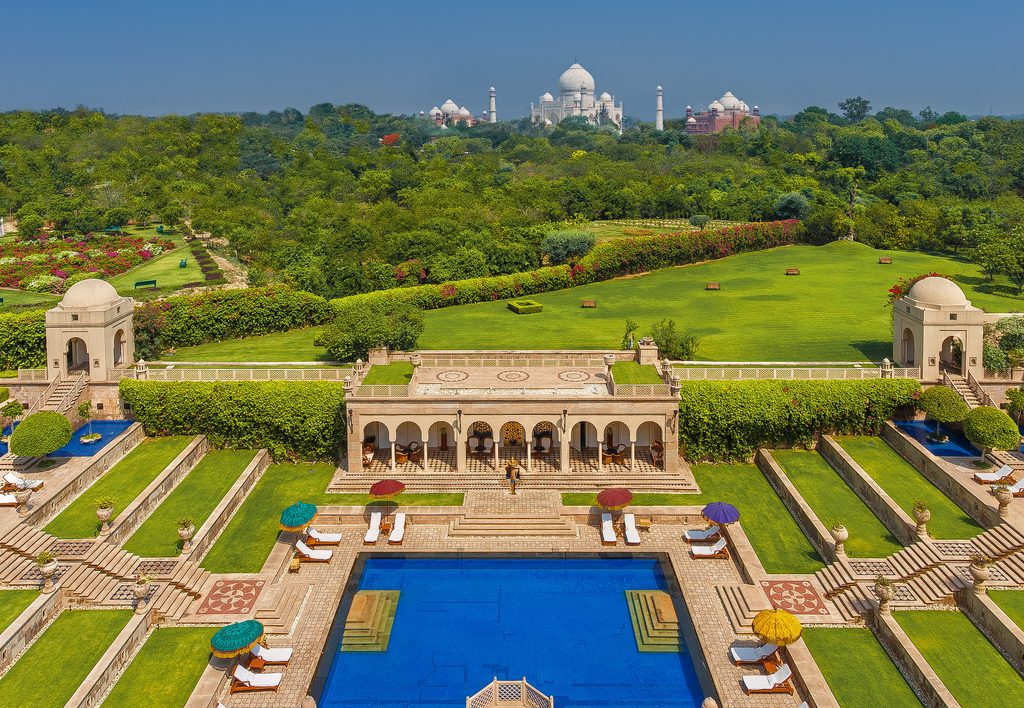
The Taj Mahal provides a spectacular backdrop to the Mughal-inspired gardens and swimming pool of The Oberoi Amarvilas, Agra.
For those undertaking the full New Luxury Triangle itinerary, the next port of call is The Oberoi Amarvilas, Agra: a property those principal attraction needs no introduction. The Taj Mahal, less than a kilometre away, can be admired from its guestrooms, while the hotel’s own Mughal-inspired architecture, ornamental fountains and colonnaded courtyards have been conceived to sing in harmony with the more renowned grandeur of its illustrious neighbour.
Mother Nature and human ingenuity, one can’t help but conclude at the end of this journey, are equally adept when it comes to living up to that much-celebrated phrase: ‘Wonders of the World’.
UK Abercrombie & Kent (www.abercrombiekent.com; 03301 734 712) offers an 8-night tailormade India itinerary from £6,295pp, based on two sharing, including domestic travel, private transfers, sightseeing and guiding, and accommodation on a B&B basis at The Oberoi New Delhi; The Oberoi Vindhyavilas, Bandhavgarh; The Oberoi Rajgarh Palace and The Oberoi Amarvilas, Agra.