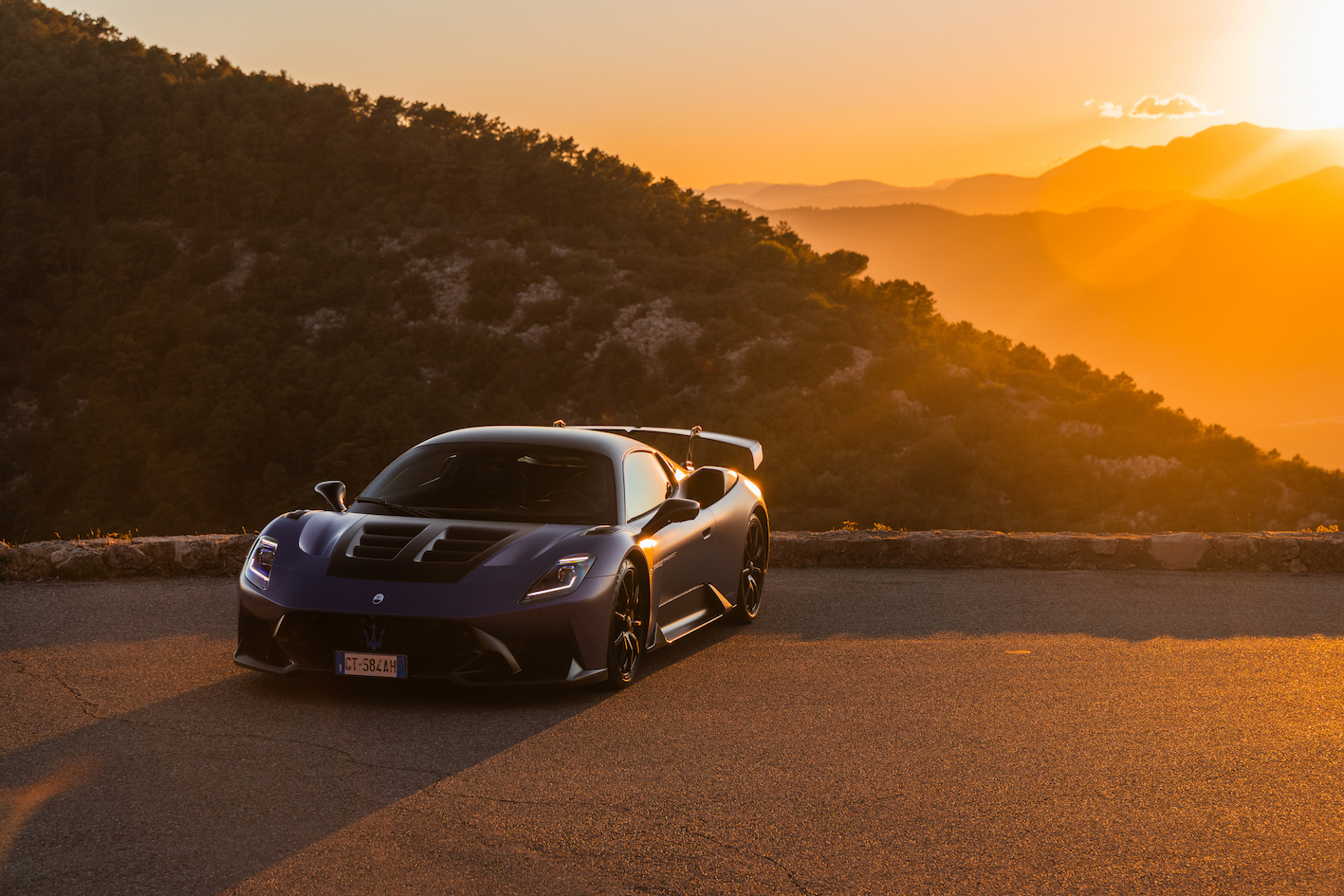
Maserati’s GT2 Stradale is a race car granted a road licence. As the historic marque honours a century of motorsport, we go for a spin through the hills above the Côte d’Azur.
The GT2 Stradale is not a road car later stiffened for track duty. In the year that Maserati celebrates its 100-year racing anniversary, the marque says an evolution was envisaged from the outset of the MC20 project, and that the GT2 race car and this road-legal sibling were developed in parallel by the same team, sharing components. The order matters: this is a competition car subsequently type-approved.
The GT2 developed alongside it returned Maserati to closed-wheel racing in the GT2 European Series, taking 16 poles, 12 victories and an Am-class drivers’ title in the debut 2024 season. This GT2 Stradale is limited to 914 units, each badged ‘1 of 914’ on the centre tunnel—a reference to 1914, the year the Trident was founded.


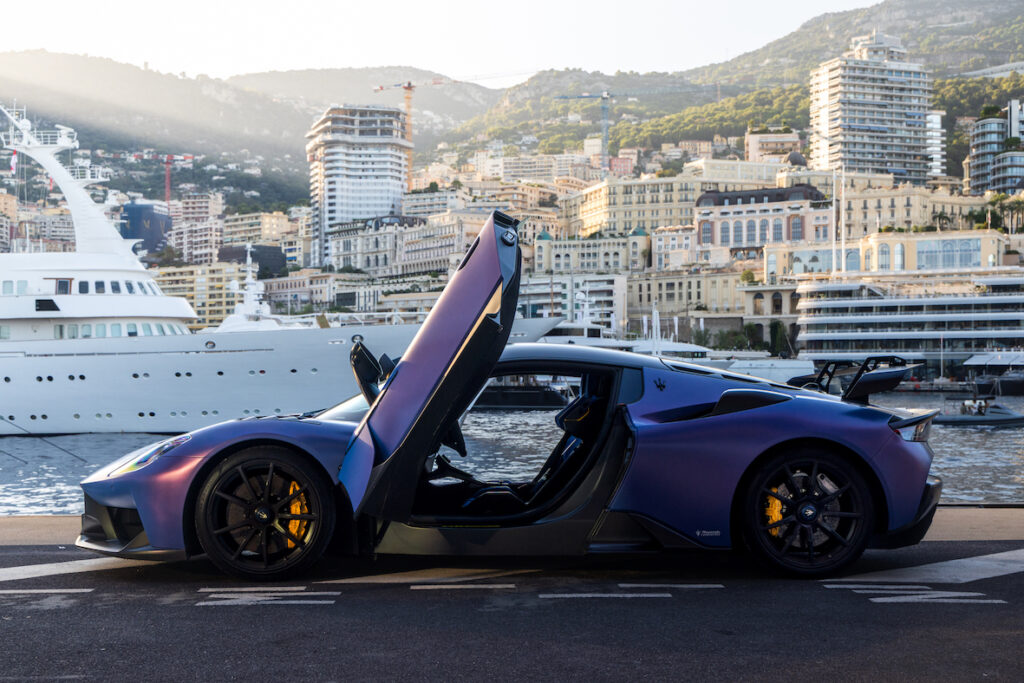
The Nettuno V6 is unchanged in architecture: 90 degrees, twin-turbocharged, 2,992 cc, dry sump, with the F1-derived pre-chamber combustion system and twin spark plugs. Modified turbos and manifolds raise boost and cut back pressure, helping to generate 471 kW and 720 Nm—making this the most powerful combustion engine Maserati has homologated for the road. Suspension geometry, steering calibration and enlarged Brembo carbon-ceramics are racesourced, too. Maserati quotes 2.8 seconds to 100 km/h, and a top speed of 324 km/h.
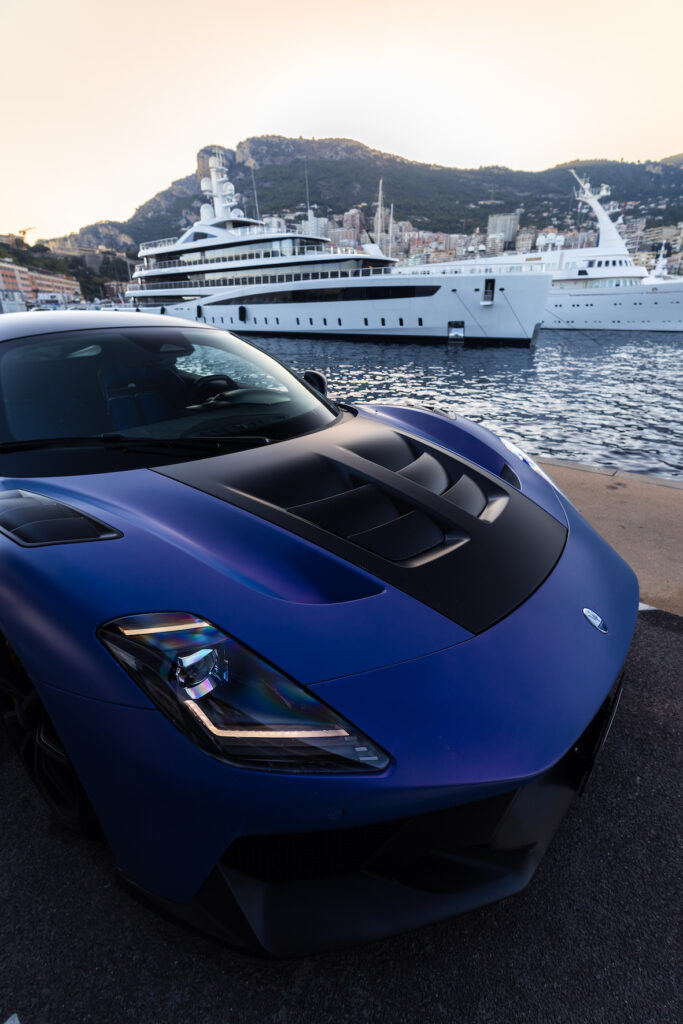
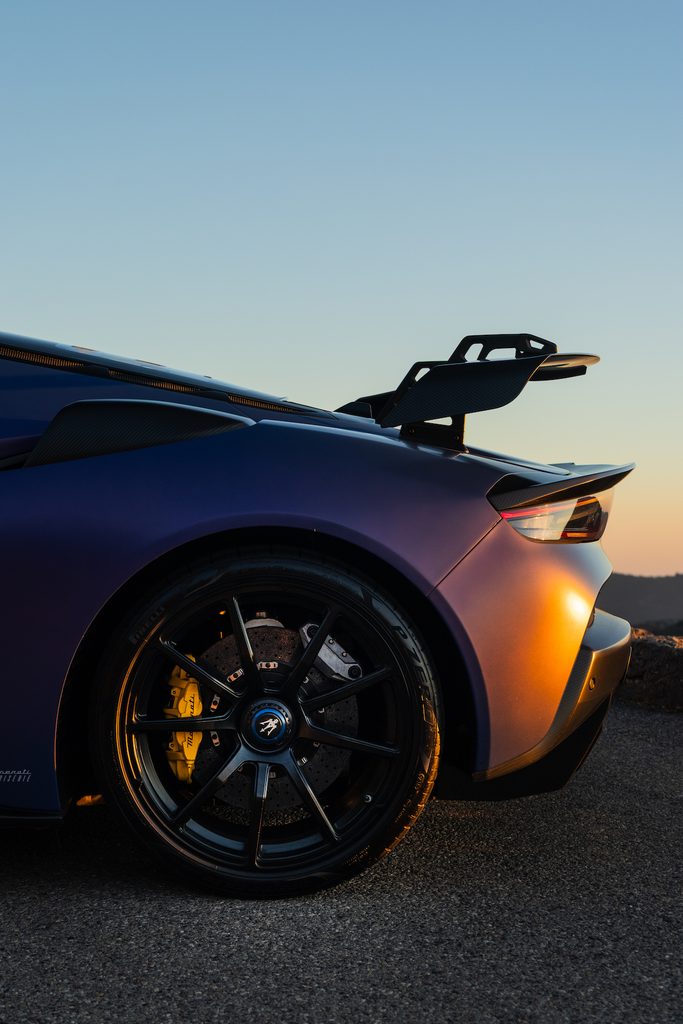
Thanks in no small part to a widened ‘shark nose’, a vented race bonnet and a three-position swan-neck wing, the car feels immediately planted on the mountain roads inland of the Côte d’Azur, the low centre of gravity obvious within a few corners. Steering is sharp; the front noses into the apex and the rear follows. The hint of understeer in low-speed bends is more likely due to tyre pressures rising with temperature than anything in the chassis set-up.
The Nettuno V6 will not sing you an orchestral crescendo, nor impart an operatic top end—and that is the one place where the drivetrain declines to act like an Italian thoroughbred. What it does deliver instead is power, and deliver it rather aggressively, which is faintly startling precisely because the soundtrack is so undramatic. There is a scintilla of turbo lag, undeniably, but peak torque arrives at 3,000 rpm and stays until 5,500, so the response remains predictable —provided you are not pushing the throttle mid-corner on cold tyres. The noise the V6 does make, though, is the best kind of turbo funk. Bury the throttle and a hurricane builds behind your head. Lift, and the wastegate exhales a perfect ‘ptsss’. It is very difficult not to smile at these playful notes.
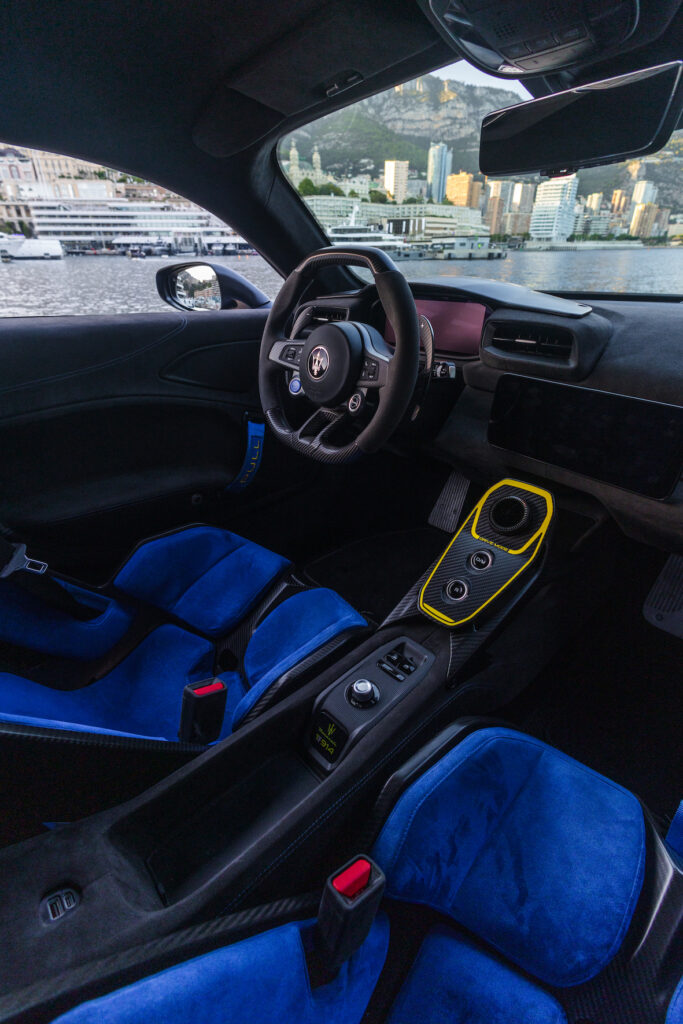
Four modes sit on the watch-bezel selector: Wet, GT, Sport and Corsa. The latter sharpens throttle response and hammers home gear ratios out of hairpins, and allows for quite some rear wheel slip. Sport suits faster roads, letting more steering texture through. A button in the selector’s centre softens the dampers without surrendering the powertrain settings.
Another strong point is the GT2 Stradale’s gearbox, which in Corsa at full rpm gives you an awakening kick in the back and emphatically pushes you up the gears as the shift lights illuminate the top of the steering wheel. In GT, the car is calmer than a bare carbon tub suggests, whether on the highway or on a back road, and it won’t punish you for ending up in Monaco traffic either.
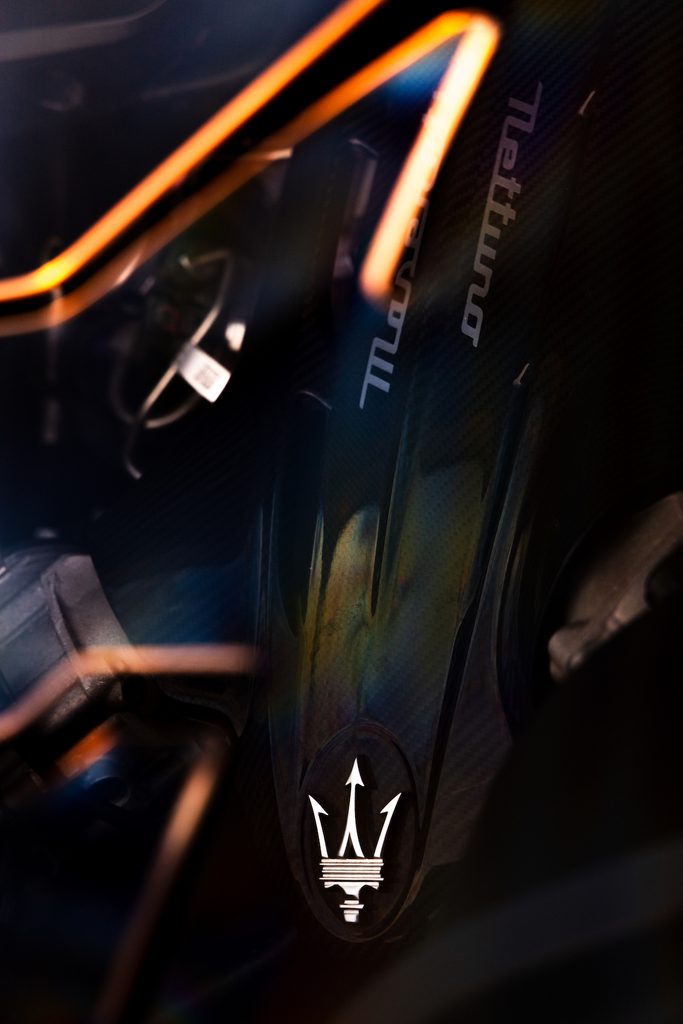
Inside, the monocoque is beautifully left exposed in many places, matched with anti-glare Alcantara and contrast stitching. The standard Sabelt double-shell carbon seats hold you firmly enough to make you feel at one with the car, while seatbelts come with three-point attachments (an optional four with the Performance Pack).
As the brand’s motorsport legacy extends into its next century, the GT2 Stradale proves Maserati is serious about making sophisticated drivers’ cars again. Here’s hoping that path will be followed indefinitely.