At his two-Michelin-starred restaurant, Kristian Baumann brings together his Korean heritage and Copenhagen upbringing in a tasting menu that challenges expectations.
In Copenhagen, a stone’s throw from the Little Mermaid, inside an unremarkable old brick warehouse, sits Koan, one of Europe’s most talked-about kitchens.
South Korean-born chef Kristian Baumann grew up in Copenhagen and built his career in its kitchens, noma among them. Since 2017, he has travelled regularly to South Korea — exploring temple kitchens, street stalls and the rarefied world of royal Korean cuisine — and brought those experiences back to his cooking. Koan began as a pop-up, and in April 2023 it took over the warehouse it occupies today. Within weeks, Michelin awarded it two stars.


What arrives at the table is not fusion, but refined culinary globe-trotting. It is Nordic produce at its most obsessive, shaped by Korean technique and Korean feeling, with the seams left visible on purpose.
The meal opens with shrimps, and immediately does something unusual: it makes you work. The texture asks for real chewing, not just a simple bite, and the sweetness builds as you go. Most tasting menus begin with something you barely notice. This one begins by demanding your attention and holding it.
The early courses move in a cool register — an oyster stewed and dressed in champagne, say, restrained almost to the point of shyness, or a scallop cut with mandarin and a whisper of chilli. The volume stays deliberately low.
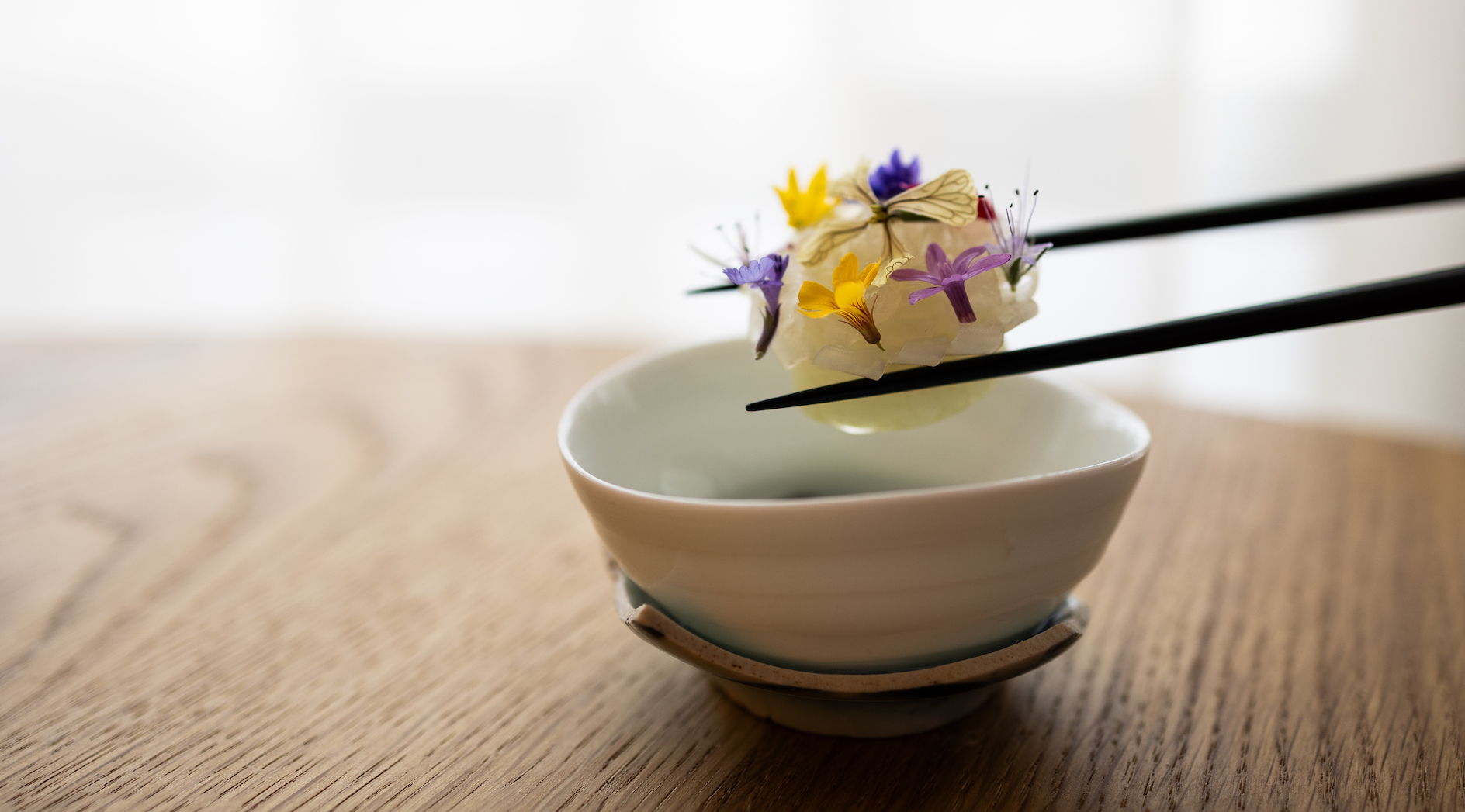
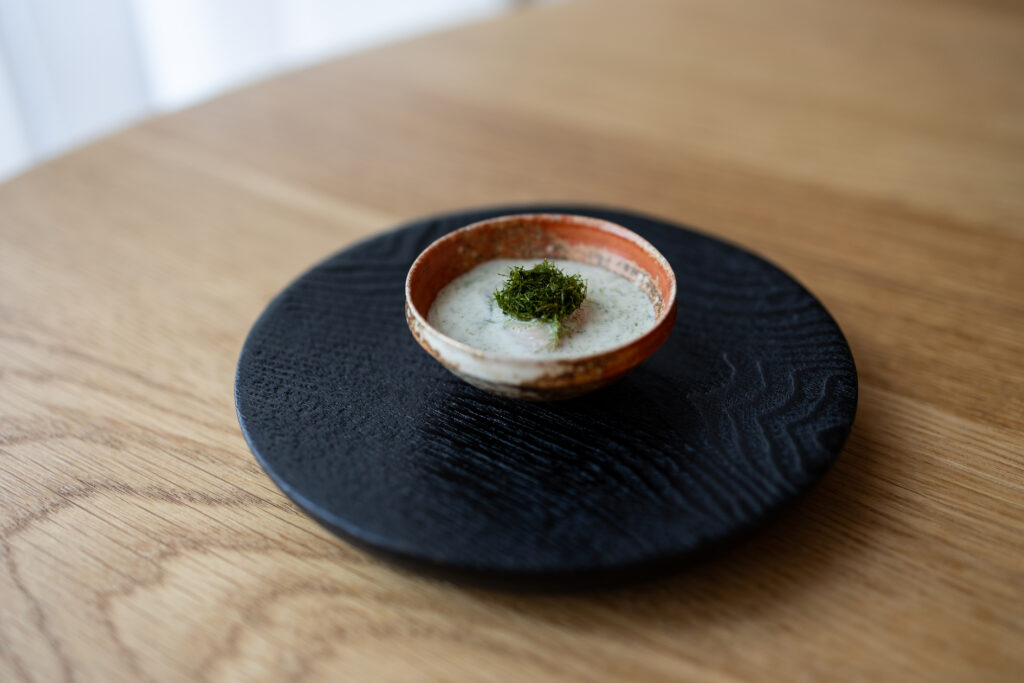
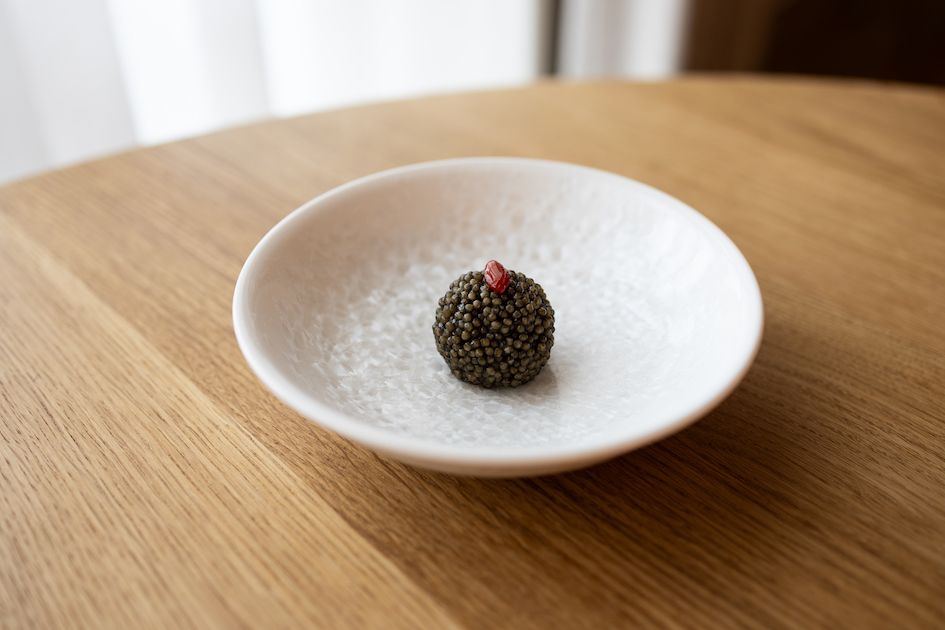
Richer it duly grows, though never heavily. White kimchi comes crowned with dill in Ming dynasty pottery, cold and faintly floral, fermentation dressed for the opera and carrying none of the aggression the word usually promises. Extravagance follows in the same soft voice: tofu beneath caviar and goji berries, a pairing that sounds improbable on paper and tastes inevitable — salt, fat, a small sweet lift at the close. Chilled lobster noodles arrive next, a ramen in spirit, sweet with onion crisp.
The middle of the meal is where Baumann relaxes his shoulders. Kkwabaegi, the twisted Korean doughnut, is sweet and faintly salty and dipped into creamy butter, landing somewhere between pastry and comfort. Norwegian langoustine then raises the voice again, delivering the biggest flavour of the evening — spicy, deeply savoury, borne on a mussel sauce whose sweetness lends the whole dish an unexpected grace.
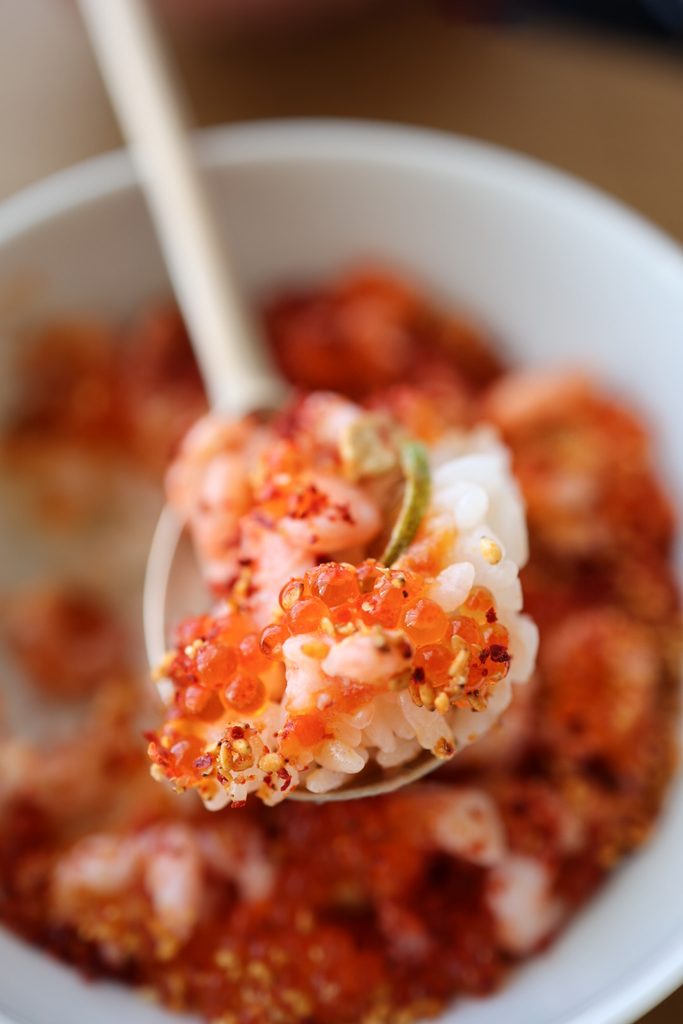
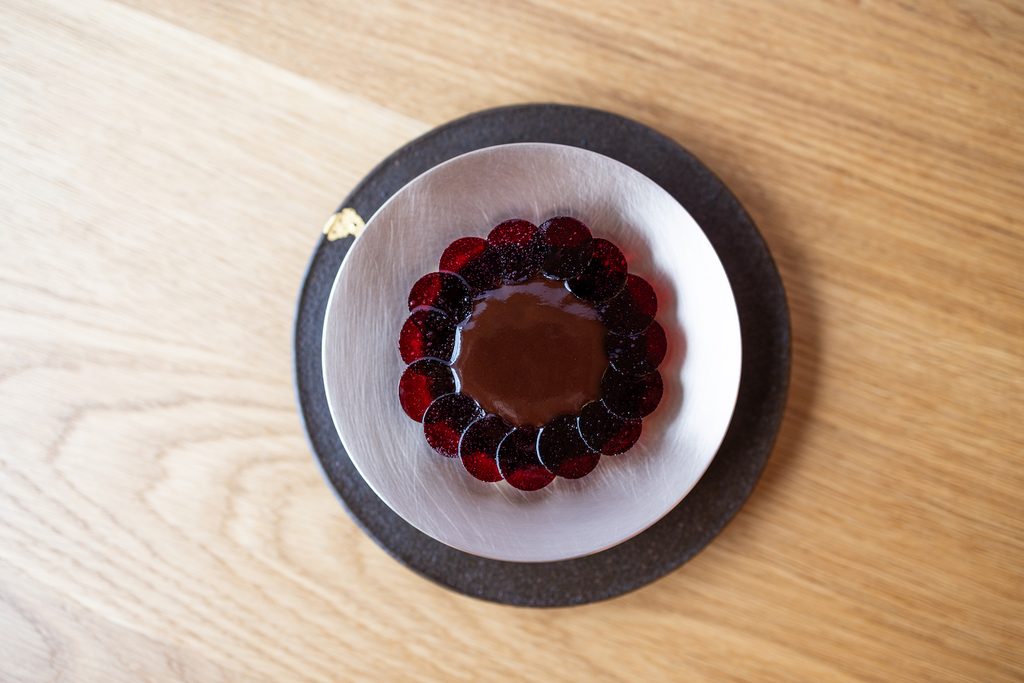
Rice closes the savoury arc, and does the most thinking. Gamasot rice, cooked in its iron cauldron, comes with rainbow roe and shrimps and a small parade of snacks alongside, maybe the nearest Koan comes to a Korean family table. Behind it, the meal’s fondest gesture: a caramelised rice porridge built from langoustine knuckles and the remnants of everything preceding it. A dish assembled from leftovers, served proudly in a two-star dining room, is a statement of values disguised as a course. After it, the sweet run continues at length — raspberries, oolong tea and good memories, elderflower, barley and gochugaru, chapssal-tteok — before sesame dasik, small and pressed, ends the evening on something like a bow.
The most telling detail has nothing to do with the food. Baumann is there — in the pass, on the floor, involved in every movement of the operation, testing, checking, adjusting. No theatre, no procession of tweezers performed for the benefit of the room. The effect on the atmosphere is considerable. Service is precise but entirely unstarched, and the whole evening carries the relaxed confidence of a kitchen with nothing to prove and everything still to explore.
The name comes from Zen Buddhism, where a koan is a paradoxical question, statement or story designed to provoke deep contemplation and insight. A koan resists solving and withholds a tidy answer, asking instead for a suspension of ordinary reasoning — a turn inward and an honest reckoning with whatever you believed you already knew.
The name of this restaurant, it is safe to say, has been chosen with care: it describes precisely the journey the visitor is about to embark on.