
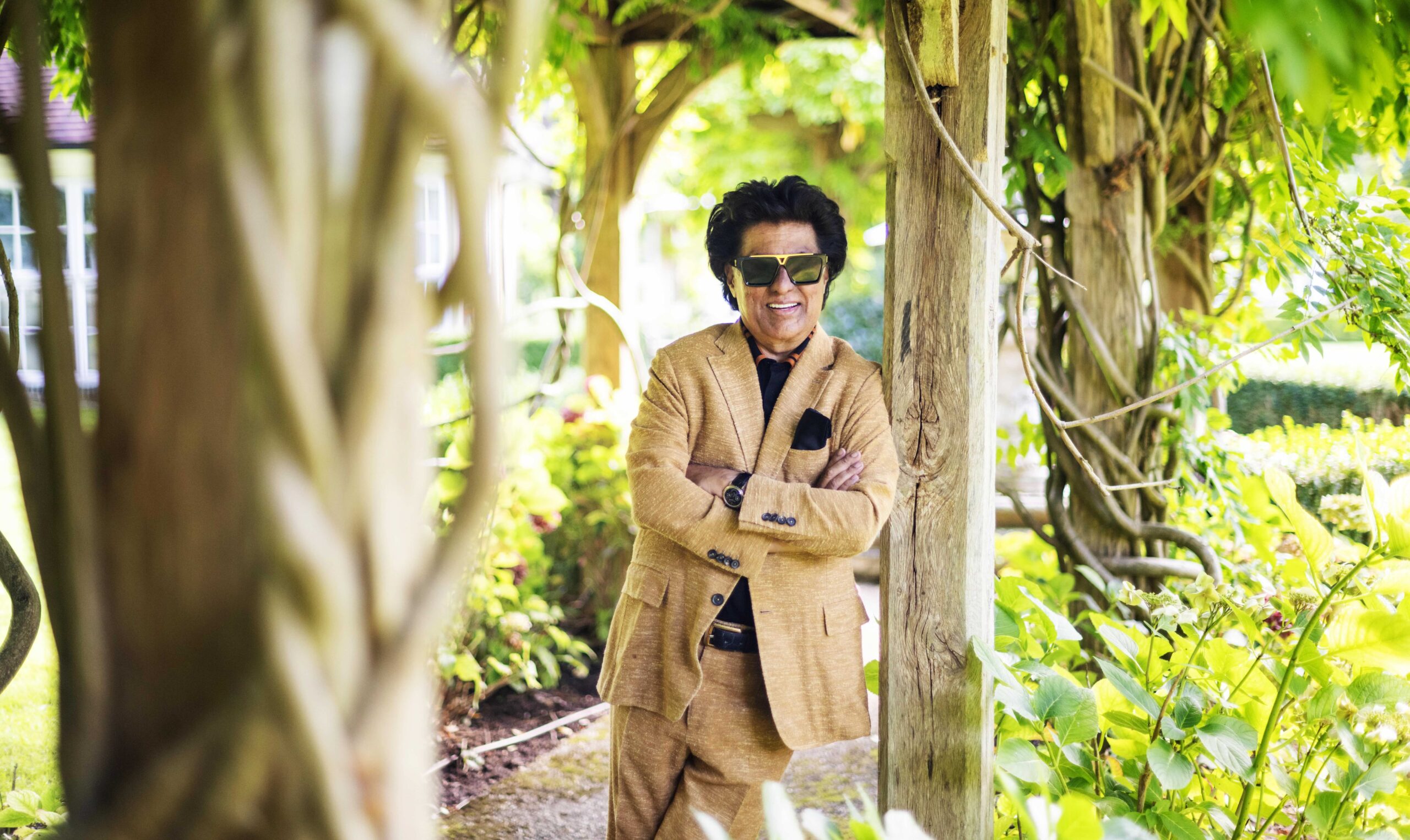
The initiative aims to give millions the chance to reclaim their futures.
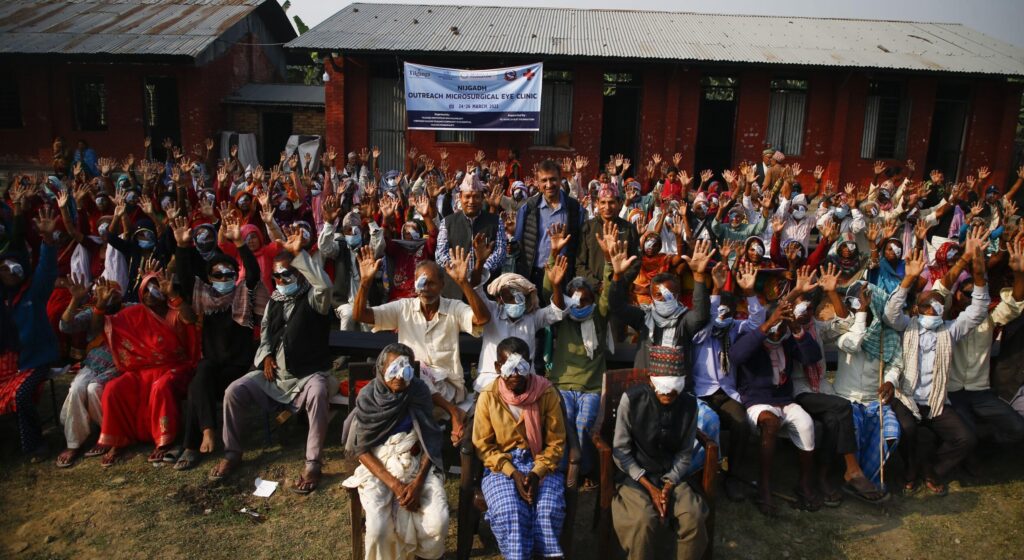
In the high Himalayas, where roads peter out into dusty tracks, patients visiting The Tej Kohli & Ruit Foundation‘s high-altitude microsurgical outreach camps arrive by donkey, motorcycle or on foot. Their treatment? The restoration of sight. The procedure involves a life-changing revelation: a bandage comes off; the patient blinks into daylight for the first time in years. Then comes the laughter, the tears and the embraces.
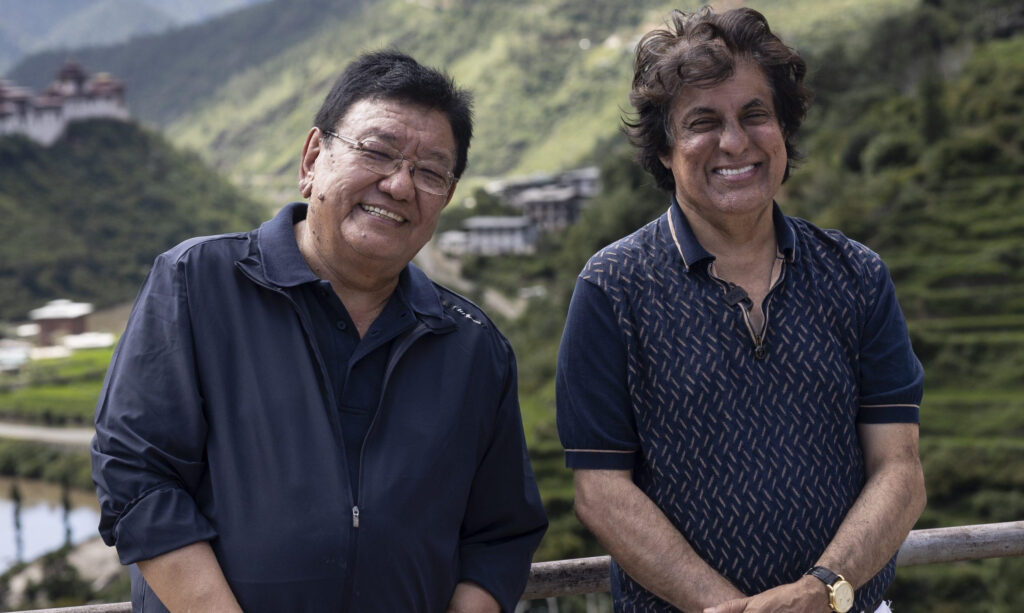
These are the moments to savour for entrepreneur, investor and philanthropist Tej Kohli and his wife Isabelle, whose mission is to eliminate needless blindness. Through the foundation and its partnership with Nepalese ophthalmologist Dr Sanduk Ruit (pictured with Kohli, below), the two have shifted their focus from treating complex corneal blindness to tackling cataracts, the world’s leading cause of avoidable blindness, through rapid, low-cost surgery in some of the planet’s most remote communities.


The journey began in 2010, when Kohli funded corneal transplant surgeries in India before establishing the Tej Kohli Cornea Institute at Hyderabad’s LV Prasad Eye Institute in 2015. Between 2015 and 2019, the institute welcomed more than 223,000 outpatients and carried out over 43,000 free surgical procedures, while also advancing research into future treatments for corneal disease.
“Corneal transplantation was very costly and very difficult because you had to harvest the cornea from a deceased donor,” recalls Isabelle, “which meant having those conversations with families within hours. We realised that, for the same amount of money, we could help far more people by focusing on cataract blindness.”
That realisation led to the creation of the Tej Kohli & Ruit Foundation in 2021, combining Kohli’s financial backing with the surgical innovations pioneered by Dr Sanduk Ruit, often referred to as the “God of Sight”. Together, they conduct outreach camps in underserved regions where access to eye care is virtually non-existent. Their long-term objective is to screen one million people and restore sight to between 300,000 and 500,000 patients by 2030.
“If people can’t get treatment—they can’t afford it or simply have no access to care in their own country, that’s when we step in,” says Isabelle. “We set up eye camps in rural places. The surgeons fly in, the equipment is transported for hours over rough roads, and around 300 patients are screened the day before surgery to determine which intraocular lens they need.”
For Kohli, the economics are as compelling as the human stories: a staggering 90 percent of the 135 million people who have visual impairment in both eyes live in low- and middle-income countries. Here lies a major challenge—one which Dr Ruit has done sterling work to address. “The artificial intraocular lens would cost, in Western countries, about $500 to $1,000, and the surgery itself would be $3000, $4000. But Dr Sanduk Ruit has reduced the cost of intraocular lenses dramatically by manufacturing them locally at the Tilganga Institute of Ophthalmology in Kathmandu, and we can now restore someone’s sight for about $50.” That affordability transforms cataract surgery into one of philanthropy’s highest-impact interventions. “There are, by some estimates, 200 million people with some level of visual impairment due to cataracts,” he adds. Indeed, globally, cataracts account for about 45% of all cases of blindness, according to the World Health Organization.
Ironically, performing the surgery is rarely the greatest challenge. “The hardest part is actually finding the blind,” Isabelle—pictured below, with Kohli, explains. “We’ve just been to Ghana, and working with governments can be complicated because they often assume we want something in return. We don’t. We have no business interests. We simply want to cure needless blindness wherever we find it.”
Despite these challenges, the pair remain optimistic—and tirelessly ambitious. “There are many different forms of blindness, but most are preventable or curable,” says Tej. “Cataracts are among the simplest to treat. We’re approaching one million people screened, and our ambition is much bigger still. I hope that, long after I’m gone, my wife and children will continue this work.”

For Isabelle, the moments she meets patients face to face will forever be her motivation to continue the good work. She recalls Krishna, a 35-year-old man who arrived at an outreach camp with cataracts in both eyes. “He came with his wife, who had been raising their three children, working the land and caring for him on her own,” she says. “The next day, Krishna could see again. He was jumping and dancing. Apart from the birth of my children, it’s the most moving thing I’ve ever witnessed.”
What stayed with her most was not Krishna’s reaction, but his wife’s. “She had her husband back. Their children could return to school because she no longer had to care for him every moment of the day. You could literally see the weight lifting from her shoulders. That’s what this is really about. It’s about giving people a future.”