While new blood continues to excite—albeit fleetingly—the market’s headliners are being stirred by something deeper.
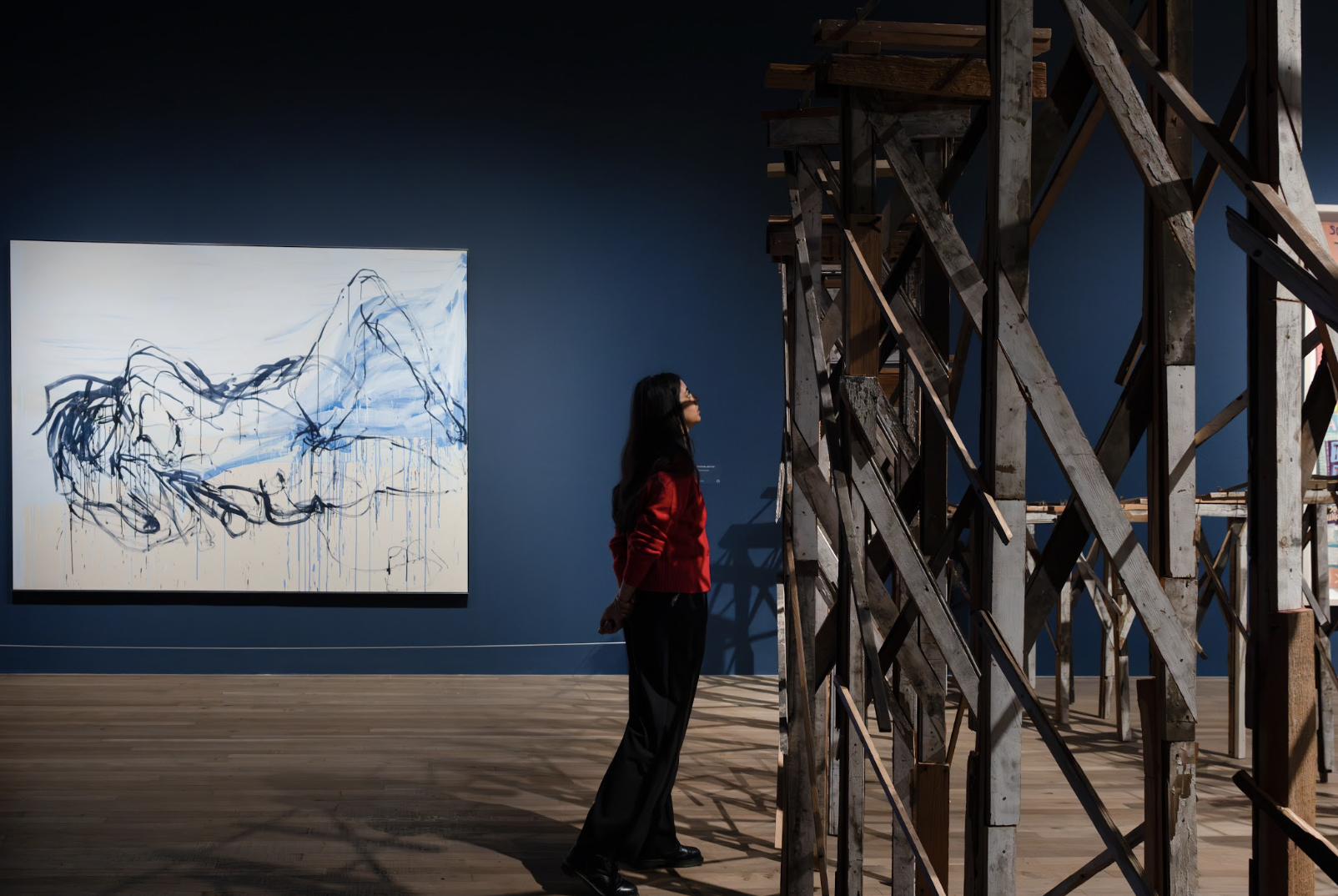
The art world’s radar can be hyper-sensitively tuned to the next big thing, but many exhibitions across Europe and the UK of late have been driven less by novelty for its own sake than by a need for a deeper conversation between past and present. At Tate Modern, London, Tracey Emin’s landmark retrospective (running until the end of August) invites a reassessment of a British artist David Bowie referred to as “William Blake as a woman, written by Mike Leigh”. The exhibition, and reactions to it, have shown Emin’s work to be as timeless, as enduringly British, as that of all three men mentioned in the former sentence.
In Monaco, meanwhile, Victor Brauner’s surrealist works receive the kind of scholarly attention long reserved for more familiar names, thanks to a showcase at the Nouveau Musée National de Monaco until January 2027. Sometimes, it takes years of cultural percolation before the significance of an artist’s work reveals itself.

Elsewhere, the boundaries between artistic disciplines continue to dissolve. Yves Saint Laurent and Photography, in New York, explores the enduring relationship between fashion and image-making, while Oliver Beer’s extraordinary investigations into sound, memory and prehistoric cave art—currently on display at Thaddaeus Ropac, London—leaps across not just genres but epochs by converting acoustic frequencies of ancient caves into pulsating pigments on canvas. The growing appetite for crossover is evident, too, in BMW’s celebrated Art Car programme, where fine art, engineering and design merge into a single cultural object.
The market’s ongoing belief in proven masterpieces is evidenced by the record-breaking sale of Henry Moore’s King and Queen, while Hauser & Wirth’s standout presentation at Art Basel also confirms the extent to which collectors continue to prize quality, provenance and historical significance. Taken together, our selection here reveals an art world that is more expansive, interdisciplinary and historically curious than ever before.
Best Anthology: Tracey Emin: A Second Life; Tate Modern, London
Those of a certain vintage—who came of age amid Britpop, Cool Britannia and the brash energy of the Young British Artists movement—might expect Tracey Emin: A Second Life at Tate Modern to be an exercise in misty-eyed nostalgia. And it is—but with new paintings, sculptures and photographs being shown publicly for the first time also in the mix.
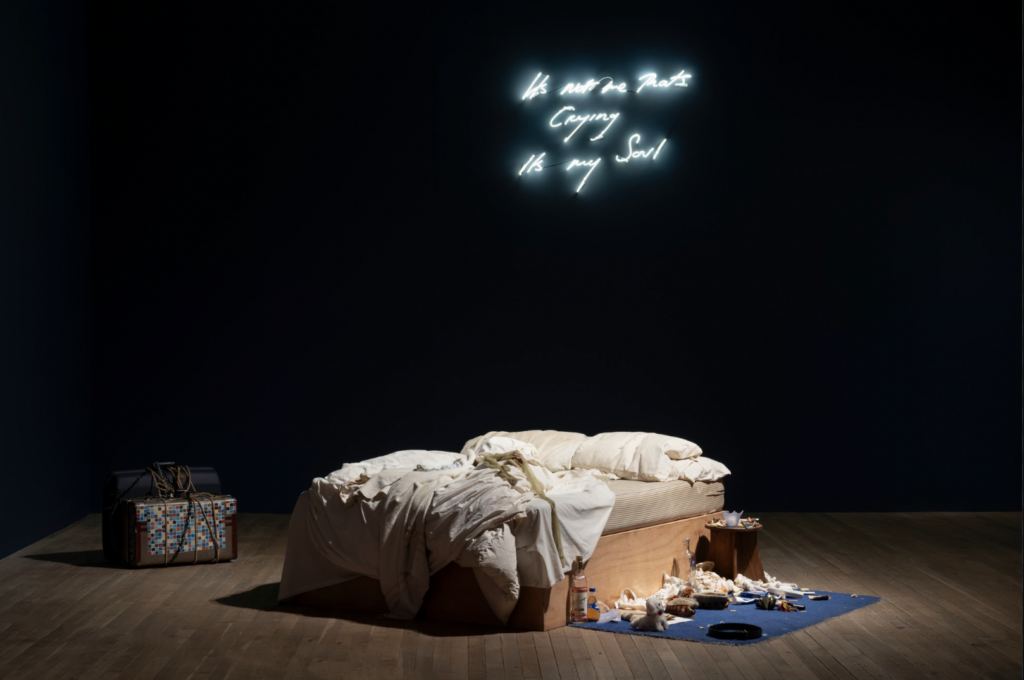
The largest exhibition ever dedicated to the Croydon-born artist, running until August 31st, brings together more than 100 works spanning four decades, with Emin herself playing a major curatorial role. Among the highlights are iconic installations My Bed (1998) and Exorcism of the Last Painting I Ever Made (1996), alongside works addressing experiences of sexual assault, abortion illness and recovery. The exhibition also examines Emin’s enduring connection to Margate, the Kent seaside town that has effectively played muse to much of her work.
Newer pieces include the bronze sculpture I Will Not Be Alone (2025), a series of self-portraits documenting life after cancer surgery, and a neon installation bearing the exhibition’s title. Outside the gallery, visitors can view I Followed You to the End (2024), the largest bronze sculpture Emin has created.
“The show is in two halves,” says Emin, who was made a Dame in the King’s Birthday Honours List of June 2024. “There’s the first life and the second life… I don’t want people to have to read notes to understand it or read books to understand. It’s visual. It’s art. It’s ideas. It’s something you feel. So, a second life is what I’m going through now.”
Best Surrealism: Victor Brauner, L’Aventure Magique; Nouveau Musée National De Monaco
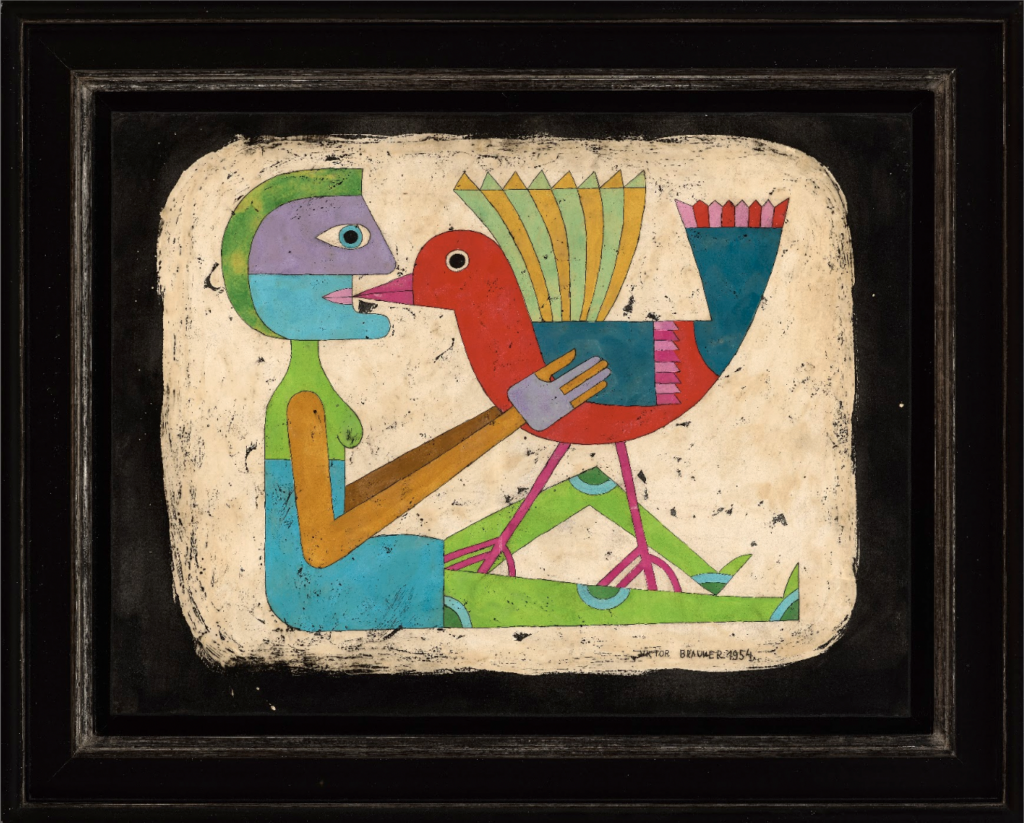
Brauner occupies a curious position within an artistic movement which came into being in Paris in 1924, when the French poet and critic André Breton published the Manifesto of Surrealism. Despite being revered by industry observers—especially of the Gauloises-puffing, modern Parisian café-dweller ilk—the Romanian painter and sculptor (who became a naturalised French citizen in 1963) never became a household name like Dalí or Magritte.
Running until January 2027, the Nouveau Musée National de Monaco’s Victor Brauner: L’Aventure Magique seeks to redress that reputational impropriety with an exhibition that lays bare the extraordinary breadth of this artist’s vivid imagination. Curated by Camille Morando and presented across the galleries of Villa Paloma, the show traces Brauner’s development from the avant-garde frenzy of the 1920s to the works which are richly emblematic of his final years. Brauner’s enduring fascination with dreams, mythology, esotericism and transformation will all be on display, via works that have never before been revealed in public.
Those already well-versed in Brauner’s catalogue will find fresh, illuminating insights into the emphasis he placed on sketching, the medium through which he wove an idiosyncratic tapestry of hybrid creatures and other fantastical beings, as well as the influence of non-Western art on his own visual language. “Every drawing and every discovery will be an extraordinary unknown place; every painting will be an adventure,” the artist himself asserted in 1941. Germane words to take with you on your visit.
Best Blockbuster Sale: King And Queen, Henry Moore; Christie’s, London
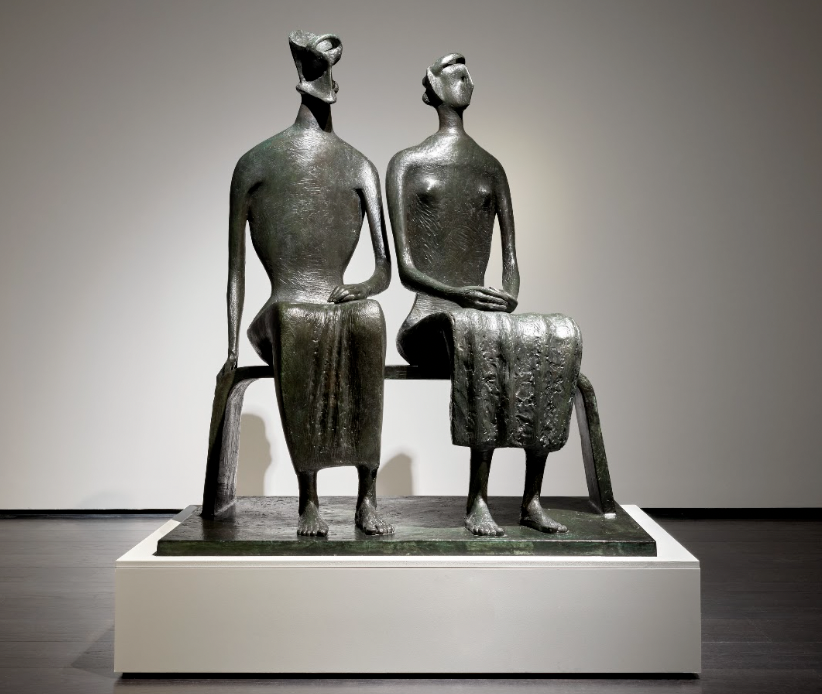
“Undisputedly a masterpiece” is how Philip Harley, senior director of modern British and Irish art at Christie’s, described Henry Moore’s King and Queen (1952) after the bronze sculpture, which had been expected to fetch between £10 million and £15 million, sold for a remarkable £26,345,000 (around ¤30,516,000) in March this year— setting a world record for a Moore artwork.
A monumental piece, previously purchased directly from Moore’s studio in 1953, King and Queen was shaped by influences ranging from the Ancient Egyptian sculptures Moore had always admired in the British Museum to the fairy tales he read to his young daughter. It depicts two seated royal figures whose elongated forms, stylised heads and delicate gestures explore the interplay between ancient civilisations, myth and archaic notions of the meaning of authority.
Why did it command such a substantial premium over its estimate? Well, King and Queen is widely regarded as one of the defining achievements not only of Moore’s career but of post-war British sculpture itself. The interplay between abstraction and realism has critics gleefully confounded, as does its expression of Moore’s belief that the hands are second only to the face in their ability to communicate human emotion.
More than 70 years after it left Moore’s studio, King and Queen continues to exert an extraordinary hold over audiences (the critic Robert Melville described it as “Moore’s finest achievement since the war, and probably the most graceful of all his works.”) The record-breaking sum achieved at Christie’s suggests that Moore’s vision of power, humanity and timeless monarchy is today striking a note just as resonant as it was when the sculpture was first unveiled in 1953.
Best Art-Fair Presence: Hauser & Wirth; Art Basel, Switzerland
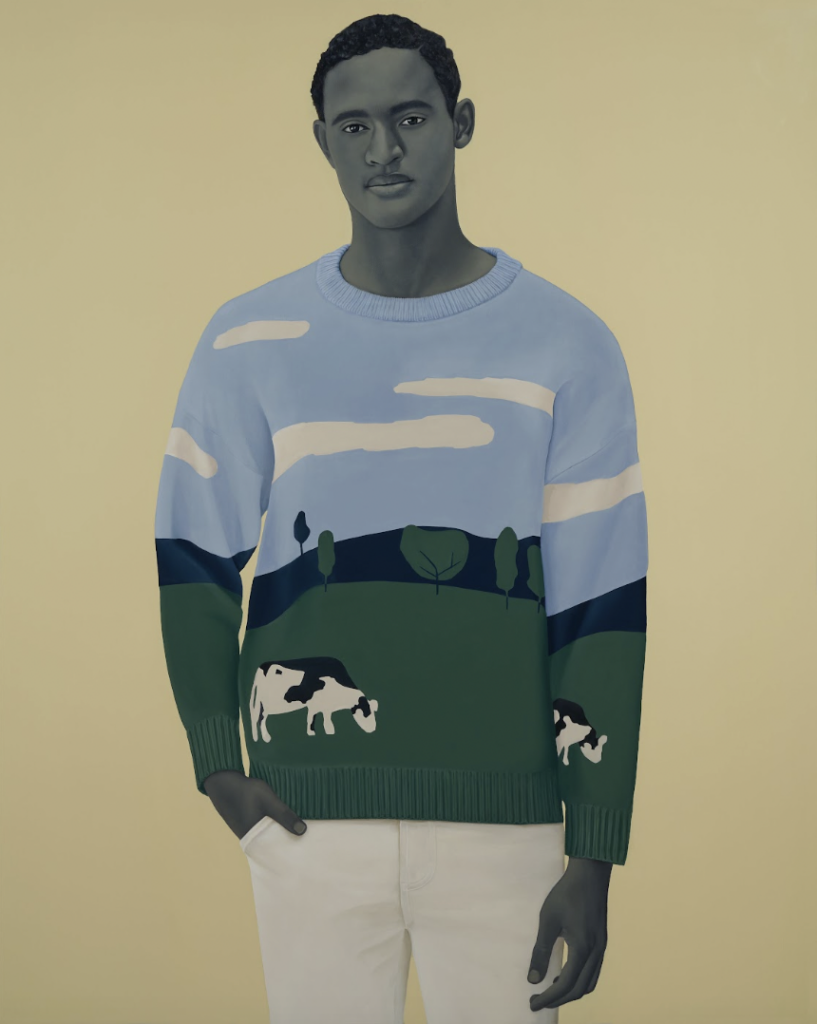
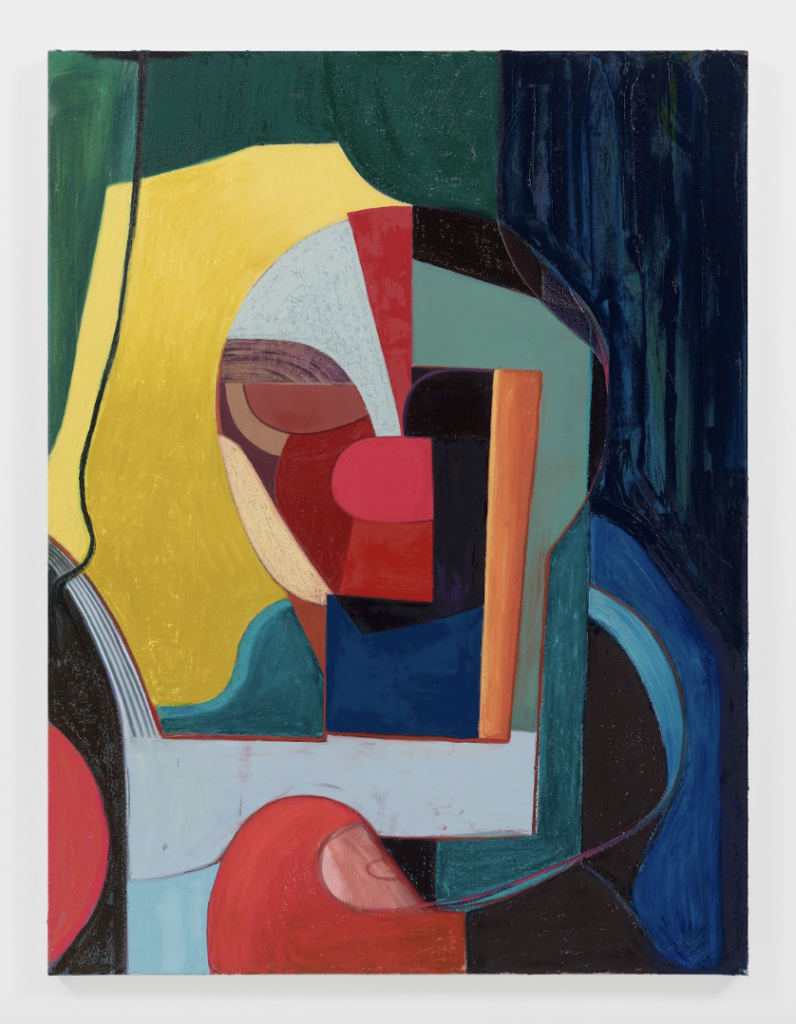
“There is no contemporary without the modern.” The words of Iwan Wirth, cofounder (with Manuela Wirth and Ursula Hauser) of the Swiss gallery whose Art Basel offering this June was, for our money, the strongest and best-executed contribution to the international flagship art fair we have seen. The line-up ran the gamut from household-name giants of modern and post-war art, including Pablo Picasso, Louise Bourgeois, Philip Guston and Joan Mitchell, but positioned such illustrious figures besides some of the most compelling artistic voices working today: notably Rashid Johnson, Amy Sherald, Nicole Eisenman, Jenny Holzer, Lorna Simpson, Nicolas Party and Jeffrey Gibson.
The result was a compelling survey of artistic innovation across more than a century, demonstrating the continuities between modernism’s great pioneers and the artists shaping contemporary culture today. Hauser & Wirth have described it as “a radical focus on 20th- and 21st-century masterpieces,” but we’re happy to frame it (pun intended) in stronger terms: this is the most intellectually coherent presentation of the synergy between the recent past and the boundarynudging present you’ll ever witness in a milieu so often beset with thematic ambiguities and laboured themes.
Best Immersive Exhibition: Oliver Beer, The Sky In The Cave; Thaddaeus Ropac, London
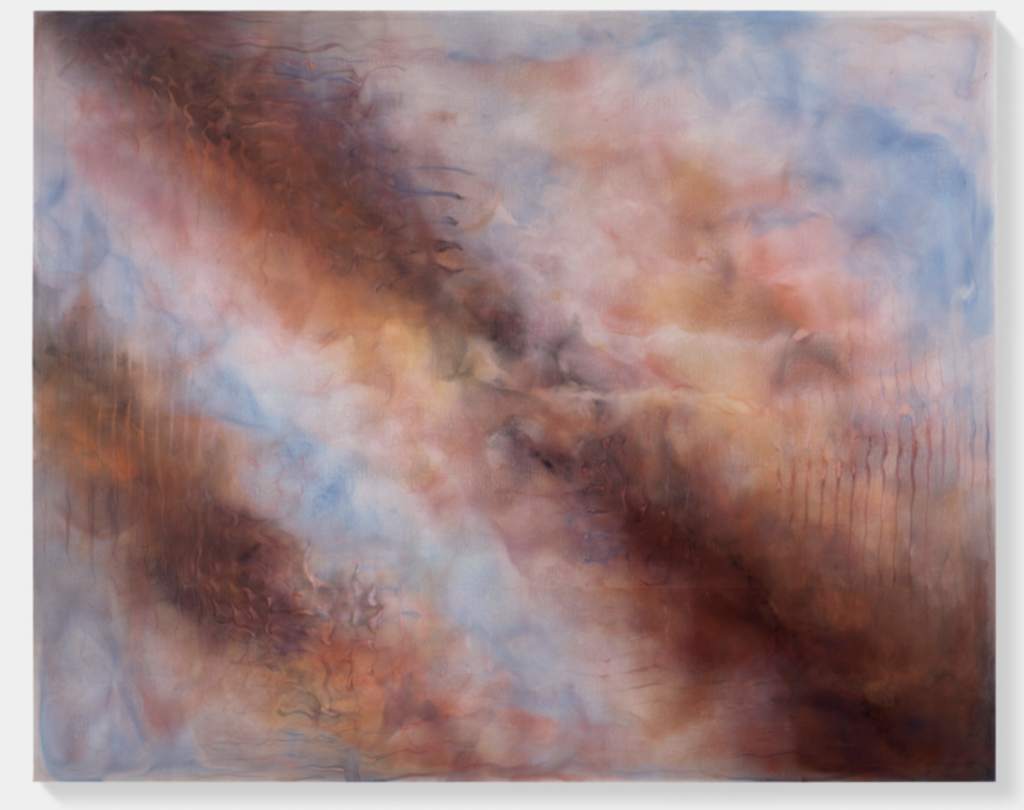
Sound, memory and image are the three protagonists in an exhibition that brings together large-scale paintings, music, film and installation, and builds on Beer’s long-term research into the acoustics of prehistoric painted caves in the Dordogne region of France, where he investigated how ancient artists may have responded not only to the surfaces of caves but also to their resonant sound qualities.
Central to the exhibition are Beer’s celebrated Resonance Paintings, works which transform fleeting acoustic frequencies into lasting visual forms. Inspired by recordings made with performers inside a Palaeolithic cave, the new works combine ancient mineral pigments with luminous contemporary colours, as well as a vinyl soundtrack and a 16 mm film documenting the artist’s process.
“Studying and exploring the paintings and acoustics of these prehistoric caves reaffirmed for me just how deeply connected music and imagery have always been,” as Beer puts it. “We don’t just hear sound—we bathe in its forms and it moves every atom in our bodies. The Resonance Paintings are my way of composing images that make that connection visible, showing how musical harmony and abstraction have always been intertwined.”
Best Photography: Yves Saint Laurent and Photography, New York
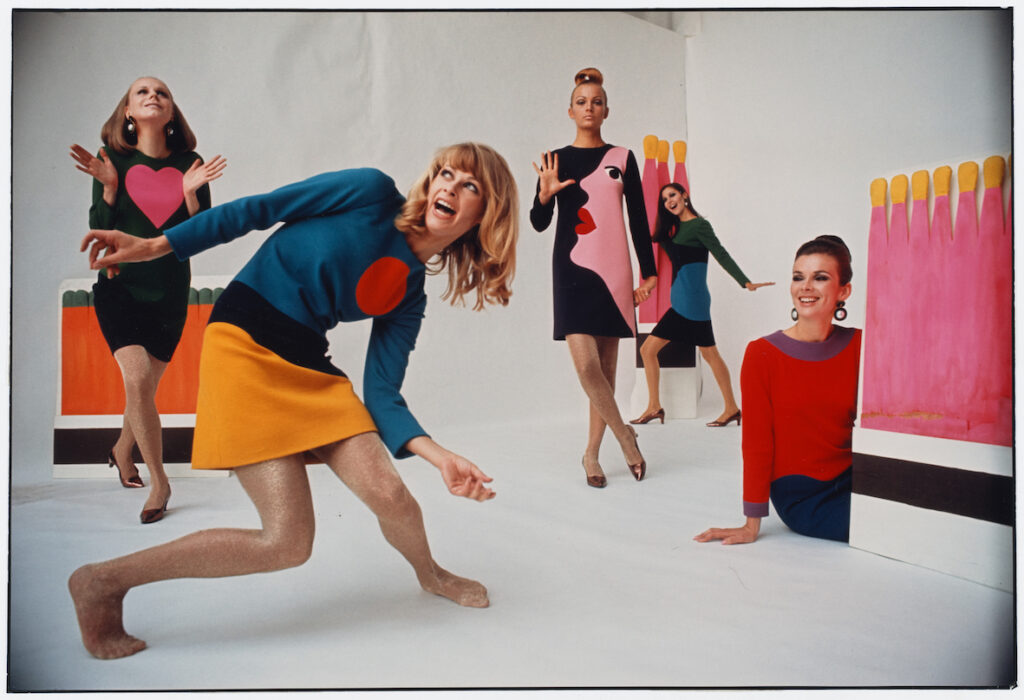
Fashion and photography’s relationship isn’t just symbiotic: the two exist in a constant dialogue. One shapes identity through fabric and form, the other captures and amplifies it, transforming garments into cultural icons.
That will be the key takeaway at a major New York exhibition, presented by the International Center of Photography (ICP), exploring the pivotal role photography played in shaping the identity, influence and legacy of one of fashion’s most celebrated designers. On display from June 11th to September 28th, at ICP’s Lower East Side headquarters in New York, the exhibition brings together more than 300 photographs, archival documents, magazines, contact sheets, advertising materials and personal images spanning four decades of creative collaboration.
Organised in partnership with the Musée Yves Saint Laurent Paris and the Fondation Pierre Bergé–Yves Saint Laurent, the exhibition features works by some of the 20th century’s most influential photographers, including Richard Avedon, Irving Penn, Helmut Newton, Annie Leibovitz, William Klein, Andy Warhol and Steven Meisel. Together, these images reveal how Yves Saint Laurent crafted his public image and challenged conventions surrounding gender, beauty and identity via the camera lens. Expect full immersion in photography’s enduring power to document, shape and elevate cultural history.
Best Automotive Exhibit: BMW Art Cars, Munich
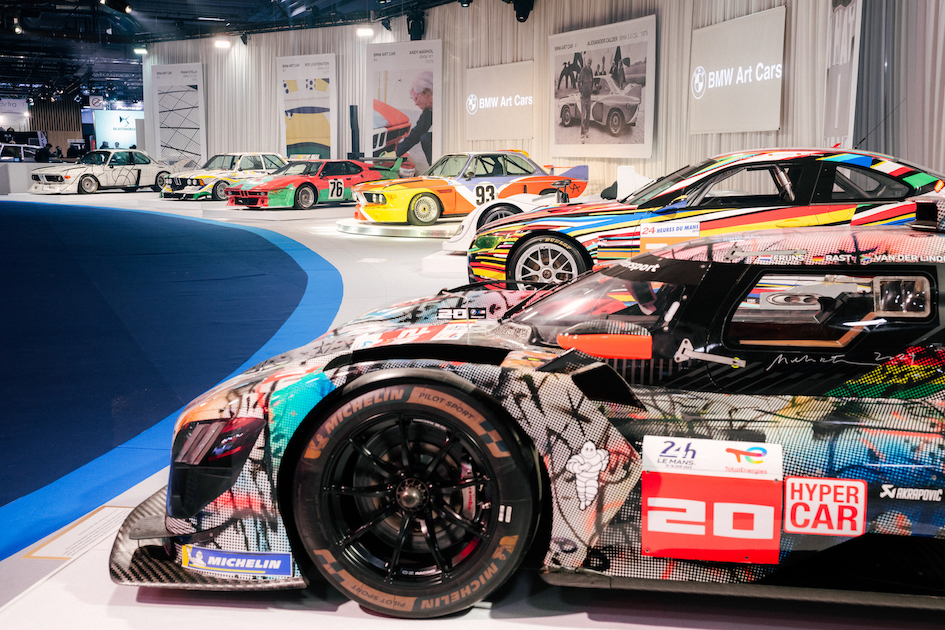
The idea of an art car dates back to the 1960s, when Janis Joplin and John Lennon transformed their Porsche 356 and Rolls-Royce Phantom V, respectively, with vividly psychedelic paintwork. The concept gained wider prominence in 1975 when French racing driver and auctioneer Hervé Poulain invited his friend, the American sculptor Alexander Calder, to decorate the BMW 3.0 CSL he would drive in that year’s 24 Hours of Le Mans.
Calder’s bold application of primary colours launched BMW’s celebrated Art Car programme, which has since seen creations by the likes of Jenny Holzer, Julie Mehretu, Jeff Koons, David Hockney, Roy Lichtenstein and Andy Warhol, each bringing their distinctive visual language to the marque’s imperious machines.
Running from July 29th to August 31st at the BMW Welt in Munich, the exhibition will present all 20 Art Cars together in one location for the first time. As well as the above offerings from modern art luminaries, one particular highlight is Olafur Eliasson’s ‘BMW H2R Project’: Instead of painting an existing vehicle, Eliasson shrouded a hydrogen-powered racing car in steel mesh, mirror-coated stainless steel and several layers of ice—a nod to the relationship between car design and climate change.
The exhibition marks the culmination of the BMW Art Car World Tour, which has been celebrating the 50th anniversary of the BMW Art Car Collection in over 30 countries across five continents since March 2025.