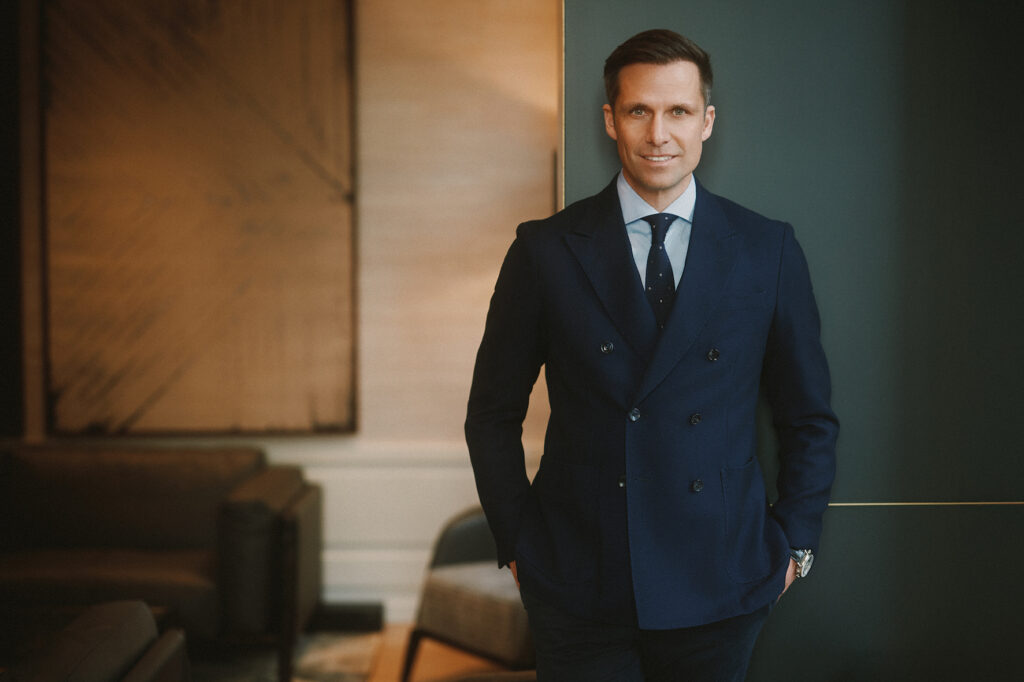
Sophie Galvagnon, co-founder and CEO of Selar, is rethinking Arctic exploration with a near-zeroemission vessel designed for polar expeditions.
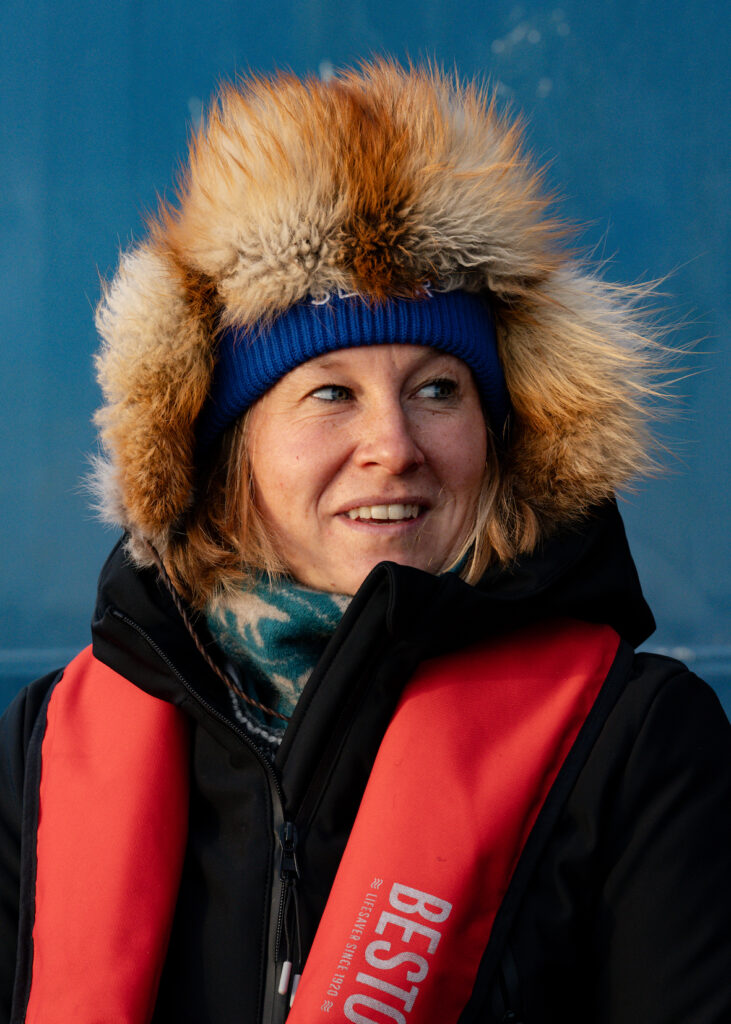
Sophie Galvagnon has built her career at the edge of the map. As the first female Arctic captain, she has navigated some of the most remote and demanding environments on Earth. Today, as co-founder and CEO of Selar, she is taking that experience one step further: reimagining how the polar regions are explored altogether.
“It was love at first sight,” she says of her first encounter with the Arctic ice during her training at sea in the late 2000s. But that fascination was tempered by a growing unease with the industry she had entered. Large-scale cruise ships, she felt, stood in contradiction to the very environments they sought to showcase. “I was not in harmony with the concept,” she says. Instead, she moved towards smaller, more agile expedition vessels, working in the Arctic with just a handful of passengers at a time.

Even that, however, was not enough. “Entrepreneurship is about frustration,” she says. “I was frustrated not to sail with tools that weren’t harming the ecosystem I loved. We had to go further—for the environment, but also for our clients.”
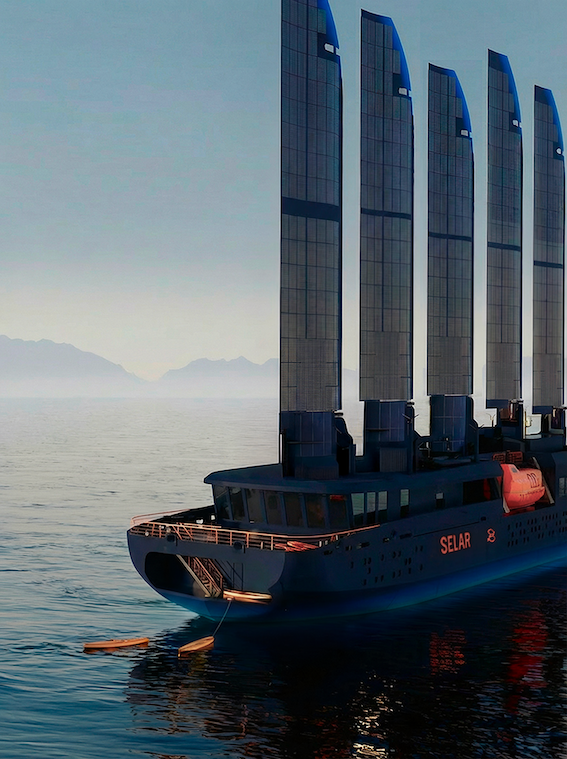
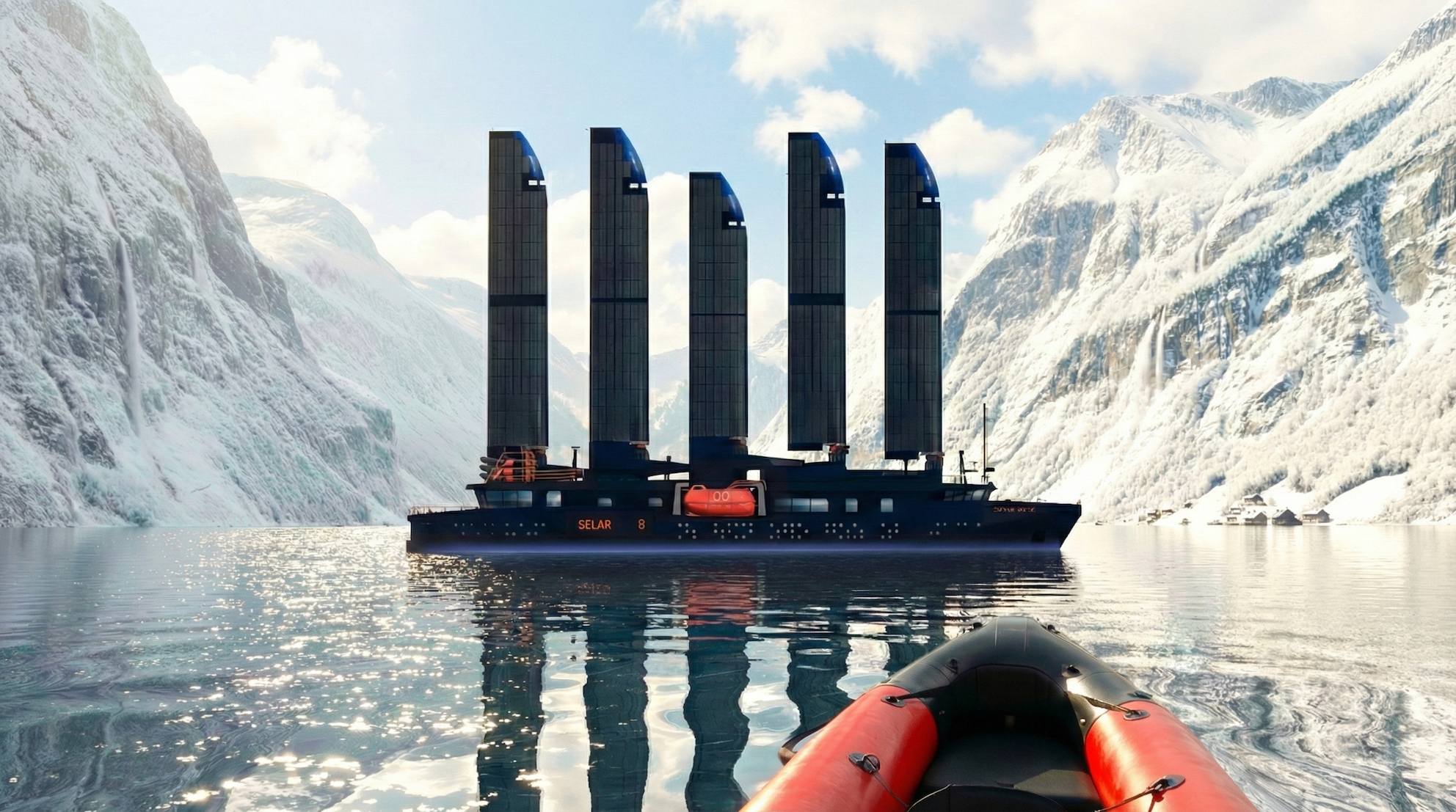
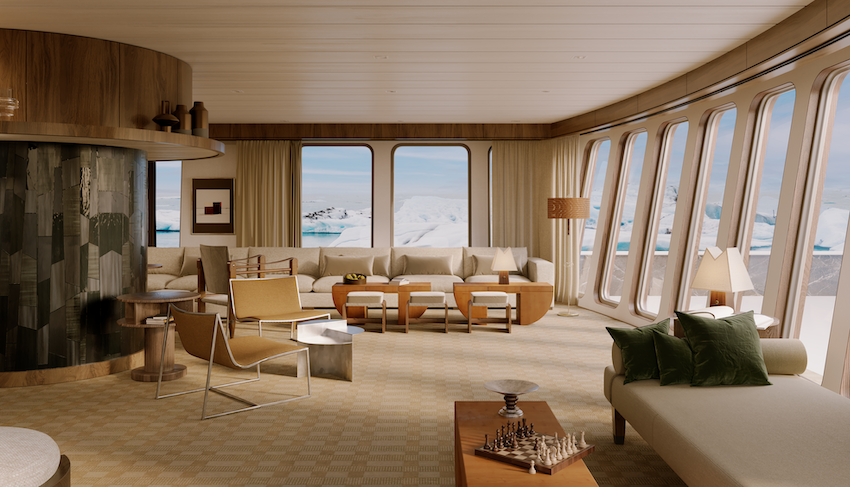
This became the starting point for Selar, founded in 2022, and for its flagship vessel, Captain Arctic—a 70 m, nearzero- emission expedition ship powered by wind, solar and biofuel systems, designed for polar sailing. Designed for just 36 travellers, Selar’s voyages are deliberately modest in size, allowing everyone to go ashore together and experience the environment up close. To encourage total immersion, travellers are asked to switch off their devices. “We reconnect people with themselves by disconnecting them from their daily life,” she says.
Onboard, that philosophy translates into an intentional and reactive way of journeying—no fixed itineraries, minimal excess and constant responsiveness to the environment. Each journey unfolds in real time, guided by weather and wildlife, returning to what she sees as the “essence of exploration”.
That mindset is rooted in Galvagnon’s years at sea. As a captain, she operated with a level of autonomy that demanded both technical mastery and instinctive decision-making. But moving into entrepreneurship allowed her to expand that control—shaping not just the journey, but the entire system behind it. “I needed to create from scratch,” she says. “To design the experience, the tool and the way we operate.”
Part of that shift has involved challenging the conventions of a traditionally hierarchical industry. Maritime culture, she notes, has long been defined by rigid structures and outdated practices—not only in operations, but in leadership itself. As one of just a small minority of female captains, she has experienced that imbalance firsthand. “The minor gender always has to prove more,” she says. Yet rather than conforming, she has used that position to redefine how teams are led, moving toward a more collaborative, less vertical model that prioritises adaptability and shared responsibility.
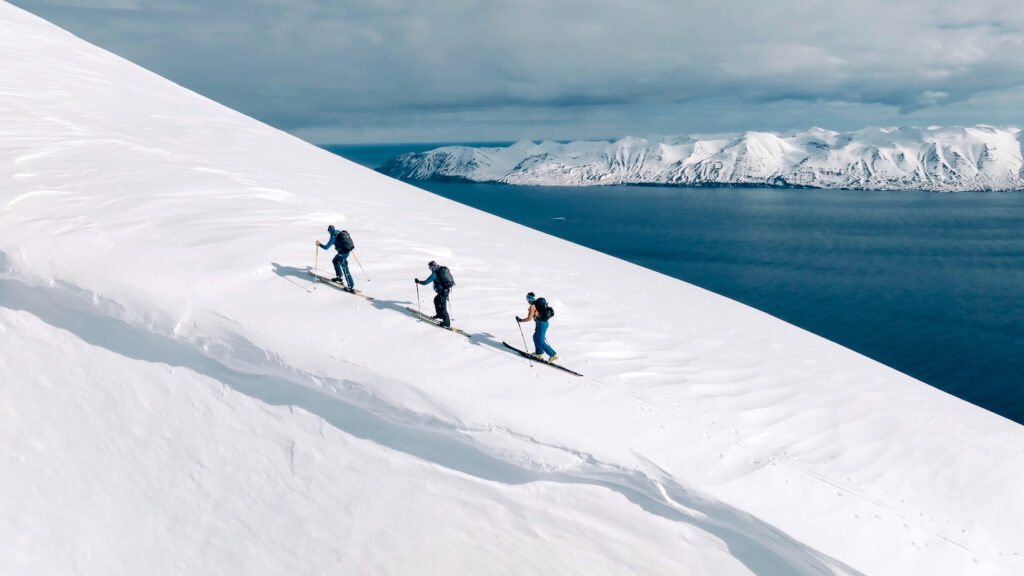
That thinking extends beyond leadership to the wider industry. For Galvagnon, sustainability is not an add-on, but a fundamental shift in how exploration must operate. The question, she says, is not whether people should experience sensitive regions, but how to do so responsibly. Her answer is the aforementioned Captain Arctic, set to launch early next year—a vessel designed to minimise environmental impact while setting a new standard for polar travel.
At the same time, Selar is redefining the idea of luxury within that context. Offering expeditions, not cruises, the company offers access to rare places and memorable moments. Experiences might include dining on drifting sea ice, encountering wildlife at close range or simply existing in total silence beneath the northern lights. It is, she suggests, a different kind of value: rooted not in consumption, but connection to the natural world.
Ultimately, Galvagnon’s work is about more than reaching remote places. It is about preserving them—and challenging an industry to evolve. In doing so, she is not only charting new routes through the Arctic, but redefining how it is explored.