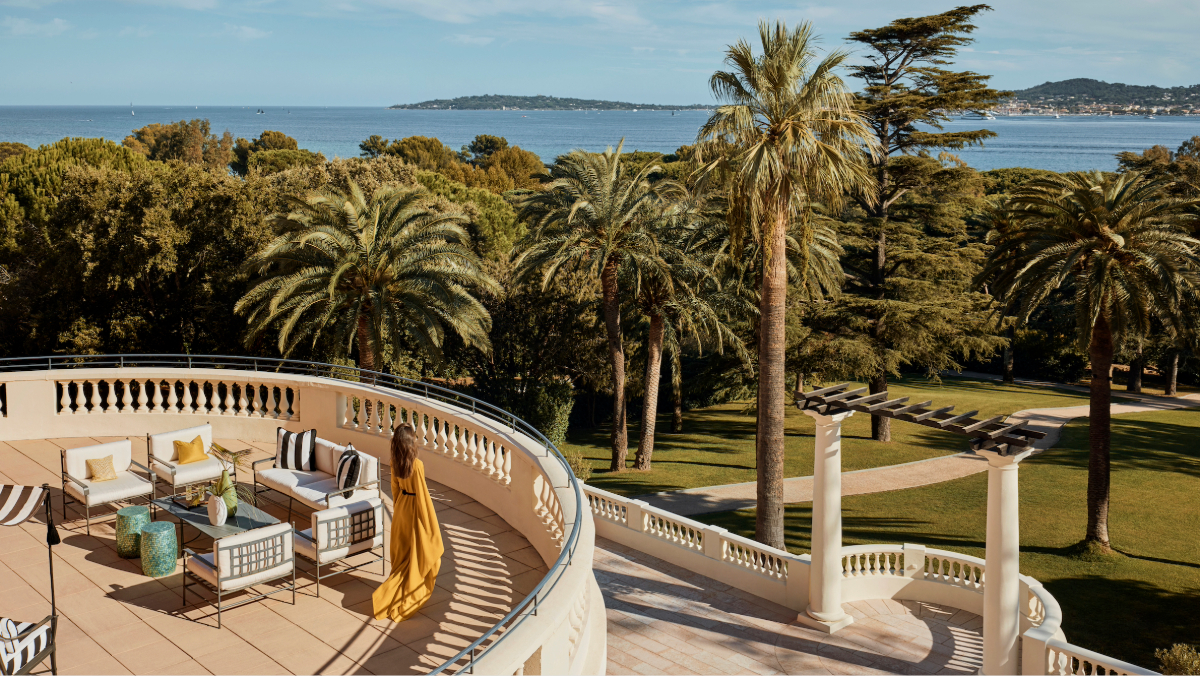
For all of the Côte d’Azur’s appeal, one particular hotspot has always sparkled a little more brazenly than its neighbouring locales. And, seven decades after the jet-set first arrived, Saint-Tropez’ status as an epicentre for hedonistic fine living isn’t going anywhere.
It started with the artists. Seafaring Ligurians, Roman imperialists, Genoese shipbuilders and aristocratic health seekers had all trodden its sands before: but the story of Saint-Tropez becoming one of the most mythologised hotspots on the planet—a home-away-from-home for jet-setters, chart-busters and silver screen icons alike—really begins with the arrival of painters such as Paul Signac and Henri Matisse, who came around the turn of the 20th century to capture the Côte d’Azur’s luminosity and chromatic intensity, and export it on canvas to Paris and beyond.
A few decades later, in 1934, F. Scott Fitzgerald’s lyrical prose in Tender Is the Night piqued the interest of readers in his native America, offering them a vivid, if vicarious, understanding of this curious zone on the French Riviera, roughly halfway between Marseille and Nice. The glam factor, though, was still embryonic. The catalyst formed in 1956 when, barely half a century after Matisse had first placed his easel on the sun-washed quay of the port, the late Brigitte Bardot power-boated through its waves in Roger Vadim’s And God Created Woman. In the ensuing years, a once remote village became a thriving hub of cafés, brasseries, guesthouses, terrace-flanked restaurants and yacht clubs.

Take a 15-minute stroll south from the main town—north-facing, thanks to its position on a jutting peninsula—and you’ll reach Chapel Sainte-Anne, where Mick and Bianca Jagger’s post-nuptial ceremony was held in 1971. In the same morning you can check out Leonardo DiCaprio’s favourite spot to hold a charity gala (Domaine Bertaud Belieu) and visit Bardot’s former home La Madrague, on the waterfront of the Bay of Canoubiers. It was this property that Bardot’s then suitor—German playboy, photographer and art collector Gunter Sachs—showered her with rose petals in 1966, weeks before they married in Las Vegas.
Saint-Tropez’ status as a centre of gravity for popular culture folklore isn’t set to wane any time soon. At the time of writing, filming of the fourth series of black-comedy whodunnit The White Lotus is currently taking place at Château de La Messardière, a 19th‑century-palace‑turned‑luxury hotel high above Saint‑Tropez Bay, built as a wedding gift from a cavalry officer to his bride. What drew location scouts and producers here, following three previous series set in Hawaii, Sicily and Thailand, will become clear when the series airs—but one would expect the writers to make merry with the tension between sun-drenched myth and modern-day privilege.
The White Lotus is, naturally, only the latest entry on Saint-Tropez’ IMDB page: one that already includes La Piscine (1969), La Chamade (1968) and The Transporter (2002). And, one of the Anglosphere’s most streamed TV series coming to town isn’t the only sign that the Saint-Tropez magic isn’t fading. At least two recent property purchases— billionaire hedge fund manager Ken Griffin’s of a £68 million or so waterfront estate in June 2024 and LVMH’s Antoine Arnault’s of a villa in the heart of Saint-Tropez for around £14 million—show that this place is still a centre of gravity for the world’s most high-profile individuals. (So, it’s fair to say, does the fact that British Airways has launched a new seasonal route from London City to Toulon-Hyères.)
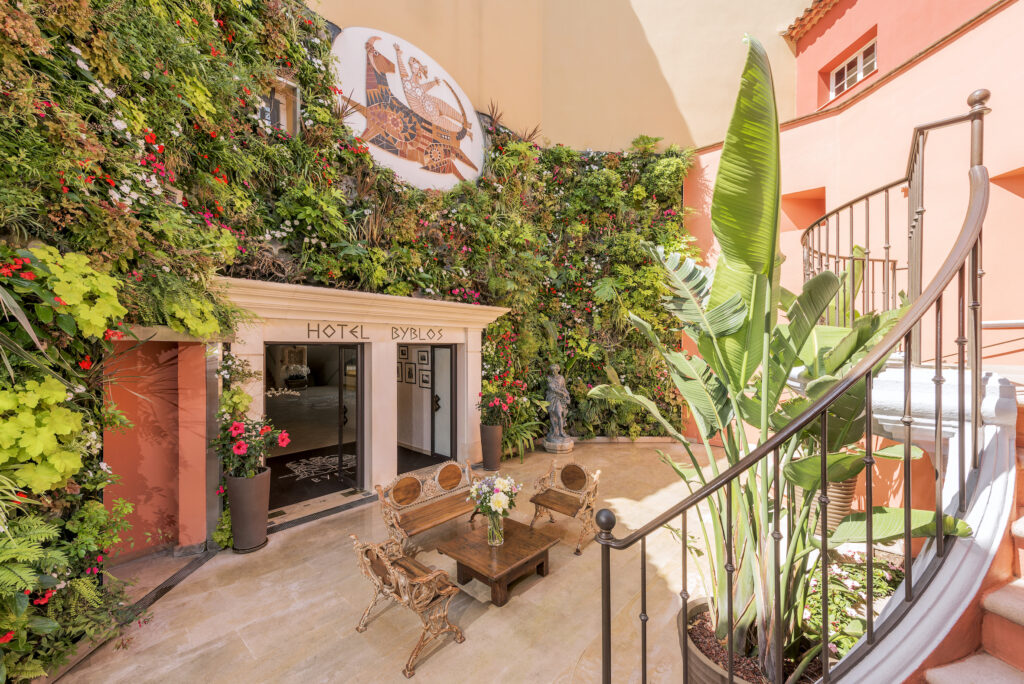
Sleepy, with a low-key, local appeal during the cooler months, Saint-Tropez wakes up from its slumber each spring and summer with a host of new developments, luxury hotel upgrades and innovative pop-ups and collaborations. Renewed energy is palpable across this year’s high season, especially on the locale’s’ illustrious hotel scene. Having added executive chef Nicola Canuti’s Italian restaurant Il Giardino and Skybar—the first rooftop bar in the hotel’s history, offering panoramic views of Saint- Tropez—to its repertoire last year, Hotel Byblos Saint-Tropez is poised to reopen in April with eight new suites (including three duplexes) by acclaimed architect Laura Gonzalez (who is also behind the exceptional, undulating glass facade of Cartier’s new flagship in Miami’s design district).
Regular patrons will also be delighted to see the return of Zuma’s residency—offering Japanese cuisine with an emphasis on fresh ingredients and bold flavours—for the 2026 season, while Byblos Beach Ramatuelle is introducing a refreshed culinary direction under chef Allan Gonthier, focused on light, seasonal Mediterranean cuisine. Enhancing its wellness offering, the hotel is debuting a new 100m² Technogym fitness centre as well as two new spa treatments, including a reflexology-based massage.
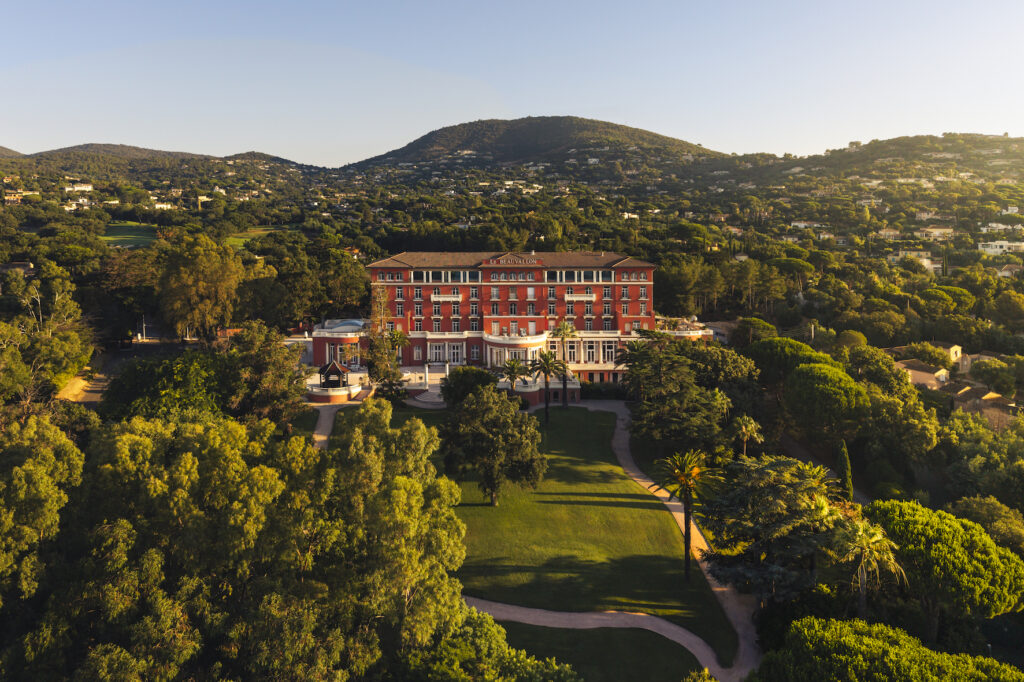
Elsewhere, a 10-minute speedboat trip from Saint-Tropez itself, a jewel of the Belle Époque, Le Beauvallon—once a retreat for Winston Churchill and Audrey Hepburn—reopens its doors this spring under the COMO Hotels & Resorts umbrella. Built in 1914, the 10-hectare estate will have 42 individually designed rooms and suites and a signature restaurant, Beauvallon Sur Mer, which serves dishes with Asian influences and Mediterranean lightness. LVMH’s Cheval Blanc St-Tropez will no doubt maintain its Riviera foothold with polished continuity—not least at La Vague d’Or, the hotel’s restaurant, whose chef Arnaud Donckele undertakes a “painstaking study of the local fish in a bid to devise recipes that reveal the full scope of each species’ nuances, textures and tastes”, according to the Michelin Guide, which has bestowed three stars upon it.
Mingling with all the new developments each summer, there are plenty of mainstay institutions and events which are gloriously familiar to frequent visitors. Some establishments have survived the entirety of Saint-Tropez’ perpetual Golden Age to date. Sénéquier—whose famous red terrace has hosted notables including Bardot, Pablo Picasso, Françoise Sagan, Jacques Chirac, Karl Lagerfeld, Giorgio Armani, Elton John, Sting, Bono and Leonardo DiCaprio—is one. Another is Le Club 55, a simple beach canteen on Pampelonne Beach during the filming of And God Created Woman, but now a centre of gravity for royalty (both showbiz and actual) visiting Saint‑Tropez. Le Club 55’s enduring clout as a Saint-Tropez icon was highlighted by the profound sense of loss in this part of the world in October last year when Patrice de Colmont, proprietor for half a century, passed away.
Meanwhile, Les Caves du Roy—a neonbathed temple of Riviera hedonism beneath Hotel Byblos—still has velvet rope factor in abundance. For art lovers, there’s the Musée de l’Annonciade—a chapel-turned-gallery, packed with works by French masterminds such as Matisse, Derain and Marquet—while revellers can experience Isabelle, a house music festival named in honour of a local woman who died in 2023 in a snorkelling accident, held at the Citadelle de Saint-Tropez for two days each July. Expect world-class DJs and immersive production experiences at an event which draws well-heeled electronica fans from all over the world.
“It’s a place that manages to evolve while preserving the very essence that first captivated visitors in the 1960s,” explains Antoine Chevanne, owner of Hotel Byblos, of the locale’s enduring appeal. “There’s the glamorous and exciting side people are familiar with, through films and TV shows—but underneath it all, it is still a small fisherman’s village that is true to its origins, shaped by culture and history. Beyond the couture stores, you can find yourself wandering quiet streets, meeting local artisans at the Provençal market or watching the sunrise over the port in complete tranquillity. For me, it’s this mix that keeps the magic alive. That balance between authenticity and energy is what gives Saint-Tropez its soul.”
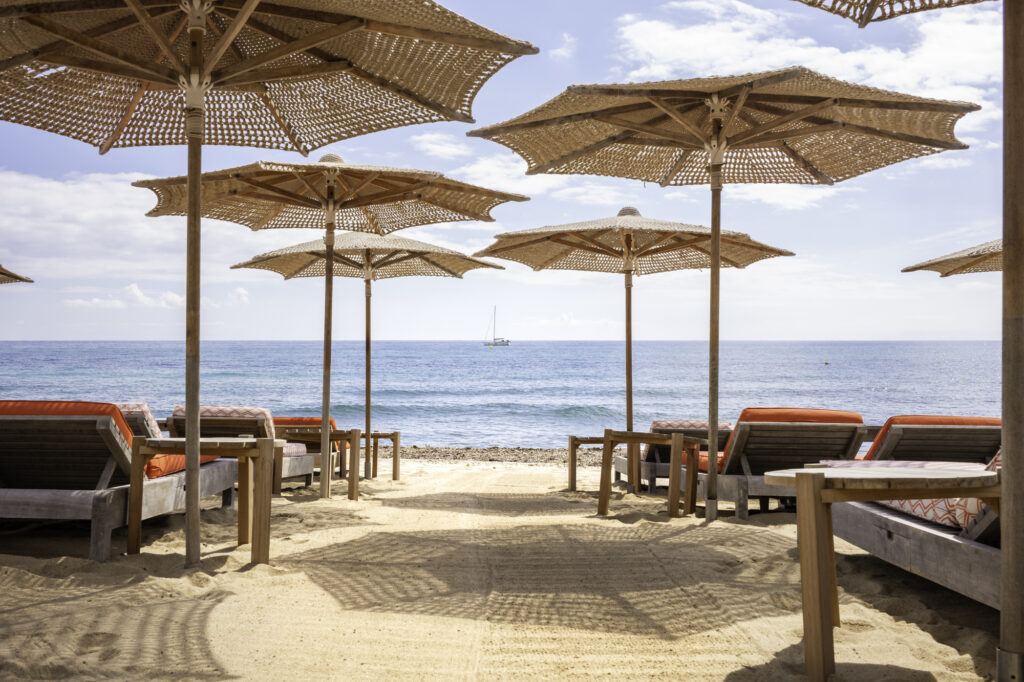
Chevanne advises first-time visitors to come during one of the two “shoulder seasons” that bookend the summer peak—between April and June, or around September or October. “An early-morning walk along the Sentier du Littoral is a great way to discover the coastline as locals do, with great views, far from the crowds,” he says. “In the heart of the village, stopping at Sénéquier on the terrace overlooking the port is a must—today it remains a symbol of Tropezian life. For something more intimate, I recommend an apéritif at Le Sube, a charming spot with an Art Deco atmosphere that feels timeless. Exploring the small, secluded beaches, such as La Plage des Graniers, gives a sense of the Saint-Tropez that is understated, natural and deeply connected to its roots.”
Véronique Grange, hotel manager at La Réserve Ramatuelle, also cites authenticity as Saint-Tropez’ defining virtue. “The village and its peninsula have remained almost unchanged for the past 30 years, with nature protected and development carefully controlled,” she says. “At its heart, the village of Saint-Tropez is just as it’s always been—its port, narrow streets and the Ponche district retain a timeless charm. Pampelonne Beach remains as breathtaking and lively as ever. What truly defines the destination is balance. Despite its global appeal, it remains intimate. Its establishments prioritise discretion and exclusivity. La Réserve Ramatuelle, for instance, is the smallest palace hotel in France.”
She continues: “Although this corner of the Côte d’Azur is highly sought-after, the quality of service and the spirit of the village bring the destination to life. Even throughout the summer season there is a vibrant community—expressed through longstanding traditions, local events and a deep-rooted art de vivre. These elements further affirm—if any proof were needed—that Saint-Tropez is enriched by residents deeply attached to their traditions and way of life.”
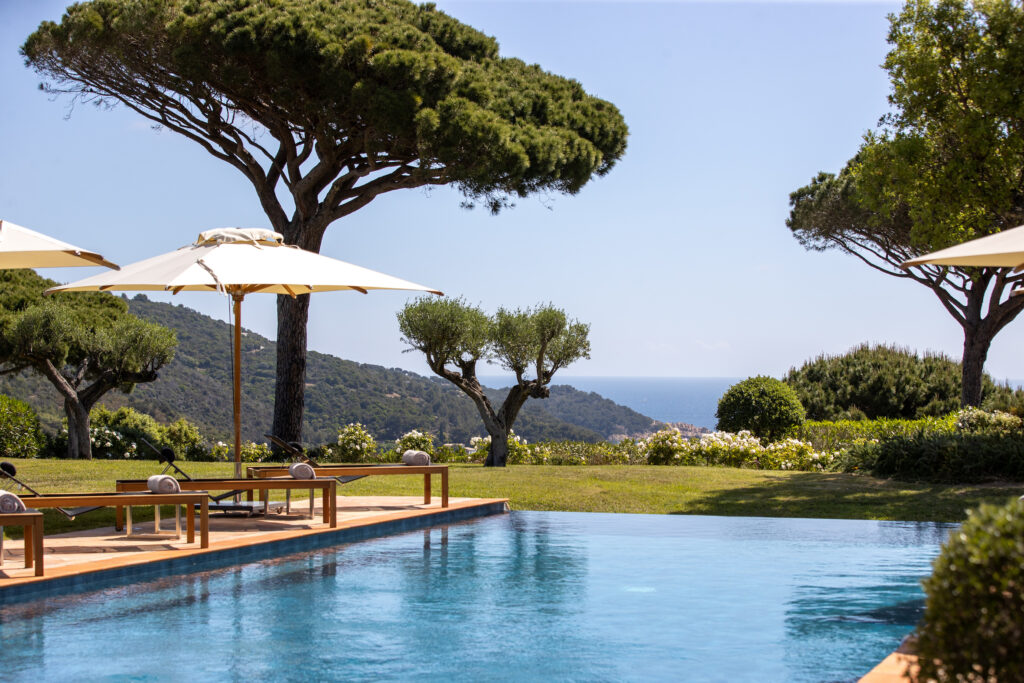
For visitors who want a fleeting experience of what it’s like to be a year-round local, Grange has a full itinerary to suggest. “Wander through the old narrow streets, especially the Ponche district, before enjoying a morning coffee at the port, then shop for the day’s provisions around Place aux Herbes and the fish market. Continue along the roads of the peninsula, winding through vineyards and pine forests, before heading to Pampelonne Beach for a delightful leisurely seaside lunch on its fine sand. Take time to discover the village’s remaining artisan boutiques; for instance, select your Tropezian sandals from one of the two craftsmen still practicing their trade. Finally, immerse yourself in artistic Saint-Tropez with a visit to the Musée de l’Annonciade, and discover—or rediscover—one of the painters who brought this beautiful village into the spotlight in the last century.”
Indeed, for all the high-summer showmanship, the town’s appeal merely changes, rather than diminishes, when the crowds thin. It’s hardly devoid of activity in the cooler months—witness the sailing regatta Les Voiles de Saint-Tropez, harvest-season wine fêtes, Christmas markets, winter concerts at historic venues like Château de la Moutte—but the slower rhythm is equally charming.
And perhaps that is the overarching paradox of Saint-Tropez: a place defined as much by stillness as it is by spectacle. One which changes profoundly with the tilts and turn of the planet, yet its essence holds true.