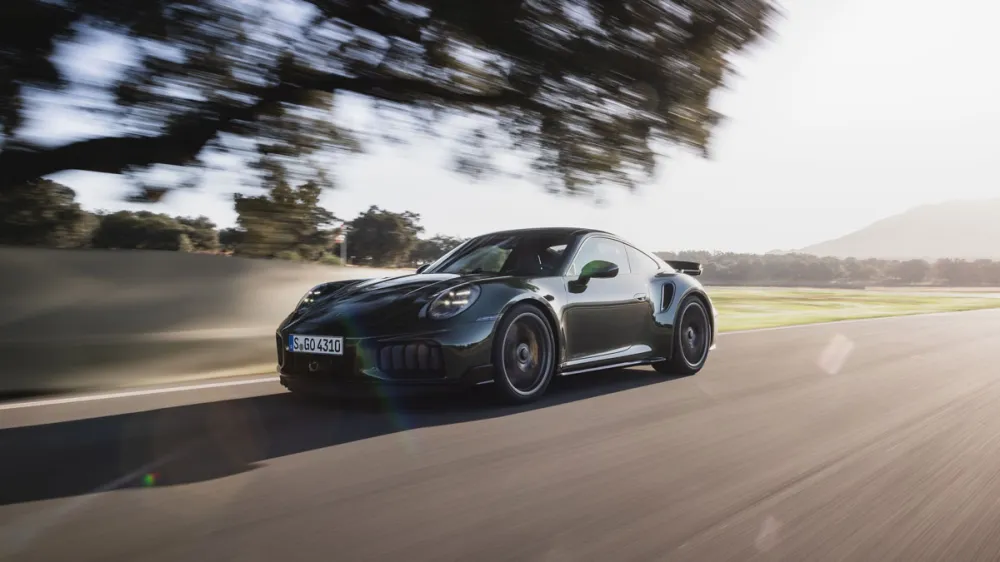
The 2026 model variant is the most powerful production 911 to date, yet still delivers as a standout daily driver.
The Porsche 911 Turbo has been the brawniest rear-engine Porsche since the variant’s first model year in 1974. Boasting 701 hp, the new 2026 Turbo S eclipses the GT2 RS as the most powerful 911 in history. But it also packs one of the most newsworthy updates since the 911 model’s launch over a half-century ago: a hybrid power-train configuration. Building on the drivetrain of the other hybrid 911, the GTS, with an even more performance-focused twist, the 911 Turbo S ups the stakes while signaling ways electrification will define Porsches of the future.
Design
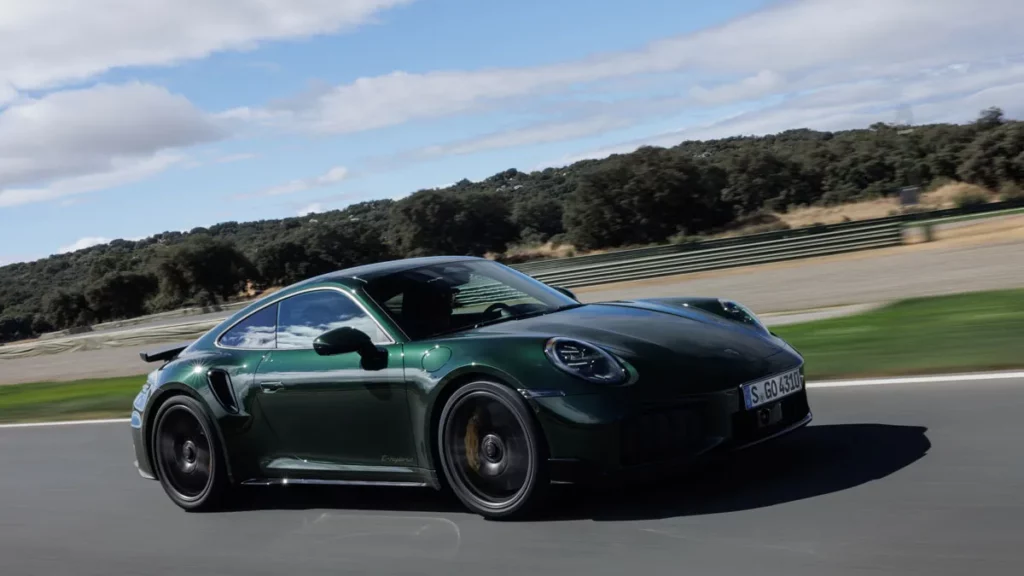
Porsche’s 911 Turbo S earned notoriety as being the brand’s alpha model based on two prominent visual features: its authoritative hips and its substantial tail spoiler. The new 2026 version refines those traits but adds a number of performance-enhancing design features. With this latest update, the wide-stance sports car gains five active cooling flaps at the nose (which are also shared by the GTS) and rear bumper flares that bring the illusion of added width. A few other subtle tweaks aim to improve its aerodynamic efficiency.
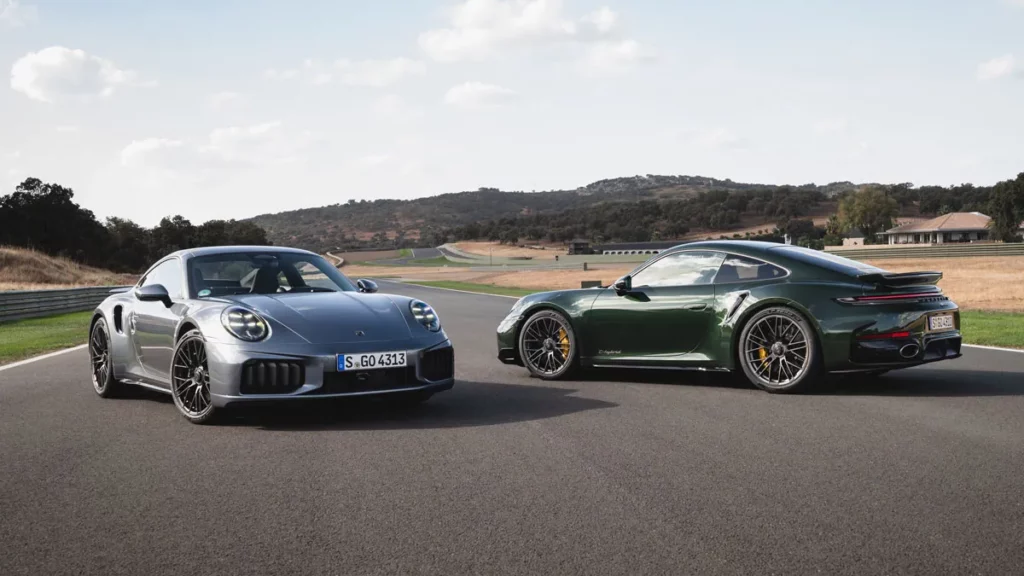
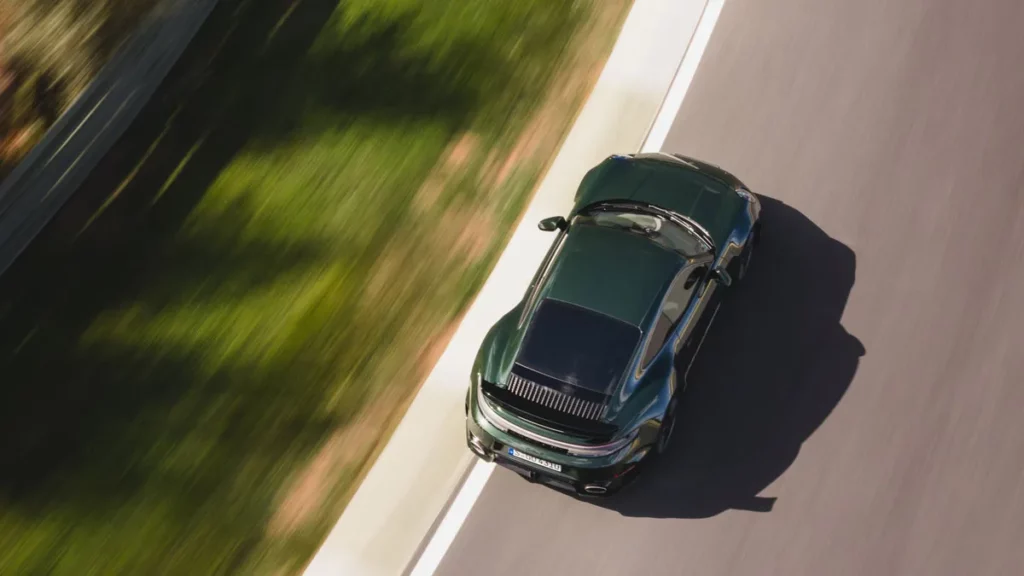
Though the latest model iteration—designated internally and among Porsche cognoscenti as the 992.2—loses some of the design purity of its predecessor, the new elements reflect Porsche’s escalating obsession with achieving maximum efficiency despite this being the most powerful production 911 in history. Active aerodynamic features, including the front lip, vertical air flaps, underbody diffusers, and a movable rear spoiler, all combine to reduce drag by up to 10 percent when set to their slipperier positions.
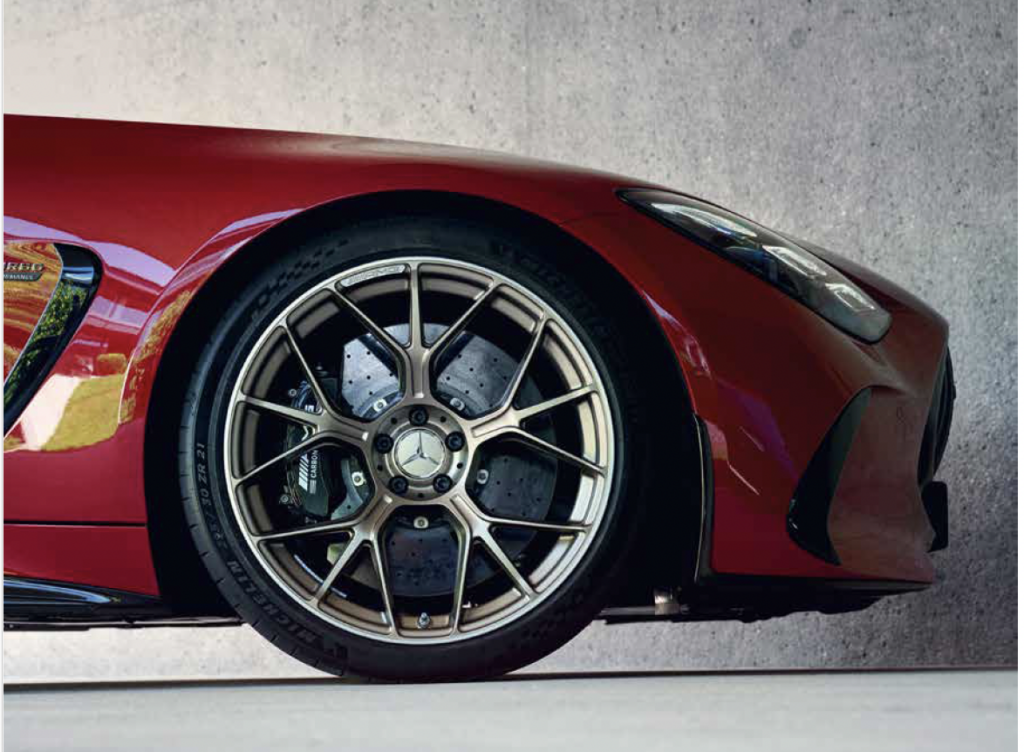
The Turbo S is now accented by a signature anthracite shade that Porsche calls Turbonite. The dark greyish color brings an element of sobriety to elements like the front badge, the rear wing slats, the side window trim, and the wheels, which have grown wider at the rear for a more assertive stance. Those seeking an even bolder look can dip into the Porsche Exclusive Manufaktur catalog, which offers options like carbon-accented wheels and the SportDesign Package, which bundles a front spoiler lip with side fins, side skirts, and a rear wing addendum.
Power Train and Hardware
The 911 Turbo’s hybridization comes on the heels of Porsche’s first-ever hybrid 911, the GTS, which was introduced last year. The new Turbo’s T-Hybrid drivetrain shares an engine with the same 3.6-liter displacement as that found in the GTS and carries over only six parts from its predecessor: the injectors. However, it produces significantly more total power thanks in part to the addition of a second turbocharger. The new electric turbos spin at an astounding 145,000 rpm and anticipate boost using a high-speed motor.
Total output is 711 metric horsepower (ps), which is 61 ps more than its predecessor. While Porsche engineers originally targeted the 710 figure, they couldn’t resist a good easter egg: they eked one more stallion out in order to sneak in a reference to 0711, the city of Stuttgart’s telephone code.
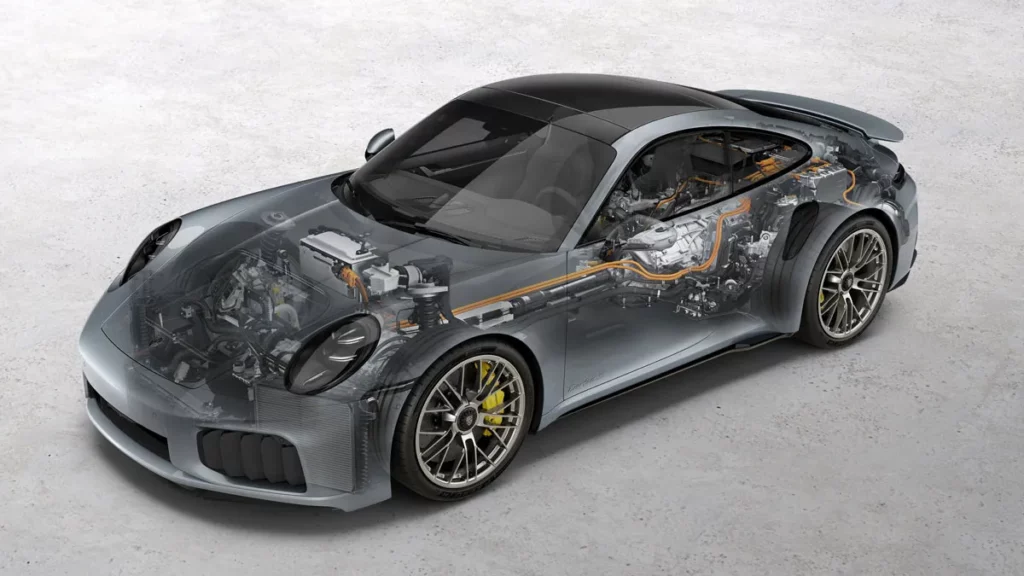
Power is supplemented by the same high-voltage 1.9 kWh battery found in the GTS, though torque is limited to 560 ft lbs because that’s all the eight-speed dual-clutch PDK can handle. Had Porsche reinforced the transmission, a cascade of effects would have required even heavier components. Because the new drivetrain adds heft—the new Turbo gains 180 pounds in sum—a titanium exhaust system mitigates some of the weight gain. There is also a new suspension system—ehPDCC, short for electrohydraulic Porsche Dynamic Chassis Control, which actively adjusts roll stabilization and ride quality. The largest brakes in 911 history have also been fitted—with 10-piston 420 mm front and four-piston 410 mm at the rear—further compensating for the Turbo S’s additional weight.
Performance
The ultimate metric for high-performance sports cars is the motorsport mecca that is the Nürburgring Nordschleife. This latest version of the 911 Turbo S has completed the 12.9-mile circuit in 7:03.92, a full 14 seconds quicker than its predecessor. Another gold standard point of reference: the coupe can accelerate to 60 mph in 2.4 seconds and the convertible in 2.5 seconds, which is a .2 second improvement that yields a two-car-length advantage by the time 60 mph is reached. Bringing those numbers to a broader context, the Turbo S edges out the Rimac Nevera (7:05.29) but falls short of the Ford Mustang GTD (6:57.68) and 911 GT3 RS (6:49.32) when it comes to Nürburgring lap times.
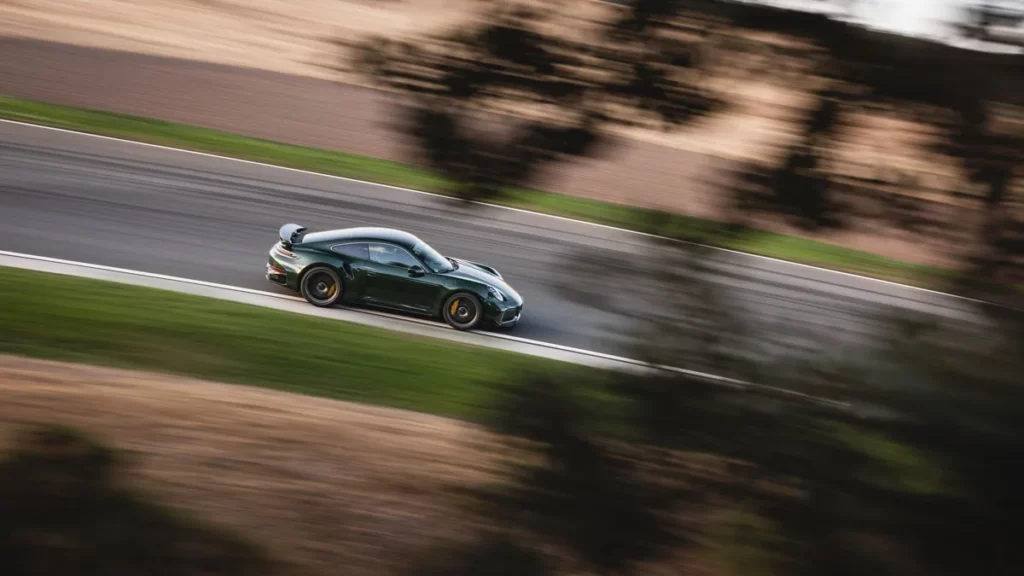
Clinical numbers aside, the Turbo S feels breathtakingly quick from the driver’s seat, with a tremendous wallop of thrust surging it to breakneck speeds in what feels like slivers of time. At startup, the flat-six engine’s titanium exhaust sounds rowdier than that of the average 911, but is modulated enough to make long drives untaxing. The engine’s power is delivered as a seamless, voluptuous stream of thrust that plays eerily well with the eight-speed dual-clutch transmission. Similarly, the suspension’s variability makes it capable of soaking up all but the most jarring bumps or firm enough to feel sharp and capable in corners.
Unlike Porsche’s track-focused RS variants, the Turbo S differentiates itself through a remarkable breadth of capabilities. Yes, it can accelerate fiercely and reach 200 mph. But it’s also comfortable enough to use as a commuter car, a grocery getter, a ski-trip sled, and everything between.
Is it Worth It?
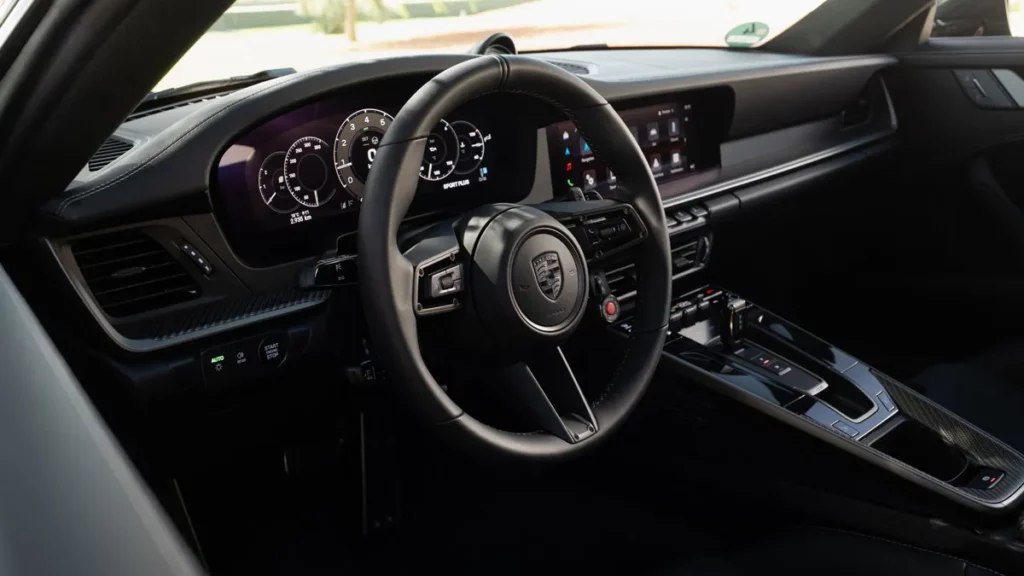
Porsche’s predecessor to the latest 911 Turbo S was already a profoundly quick and capable everyday sports car that happened to pack supercar performance. This time around, the hybrid’s improvements are real, though not earth shattering. Yes, the new Turbo S is quicker and more refined than before. But in some eyes, its revised bodywork loses a bit of its predecessor’s understated elegance. Some nostalgic drivers will also miss analog hallmarks such as the physical tachometer needle and ignition switch (as opposed to an “Engine Start” button).
The counterargument is that Porsche 911s tend to experience minimal depreciation anyway, and the Turbo S is no exception. Though the coupe starts at $270,300 and the convertible at $284,300 (and can surpass the $400,000 mark when generously equipped), there is less money to save by purchasing its predecessor than you might expect. Unless you’re attached to those last few analog holdovers, the new Turbo S makes a case for itself as a more visually low-key alternative to flashier supercars, especially at a time when RS models are being subjected to six-figure price markups.