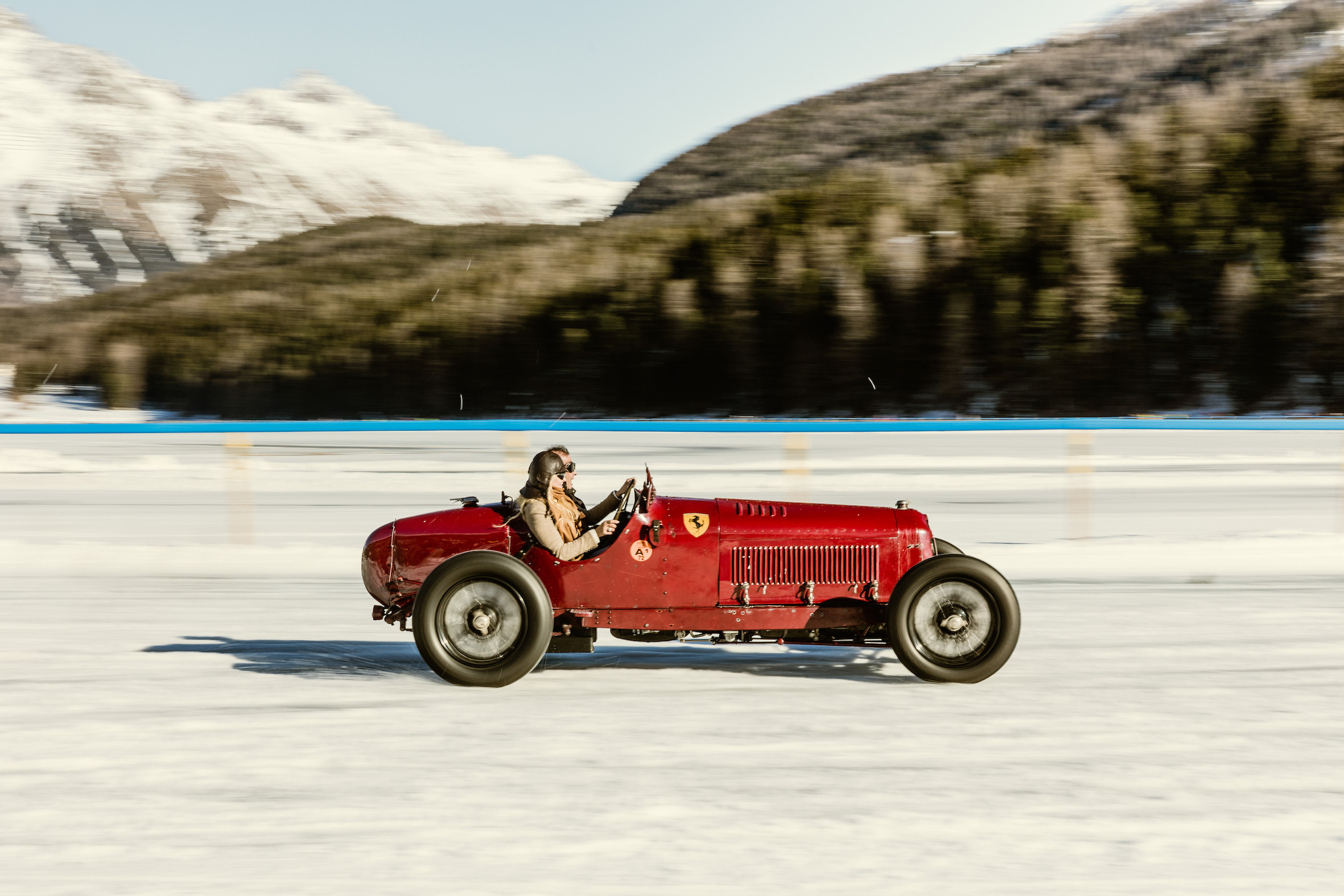
Imagine if you could transpose all the magic of a vintage car extravaganza to a winter wonderland? The I.C.E. St Moritz does exactly that. Expect “a spectacle that feels personal to everyone in attendance”, in the words of sponsor Richard Mille’s Peter Harrison.
There’s little wonder that international classic car events hit their stride in summer: what could be more breath-taking than the backdrops of Lake Como or Pebble Beach as the sun-kissed stages for stunning, open-topped mechanical vehicles? But then came, in 2019, the inaugural I.C.E. St Moritz: a wholly unexpected vintage car event held in the dead of winter on a frozen lake that turned the idea of an international Concours of Elegance on its head.
The brainchild of patron and automobile historian Marco Makaus, the I.C.E. St Moritz had a somewhat sputtered start thanks to Covid, but in the last four years has become a mustattend fixture on the social and motorsport calendar. And now, ever growing ties to the art world and the surrounding Engadin Valley are further cementing the global reputation of Switzerland’s I.C.E. St Moritz.
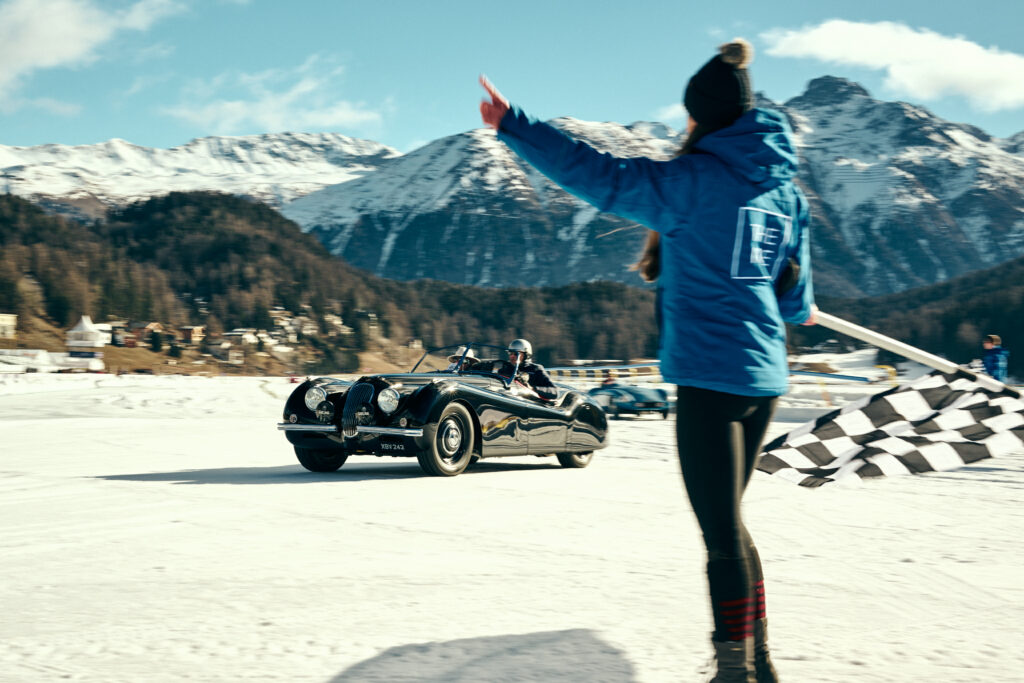
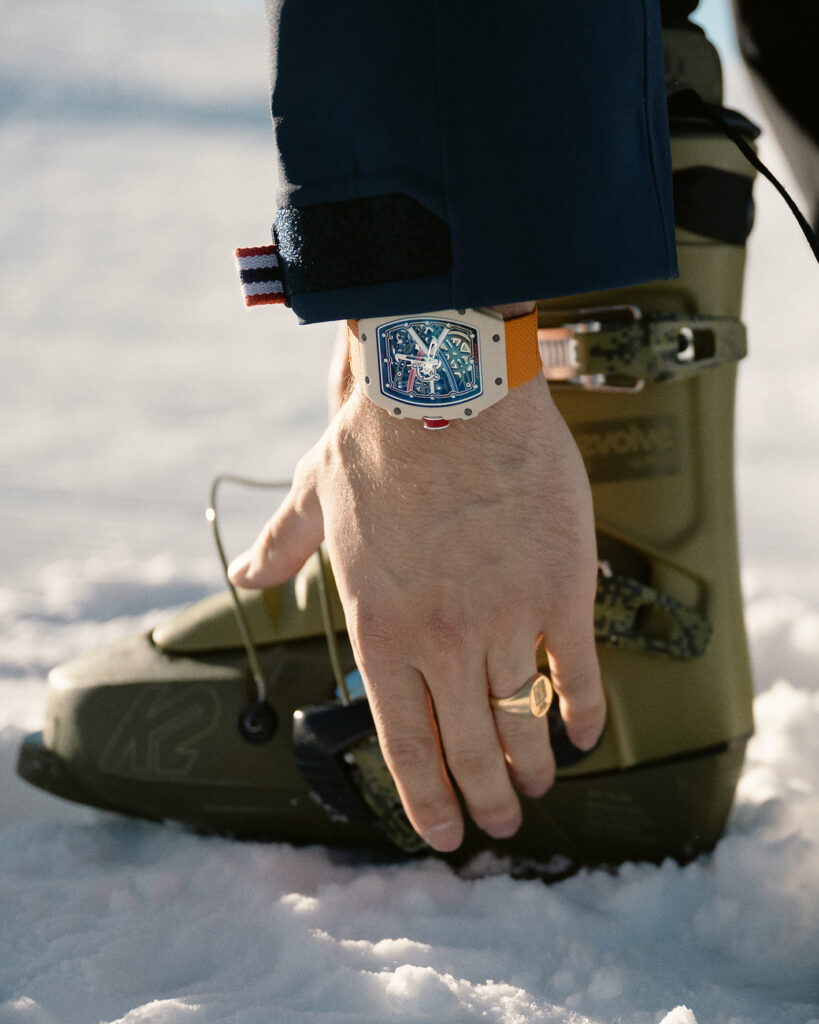
The I.C.E’s ability to push boundaries— yet remain rooted in heritage, provenance and craftsmanship—draws collectors and connoisseurs, not to mention the top partners. Swiss watchmaker Richard Mille has been title sponsor of the I.C.E. for four years, with Peter Harrison, Chief Executive of Richard Mille Europe and the Middle East, saying: “The I.C.E. offers a completely fresh interpretation of a concours, challenging convention by transforming automotive heritage into a celebration of mechanical artistry against the outstanding backdrop of the Engadin Valley… What sets aside I.C.E. St. Moritz and makes it truly special is their ability to push boundaries and fuse the unexpected with some of the world’s most extraordinary classic cars, theatrically displayed around the frozen lake.”
The appeal of I.C.E.—especially beyond traditional classic car circles—also comes from that buzzword that keeps cropping up in the world of luxury: authenticity. With artificial intelligence charging ahead, frighteningly eroding a sense of belonging and connection, the idea of gathering people together in a surreal setting to enjoy the most incredible classic cars is intoxicating. “That emotional impact reaches well beyond traditional automotive circles,” says Harrison. “The I.C.E. has a unique format [compared] to any other concours and provides a welcoming atmosphere and spectacle that feels personal to everyone in attendance.”
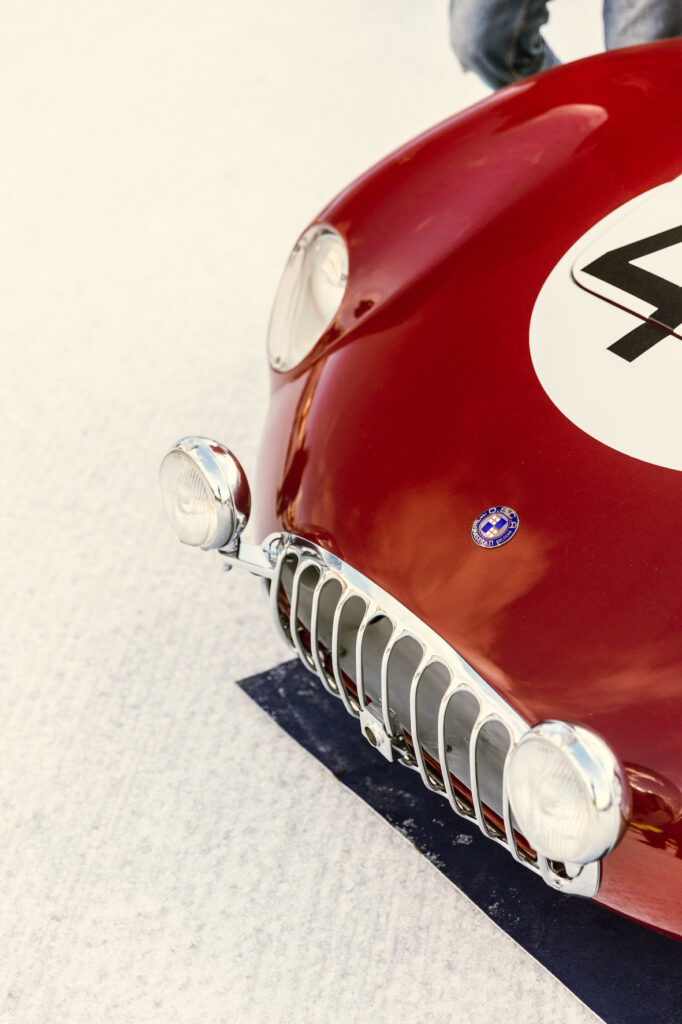
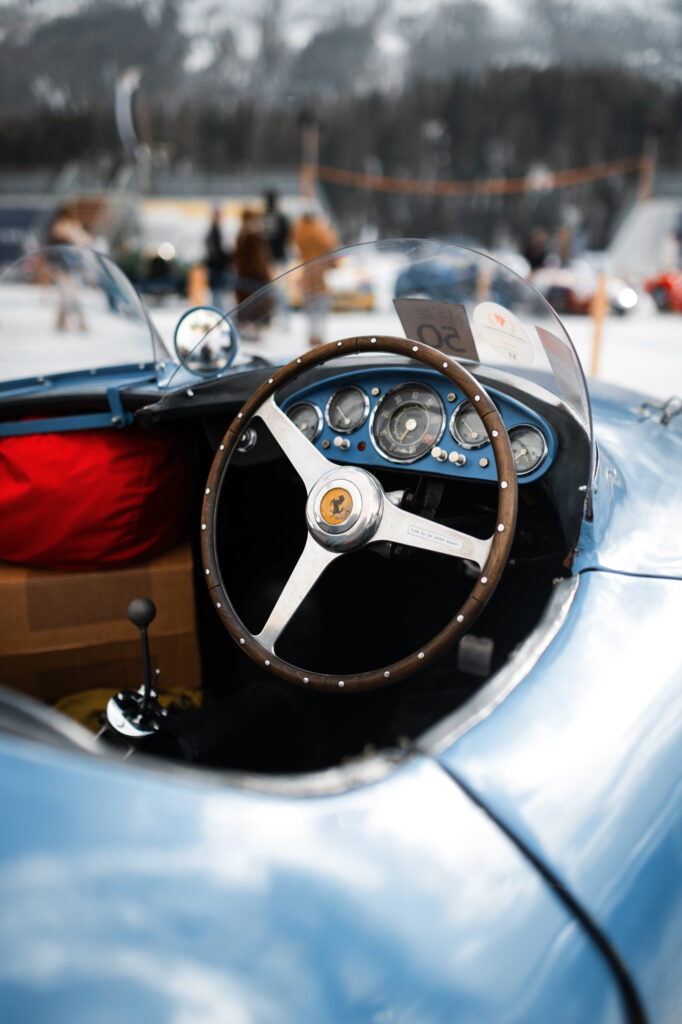
Unlike other car concourses that are more static, where immaculate cars rest on perfectly manicured green lawns, the I.C.E. captivates audiences with bold and audacious laps around a frozen lake, controlled skids and snow sprays adding drama and thrills. Raw experience and spectacular ice driving skills heighten the sense of emotion and awe, as drivers hash it out for awards like ‘Best Sound’ and ‘Hero Below Zero’ on the lake. Then there’s the pristine white backdrop, chrome reflecting off the icy snow, the Albula Alps framing the whole spectacle. As I.C.E. co-founder Ronnie Kessel says: “The ice emphasises the line of the cars. When you see the white surface, you actually see the car as the designer imagined them when they were created 30, 40 years ago: but now here sliding through the corners.”
Some five editions in, there’s a real sense of camaraderie surrounding I.C.E., as echoed by the iconic industrial designer Marc Newson. Last year, his 1934 Bugatti Type 59 won Best in Show at the I.C.E.—which notably saw a poignant moment between two creative greats when Newson was awarded the trophy by Lord Norman Foster, who designed the award. This year, Newson’s winning Bugatti rightfully held pride of place on the official poster for the 2026 edition.
“The I.C.E. seems an unlikely setting for warmth and connectivity, but it somehow works beautifully,” explains Newson. “The specificity of the location only serves to enhance the collective experience—one underscored by a real reverence. The venue is at the heart of the town in every sense. It’s embraced in its entirety—emotionally and physically.”
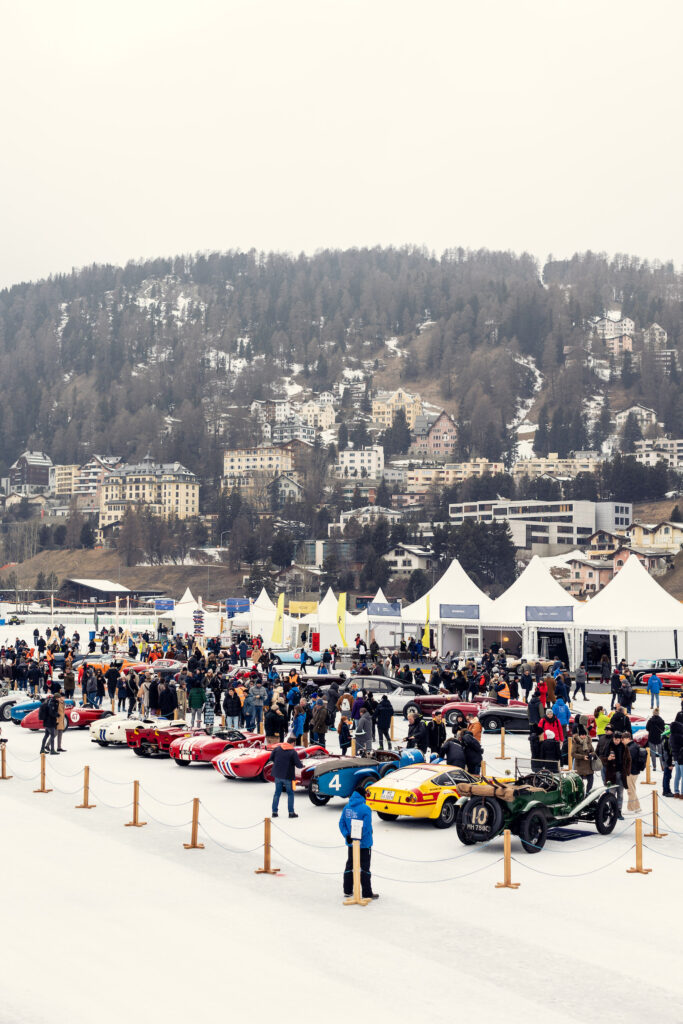
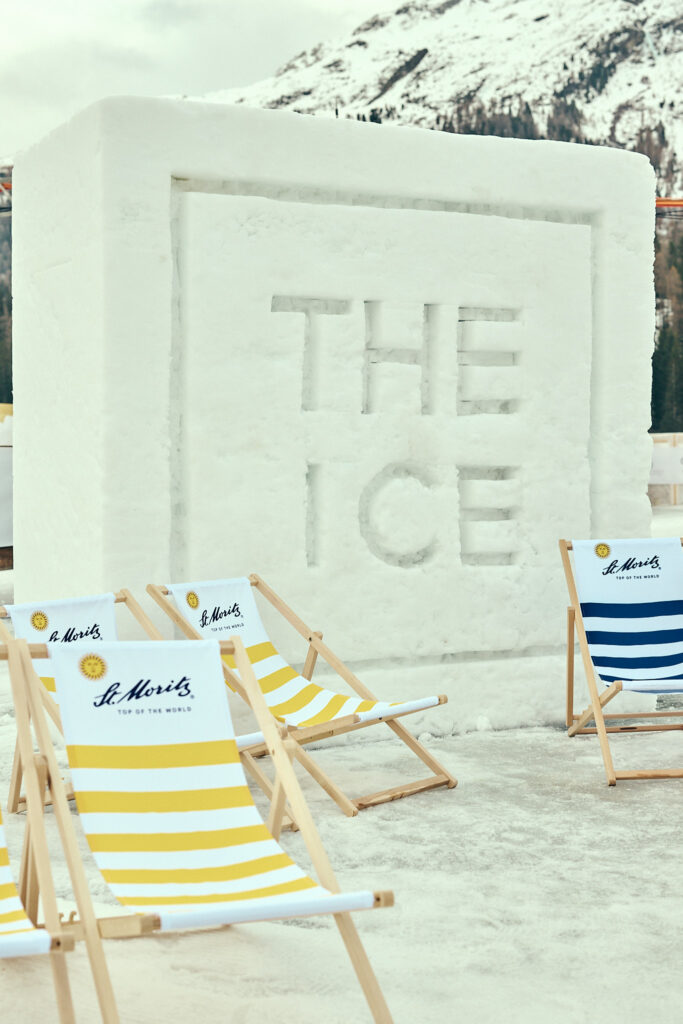
In January, the 2026 edition welcomed a new curated art programme, the I.C.E. Art Show, intended to extend the I.C.E.’s presence and draw more fans beyond the lake and into the city. Art exhibitions were staged throughout— like the exhibition Art in Motion, curated by Diana Segantini, featuring a range of works including painting, sculpture and photography by Swiss and international artists. There were also panel discussions, notably focused around local Engadin artists and collectors from both motorsport and art, as well as film screenings.
All this is the realisation of an original vision coming to the fore as the I.C.E. gains traction. “The I.C.E. is not just an event but a true cultural movement,” explains Kessel. “Those who come aren’t simply interested in cars—they’re drawn to a very specific kind of automobile: rare, aesthetically unmatched. The kind you admire as you admire a work of art.”
Richard Mille too is embracing this spirit, finding expression in its art book (above) that pays tribute to the region, Engadin: An Art Journey. A collaboration with the Swiss museum Fondation Beyeler, the book blends narrative, imagery and design—its form inspired by classic supercar manuals—and is what Richard Mille’s Harrison describes as “a celebration of art, culture and community… a bridge between our automotive ties and our commitment to the arts”. Limited to only 1,000 copies (50 of which are gifted to participants) the inaugural book last year landed with a collection of essays and features by the region’s most influential artists and residents, including Rolf Sachs and collector Grażyna Kulczyk.
Volume II—unveiled the day before I.C.E. opened—features equally impressive luminaries, such as the artist Gerhard Richter, fashion powerhouse Luisa Loro Piana and the local hotelier and art curator Ladina Florineth. The latter knows well the diverse and international community that flock to Engadin (“despite the high altitude, where people sometimes cannot sleep but it’s okay— they adapt”). Famed for its stunning natural beauty and centuries-old farm houses and architecture dotted a round the valley, Engadin is known for its “lakes, incredible light and incredible strong nature and energy”, says Florineth. “That’s why all the artists, painters, writers and philosophers came here.”
And now the world’s most discerning classic car enthusiasts are too—and raring to go when it comes to writing the Engadin Valley’s sparkling next chapter.