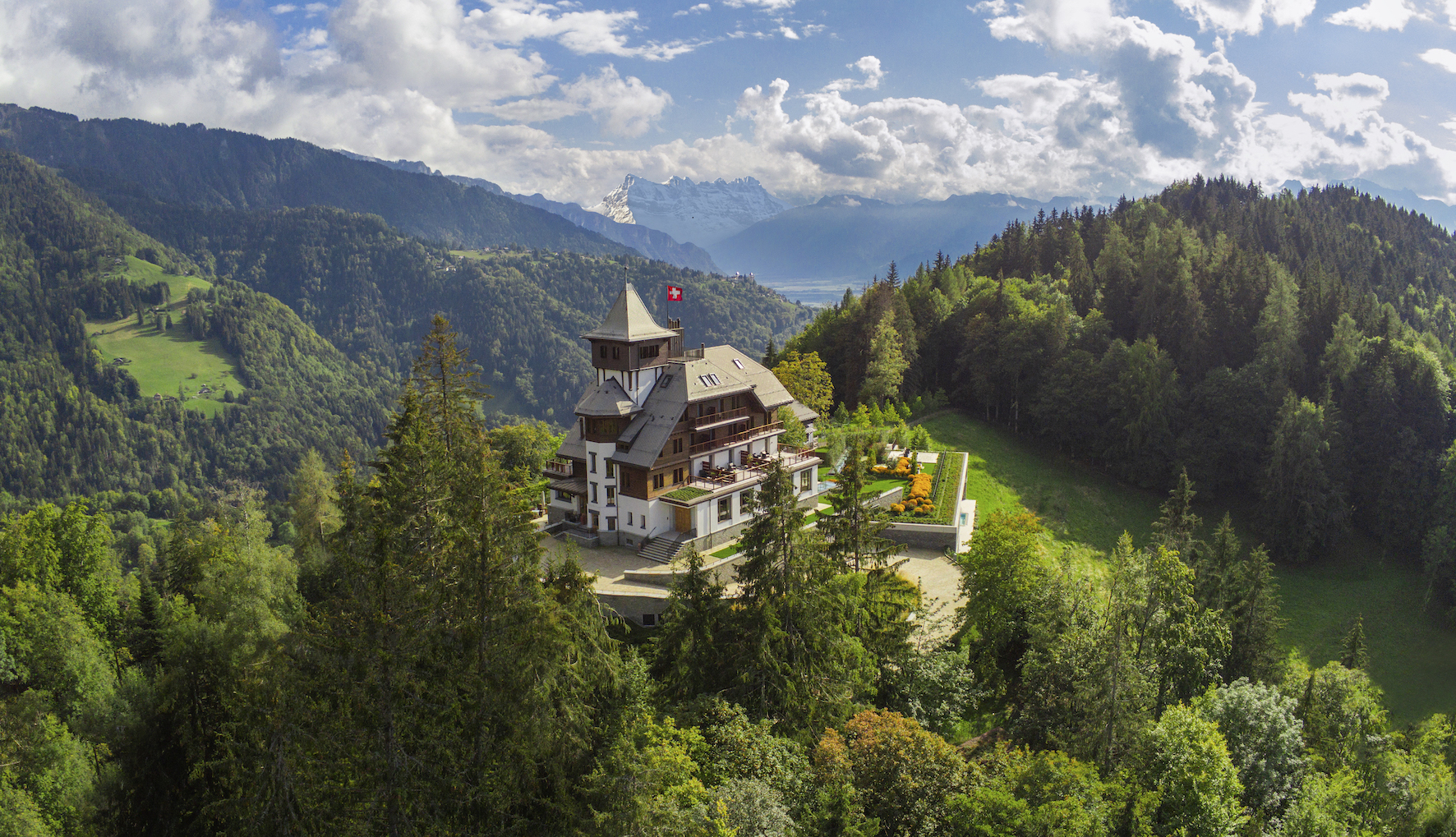
Tucked away on a Swiss mountaintop, the world-leading Clinic Les Alpes is a fully licensed, in-patient medical recovery facility catering to the elite—and is a decades-long passion project of its founder.
There are several ways to arrive at Clinic Les Alpes. Some clients choose to come by helicopter, but most come by one of the clinic’s chauffeur-driven limousines, either from various nearby private airports or Geneva (one hour) or Zurich (two hours) international airports. Visitors drive up winding alpine roads past old farmhouses, terraced vineyards and a girls’ finishing school, before rounding some hairpin bends and catching their first glimpses of Lake Geneva below and the French Alps in the distance. Emerging from the dense pine and fir forests, one can’t help but arrive at the clinic with a sense of calm—the reset underway, induced by the silence and the air quality, the temperature notably cooler.
This is one of several USPs of Clinic Les Alpes, a pioneering rehabilitation clinic that offers the highest level of care, and—a rarity in the world of recovery—a fully licensed, in-patient Swiss medical facility, regulated by the Swiss Department of Health. Its clinical staff of doctors, psychiatrists, nurses and psychologists are on duty 24/7, 365 days a year. Another USP, due to its status as a hospital, is that every aspect of recovery treatment is available all within the property, including several state-of-the-art detoxification suites.


But what truly makes the clinic stand out is its founder, Patrick Wilson. He had his own painful journey and over 20 years of successful recovery. In his own words: “I experienced the wheels come flying off. I’ve been through the sausage-making machine myself.” As a result, he built Clinic Les Alpes from the ground up. It was a 10-year labour of love that saw the clinic finally open in 2018. “I was adamant to build this clinic through the eyes of a patient, through my own experiences and not as an investor. I know what works and what doesn’t,” he tells Robb Report when we visit the clinic in spring, a burst of local narcissi “May snow” flowers beginning to blanket the landscape in white, replacing the powder from the winter just past. “My view was that if I was going to do this, I would do it properly or not at all. The basic mantra was, and is: ‘I got my life back 20 years ago and I have no doubt I would be long dead if I had not.’”
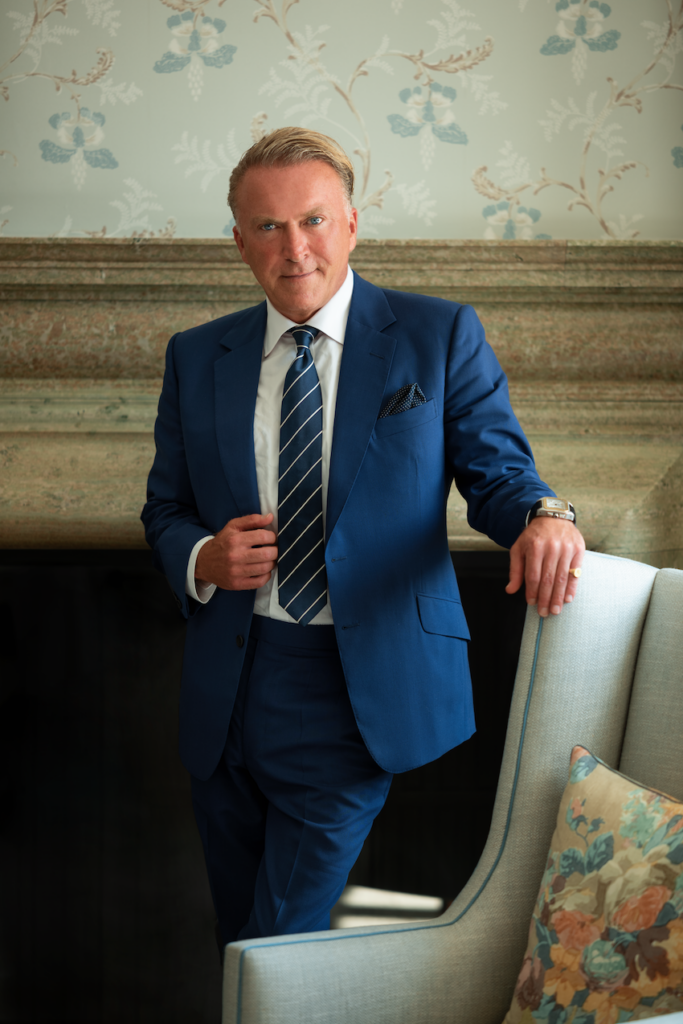
For Wilson (pictured above), a successful businessman with links to the pharmaceutical industry, “doing it properly” meant regulatory supervision, or what he calls a “hierarchy of competency” to achieve results and success. “I have a long career in business that is highly regulated,” he says. “A regulator has supreme power. Regulators are not there to annoy you—they’re there for a purpose, which ultimately is consumer safety. That’s my start and finish: the wellbeing of the patient. Unfortunately, in my opinion, this is not always front and centre in this industry.”
Echoing his own experiences, Wilson opened the clinic primarily for issues of substance and behavioural dependency. The clinic also has bespoke programmes for severe burnout, trauma, post-traumatic stress disorder, anxiety and depression, which perhaps reflect modern life today and a growing mental health crisis.
The research consortium Future Forum reports that exhaustion is on the rise globally, with 42 per cent of the workforce reporting burnout. Depression and anxiety, extreme enough to cause absences from work, is costing the global economy US$1 trillion (around €840 billion) annually, while the Financial Times reports that CEOs are burning out faster than ever, especially those in the finance and insurance sectors.
Core to the ethos of Clinic Les Alpes is the use of integrative medicine for each patient, and creating individualised treatment programmes for the best possible chance of recovery. This includes the full 360-degrees—from medical, psychological, environmental and nutritional (the on-site chef customises menus for each patient in conjunction with their dedicated nutritionist) to medical therapies.
The clinic itself has a distinctly family feel. The medical director Dr Randolph Willis and chief operating officer Alexandre Tavassoli have both been involved well before the establishment opened its doors. Patients, meanwhile, generally arrive at the main château, a once derelict Art Nouveau hotel that’s been lovingly restored, but also completely reimagined—and independently financed by Wilson. There are a further three subterranean levels below, flooded with natural light from floor to ceiling windows, housing the stateof- the-art medical facility that has, in essence, been blasted deep into the mountain rock.
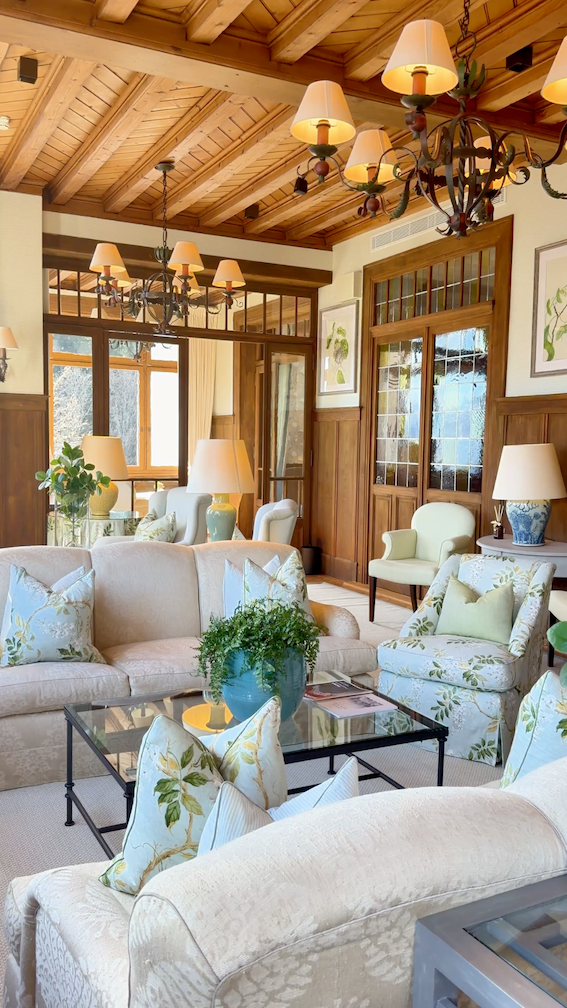
Wilson originally hired an interior designer for the château, but the renderings kept coming back in the vein of a five-star hotel. “People spend about three nights in a five-star hotel— this has to be a home,” recalls Wilson (the average stay at the clinic is 28 days). Wilson ended up doing all the interiors himself, picking the antiques, the linen curtains, the rugs, the lamps, in fact everything that would give the château a feeling of warmth so the patients would feel comfortable, safe and cocooned. He opened up blocked fireplaces so patients would have the comfort (and scent) of log fires throughout the beautiful public rooms. “Patients often arrive full of anxiety and it is important to bring a sense of calm and familiarity to the environment,” Wilson explains.
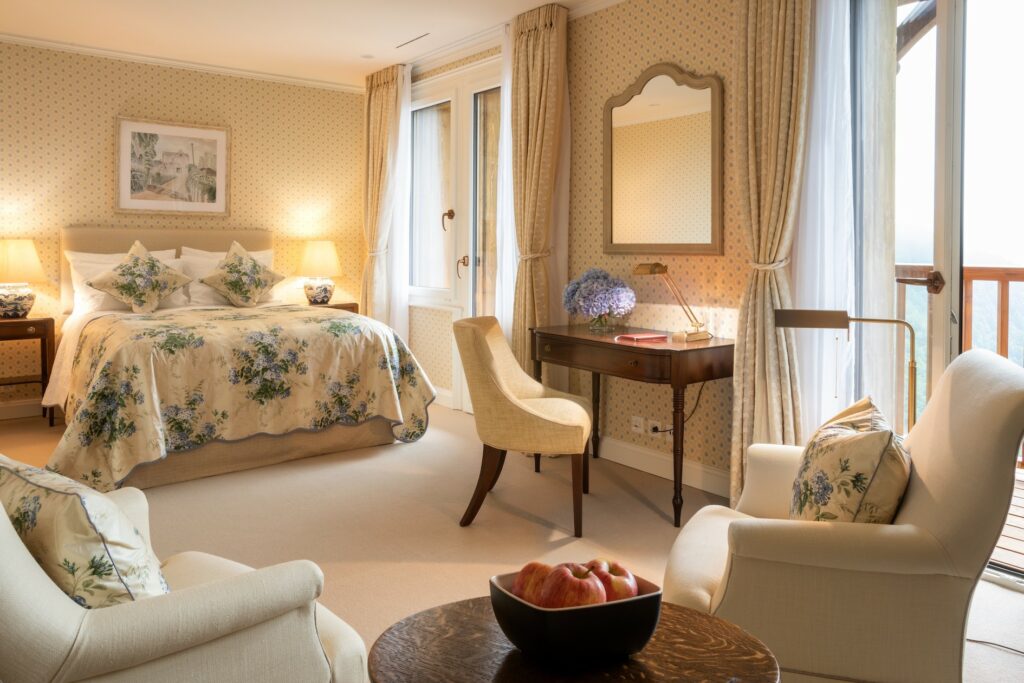
The aim is to emulate a British country home, which reflects Wilson’s own background, but also the notion of somewhere cosy and familiar: the visitor’s grandmother’s house, perhaps; somewhere safe and completely peaceful and ambient —and which is not normally associated with a rehabilitation clinic.
“I want you to arrive here and feel like the owners have gone away and given you the keys to their home,” says Wilson. The château includes an impressive multi-level penthouse suite that can accommodate staff and security detail, which reflects the kind of clientele that stays here (prices start at around €55,000 per week).
Patients are largely prominent figures from the worlds of music and film, alongside professional athletes, royalty, politicians and, increasingly, top CEOs from Fortune 500 companies and enterprises. Their families and children are also regularly treated here too.
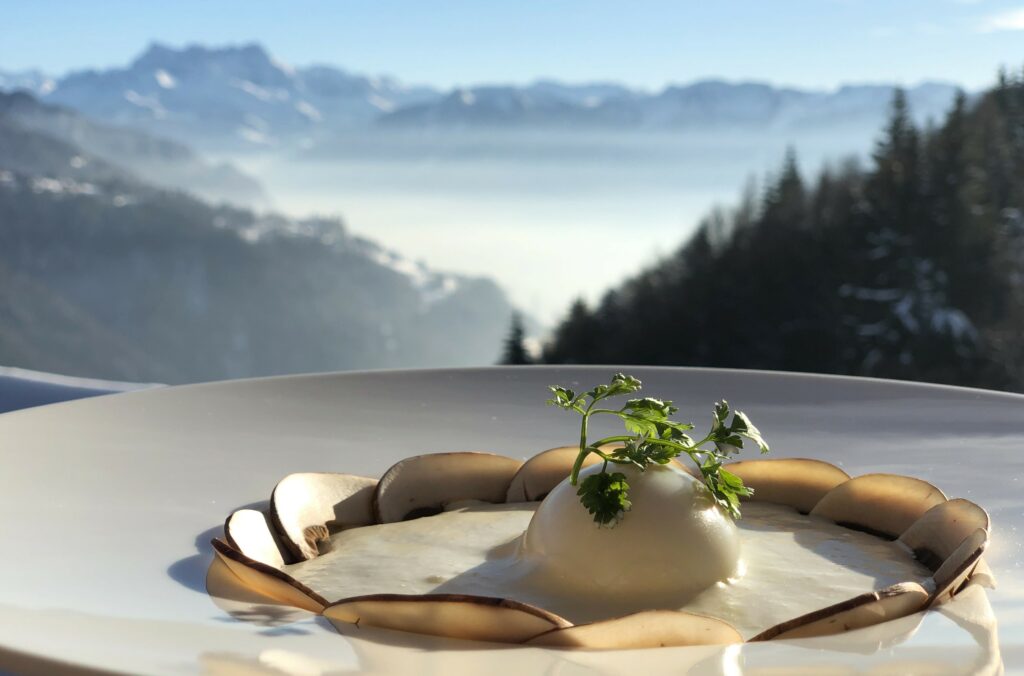
If the château calls to mind a beautiful British country house, the medical facility below is pure Manhattan modernism. “There also, I didn’t want anything that resembled a clinic,” says Wilson. “I didn’t want a whiff of disinfectant or anything like that at all.” Discretion and privacy are also paramount: for extra-discreet patients, for example, secret direct access from outside can be had via an underground entrance that bypasses the château above and brings one directly into the detoxification suites.
The medical facilities below the château are led by medical director Dr Willis, who oversees a multidisciplinary team of doctors, psychiatrists, nurses and psychologists. Each patient’s programme is bespoke tailored for them, with the emphasis directed to one-on-one treatment. There are also seven two-week programmes that target executive burnout, promote wellness and personal growth, sleep improvement and mental/emotional health, among them.
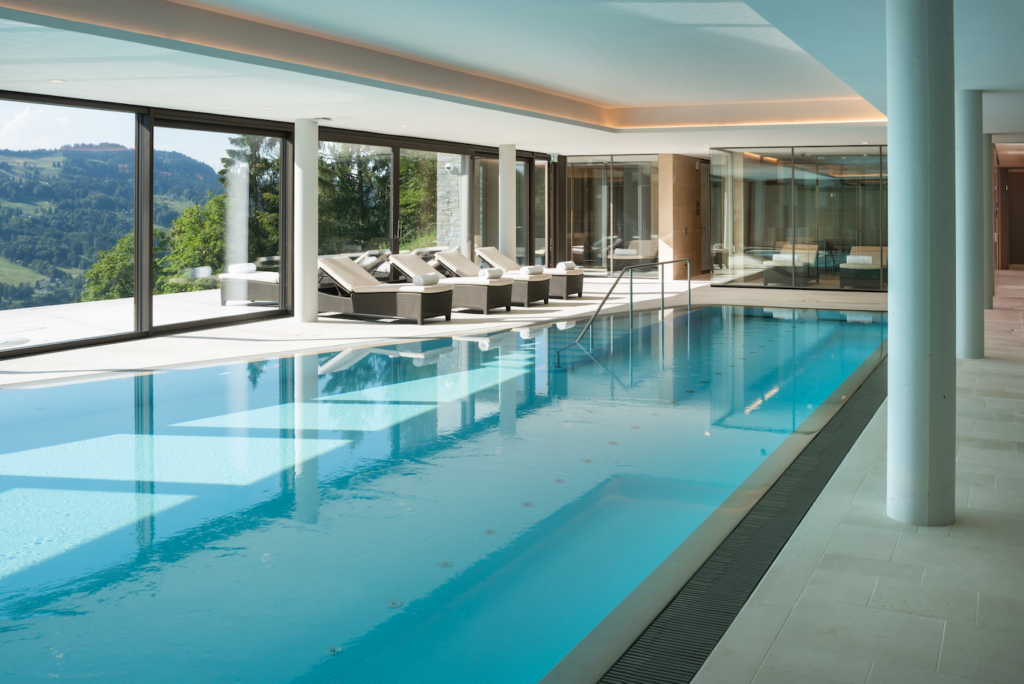
The clinic provides 25 different types of evidence-based, effective complementary medical therapies and treatments—all of which are held in the clinic’s incredible Body Mind Source level medical spa. With sweeping views of Lake Geneva and the Swiss Alps, the 1,000 m² space includes a fully equipped gym, sauna and hammams, relaxation rooms and a spectacular infinity pool and outdoor jacuzzi. There is also the breathtaking Serenity Space, again tunnelled out from mountain rock, where patients— aided by the most exhilarating views— can come to meditate, rest and reflect.
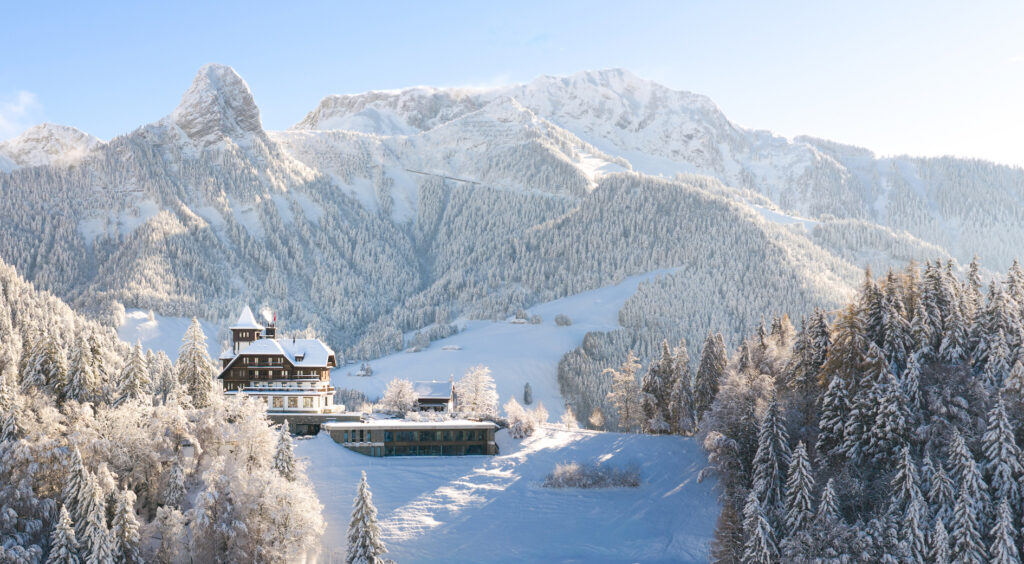
In the evenings, patients retire to the château and relax in the beautiful library, drawing room, study or their luxurious en-suite bedrooms, all with magnificent balconies and panoramic views of the mountains and Lake Geneva.
Throughout all this, aftercare is front of mind. “We really try and focus on the aftercare being the first and most important part,” explains Dr Willis, who works with his team to ensure that all is set up before a patient leaves— from psychotherapists and GPs, to life and sports coaches and dietitians.
James Blyth, a partner at TransMind, who works at the intersection of mental health, substance dependency and performance, and whose clients include UHNWIs and family offices, has sent clients to Clinic Les Alpes, praising its fully bespoke but no-holds-barred approach. One very recent example saw the clinic facilitate a last-minute private jet transfer to the facility for a client in Monaco.
Aftercare, says Blyth, is where Clinic Les Alpes notably excels. “They take it very seriously—and back it up,” he says. “Most treatment centres sort of cut you loose and send you off into the unknown. There is an almost wait for the call, which is when many are brought back in for another few weeks.” For Wilson, aftercare and preventing relapse is fundamental. “I really don’t want repeat business.
Clinic Les Alpes’ success feels rooted in patients being equipped to feel empowered to heal themselves— which may be the Clinic’s ultimate USP. As Blyth says: “There’s a feeling like you’ve found your sanctuary, your mirage, here. It makes you think, ‘God, I’m safe here. I can switch off and remind myself who I am. And just maybe pause long enough to think, ‘I can come out of here and actually affect some real change in my life.’”