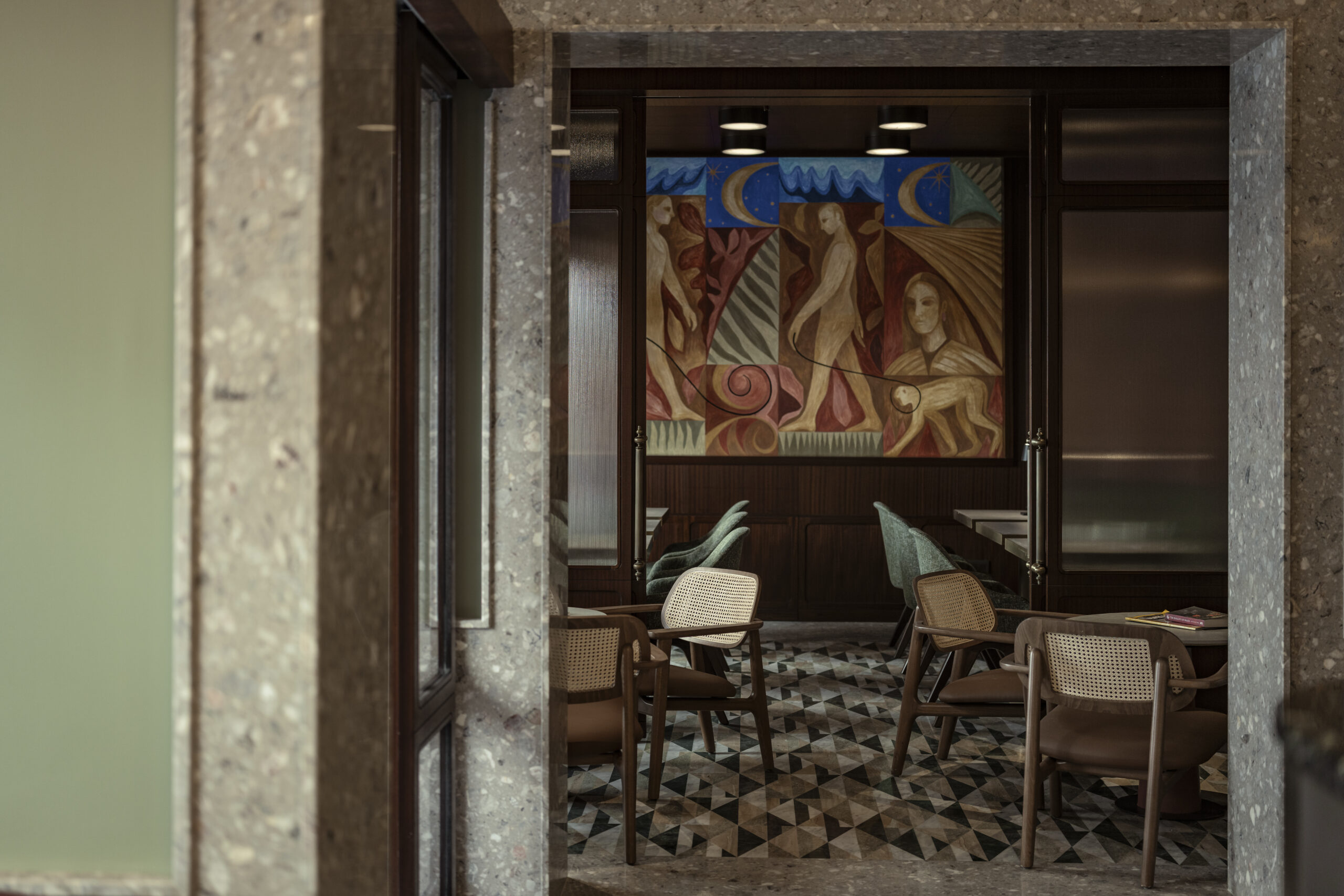
This new boutique property, in a restored 16th-century palazzo, is at the vanguard of the transformation.
The Mediterranean archipelago situated some 50 miles south of Sicily has traditionally occupied a rather different position in the Mediterranean’s prestige hierarchy to the French Riviera, the more exclusive enclaves of the Balearics or the tonier towns of its Italian neighbour.
Change, however, is afoot. Malta is undergoing something of a luxury renaissance. Its Michelin star tally has almost tripled in six years (from three in 2020 to eight in 2026), while an ambitious regeneration of Valletta’s Grand Harbour, encompassing new yacht marinas, leisure facilities and revitalised waterfront districts, looks set to broaden the archipelago’s appeal amongst the Mediterranean’s more affluent jet-setters.

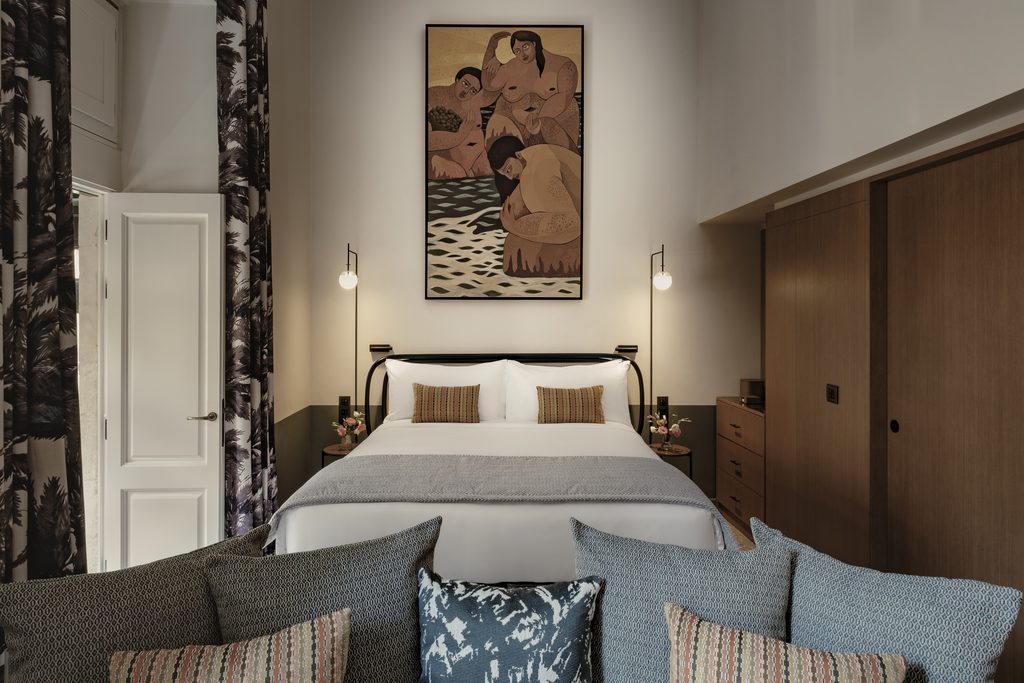
One of the more persuasive manifestations of this shift is the 22-room Romègas Hotel, which opened in September 2026 in the heart of Valletta, the island nation’s UNESCO-listed capital. Occupying an artfully restored 16th-century palazzo on Old Bakery Street, the property is named after Mathurin Romègas, a French aristocrat and celebrated naval commander whose swashbuckling exploits defending Malta against Ottoman forces earned him legendary status among the Knights of St John, the chivalric order whose distinctive eight-pointed cross remains the island nation’s most recognisable emblem.
An intriguing figure even by the standards of the island’s colourful history, Romègas reportedly fathered six children despite his vows of celibacy, and kept a pet capuchin monkey named François. Local legend even maintains that his sword remains concealed somewhere within the building, whose recently discovered subterranean passage adds another layer of intrigue.
The hotel’s transformation – perhaps unsurprisingly, given the wince-inducing regulatory hurdles with which any such project is encumbered – has been five years in the making. Previously subdivided into five separate properties, the palazzo has been painstakingly reunited, with local practice EM Architects working alongside archaeologists, restoration specialists and traditional craftsmen to both preserve and enhance its original architectural character. That interplay between renovation and restoration, here, has been handled with aplomb.
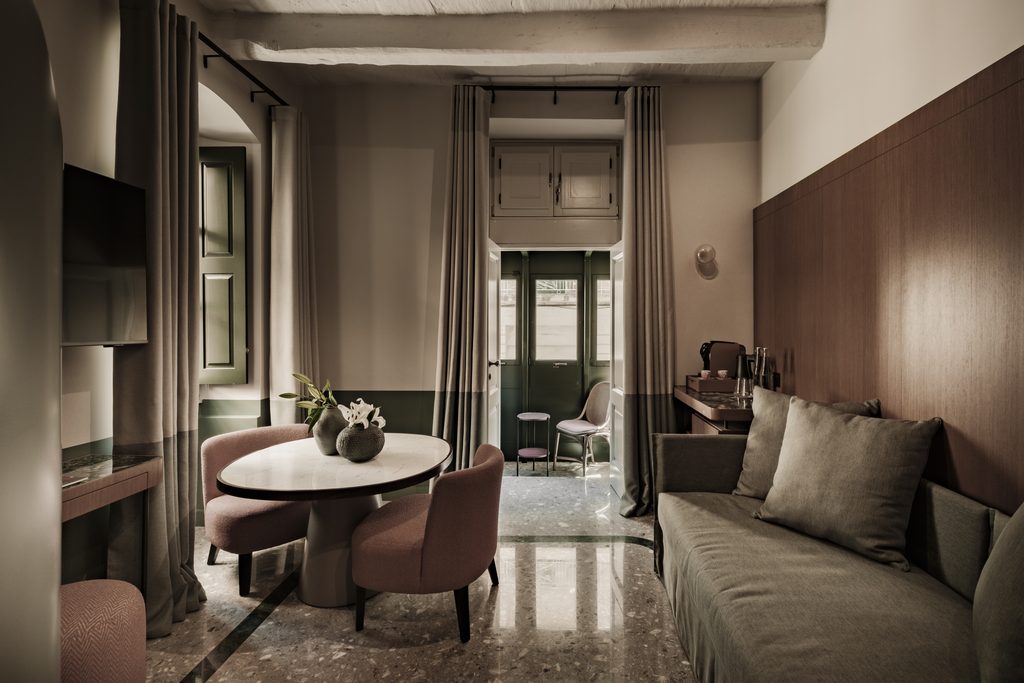
Interiors are by Camilleri Paris Mode, a fifth-generation Maltese family business which clearly knows how to make historical authenticity and contemporary refinement – and aesthetic touches that really ought to clash – all somehow sing in harmony. Bespoke timber panelling, richly textured wooden ceilings and palladiana terrazzo floors lend the communal spaces a quietly theatrical quality (especially in tandem with the eclectic artworks – more on which below), while the bedrooms adopt a more restrained, soothing aesthetic.
Each room and suite is individually designed, with several incorporating the traditional enclosed wooden balconies, or gallariji, that are among Valletta’s most distinctive architectural signatures. The flagship Romègas Suite, arranged over two levels connected by a spiral wooden staircase, makes smart use of the palazzo’s generous proportions and lofty ceilings.
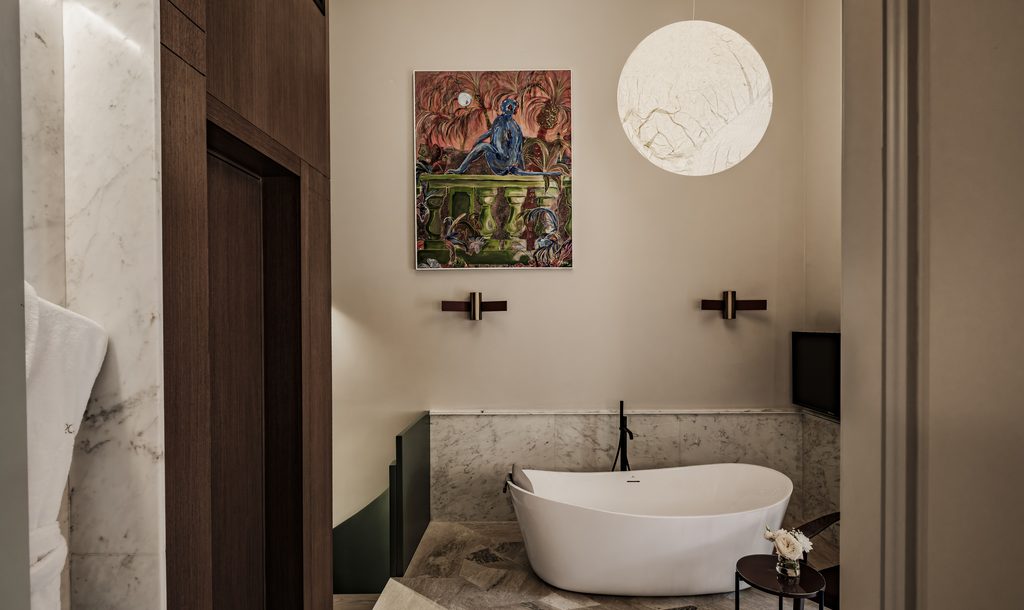
Such is the emphasis on a distinctly Maltese identity that more than 25 established and emerging artists are represented throughout the hotel, their works – often containing gloriously prurient references to the building’s history and the exploits of its namesake – having been curated by Maria Galea to explore the relationship between the building’s past and the city’s evolving cultural identity.
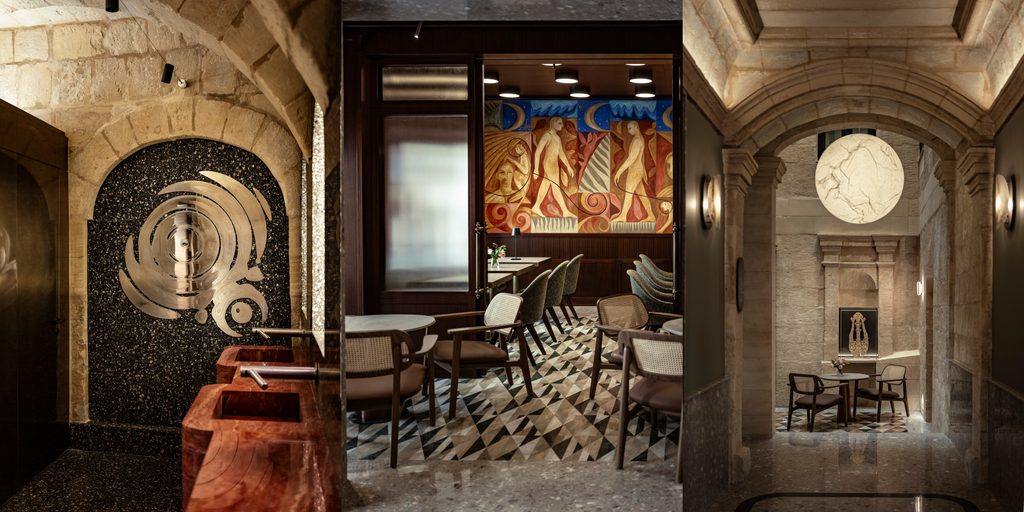
Among the contributors are Matthew Attard, ceramicist Paul Scerri and sculptor John Paul Azzopardi (if you’re tiring of the generic decorative flourishes so ubiquitous in the world’s major hotel chains, you’ll delight in the latter’s macabre creations fashioned from rabbit bones). The hotel’s former occupant and his simian companion also make appearances in its artworks.
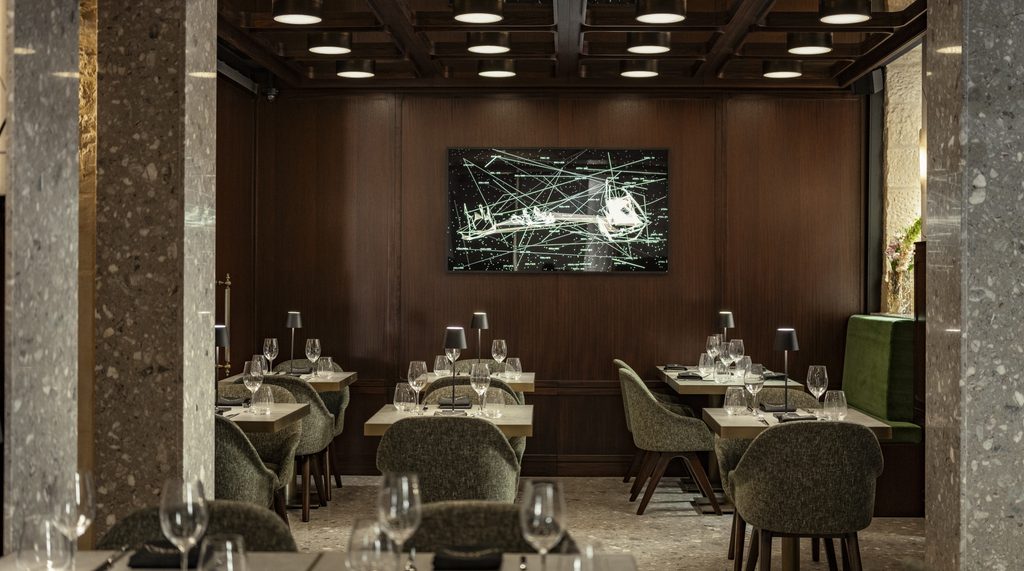
The gastronomic offering is similarly ambitious. Caviar & Bull Valletta, overseen by acclaimed Maltese chef Marvin Gauci, brings contemporary culinary techniques and international influences to bear on locally sourced ingredients, in an elegant dining room whose walls are adorned with striking etchings of bulls, a playful nod to the restaurant’s moniker. Dishes such as Angus beef agnolotti and a signature interpretation of beef tartare exemplify an approach that is cosmopolitan yet firmly rooted in the island’s gastronomic culture.
Above all this artistic and culinary brio, a rooftop pool and bar offers panoramic views across Valletta’s honey-coloured rooftops towards the surrounding waters and Manoel Island: unique, in the heart of a capital where outdoor space is a precious commodity. A cocktail incorporating prickly pear, one of the island’s characteristic ingredients – in a glass cooled with deft precision by the bar staff, using a blast of compressed CO₂ – feels obligatory.
The surroundings are, of course, nothing new: Baroque architecture, crystalline waters and the cultural legacies of the Phoenicians, Romans, Arabs and Knights Hospitaller are all etched into Malta’s identity. What feels decidedly fresh, though, is the island’s emergence as a luxury destination of international standing, with a hospitality scene increasingly worthy of its extraordinary cultural riches. There are few finer bases from which to explore this new chapter in Malta’s long and eventful history.
From around €1,400 per night for the flagship Romègas Suite; romegashotel.com