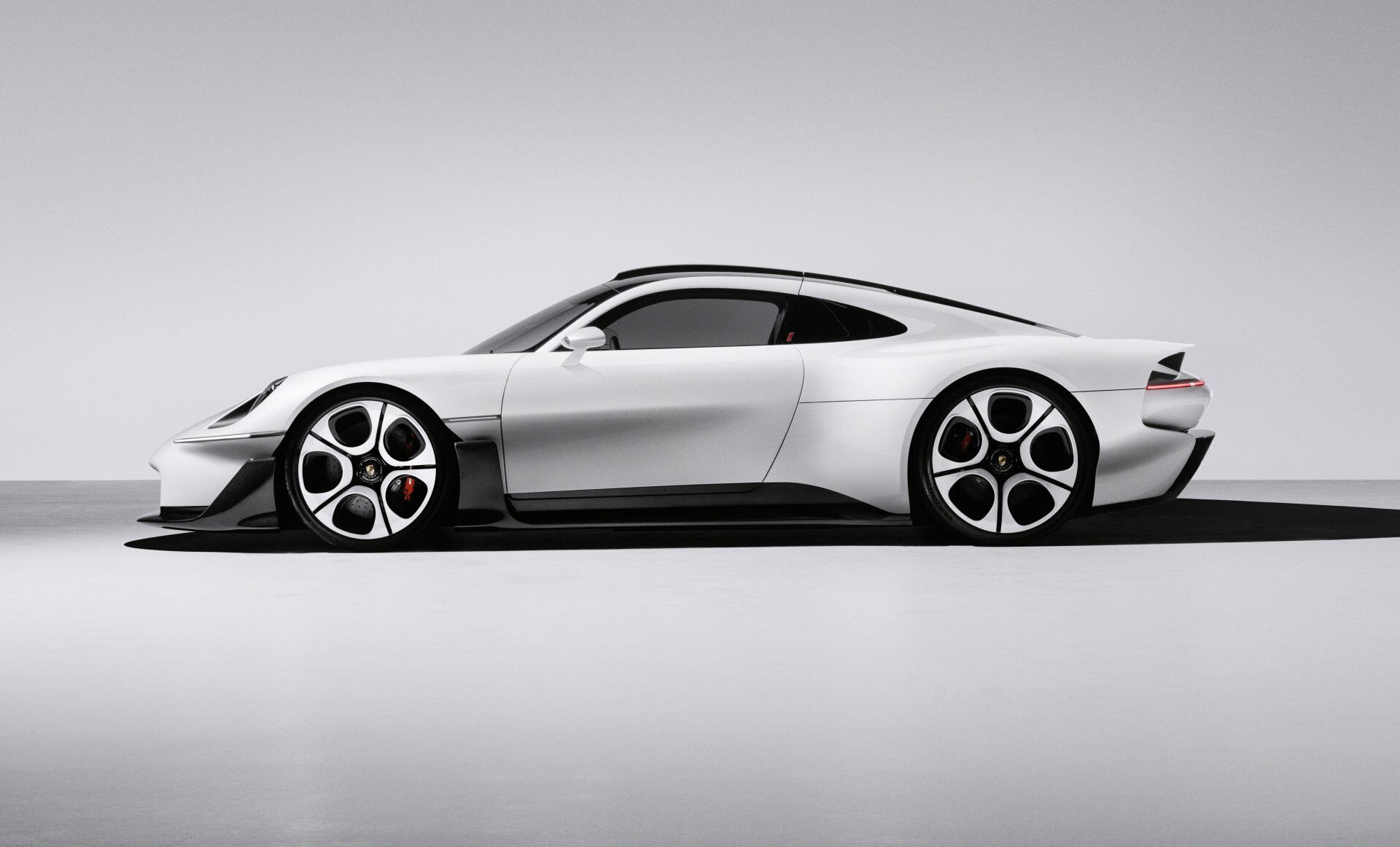
Unveiled in New York last week, the striking mid-engined concept takes inspiration from Porsche’s most iconic models, offering a first glimpse of a new generation of supercars.
Porsche has released the first pictures of the Mission S, and the overriding emotion is relief. Styling a car to look like the future while still looking like a Porsche is like asking a tailor to reinvent the navy suit: change too little and nobody notices, change too much and the regulars revolt. Officially a vision model under the ‘Sportwagenschmiede ’35’ realignment, it is the most convincing argument yet for where Porsche design goes next.
Nor is it a motor-show daydream. The car previews a mid-engined super sports car platform positioned above the 911 – not a one-off hypercar, but a permanent addition to the range.


“A Porsche must be recognisable as a Porsche at first glance,” says Dr Michael Leiters, Chairman of the Executive Board, and the designers have taken him at his word. The round headlights, torpedo-style fenders, iconic roofline and dramatic width-to-height ratio are pure 911. What has changed is the treatment. Porsche talks of floating volumes, surfaces which appear to hover over the structure, and the effect is a 911 face drawn with a finer pen and far more confidence.
The elegance is in the lines. A single wraparound line ties the front and rear light signatures together, with muscle above and openly technical surfaces below, where the lightweight construction is on display. The shut lines run into the light graphics as a nod to the G-model, the flat nose borrows from the GT1, and the roofline beneath the rear wing recalls the 959 before stretching to the tail. Round and unmistakably Porsche, yet entirely unsentimental.
The central engine frees the designers to draw the familiar flyline without compromise. Add a cooling solution reminiscent of the 917’s radiator fan, a fully integrated active rear wing, a GT1-derived car-in-car rear and wheels reinterpreting the 928’s dial design, and the result is a greatest-hits album remixed rather than reissued.
Inside, the references move back to the 550 Spyder and the 356. Two lines through the dashboard and doors create the sensation of sitting deep within the car, and there is no permanent centre or passenger display. A retractable MagSafe-compatible holder takes your own smartphone instead, while the My Porsche App offers historically inspired dial faces. Bravery, in 2026, is a dashboard without a central screen.
Five round instruments sit behind the wheel, led by a rev counter with an analogue needle and a display behind it. Switch drive mode and the rev counter moves closer to the driver while the tubes rearrange themselves. The key sits to the left of the wheel, as Porsche custom demands, alongside push-pull controls and a reimagined Sport Chrono.
The colours – Firn White Metallic, Light Red Metallic, Black Chrome and Special Black inside – rework the white, grey and red of Porsche’s racing cars. To emphasize the brand’s connection to its history, the car was unveiled on a pier in Queens, Manhattan across the water, where the 550 Spyder, the brand’s first super sports car, was photographed in 1953.
Porsche has said nothing yet about what sits in the middle or what it will cost. On this evidence, it hardly matters. The Mission S gives the round face the world has known for generations the upgrade it has quietly been waiting for: sharper, cleaner, more elegant, and still entirely itself.