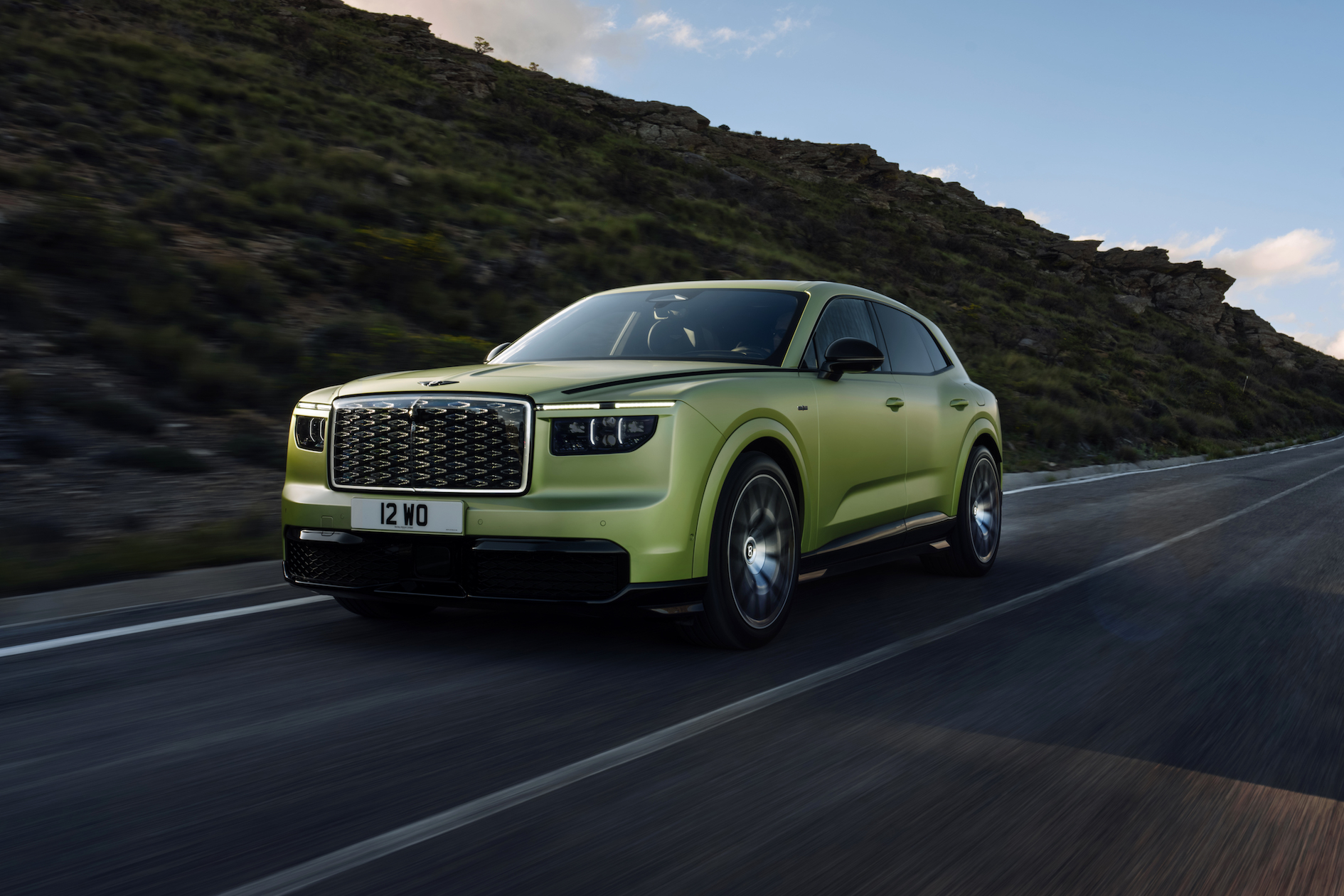
After a summer of teasers, Crewe’s first electric car is out in the open. On paper it is fast, clever and restrained in all the right places.
Bentley has finally released pictures of its new Torcal. Since mid-August the company has served the car up in instalments, a dance of the seven veils conducted by press release. Then, on 23 September in London, the whole thing arrived at once. The Torcal is Bentley’s fourth model line and its first fully electric car, and Bentley calls it a template for every future model, whatever drives it. With the company committed to an all-electric range from 2035, the stakes could hardly be higher. Electrification on cars intended to give the smoothest of rides may be the absolute best feature of them.
At five metres, it is the shortest four-door in the line-up, drawn by Robin Page’s team as a low, long-bonneted SUV. The face borrows from the Continental T via an illuminated diamond grille, the tail from the EXP 15 concept, and the cabin narrows so the rear haunches can swell over the wheels, an effect the designers liken to a beast at rest. Superfluous lines have been stripped out to let the surfaces do the talking, a sound instinct for a car which needs to look new without alienating existing owners.


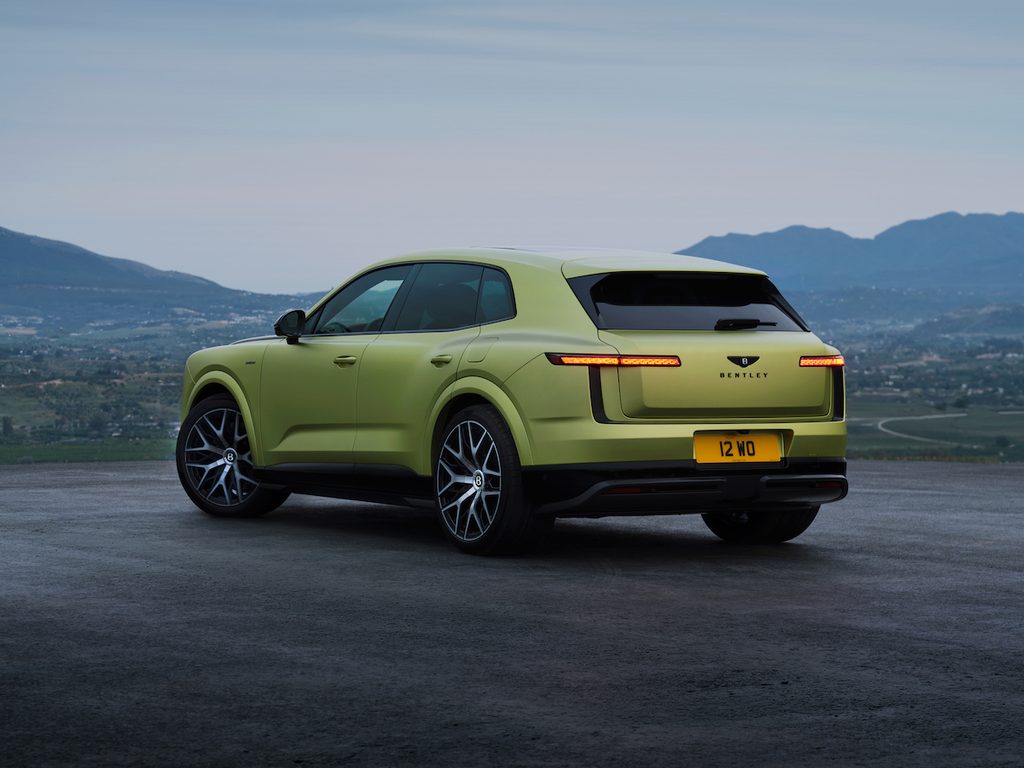
The most telling number is one Bentley chose not to chase. The core Torcal delivers 821 PS and 1,194 Nm for 0-60 mph in 3.3 seconds; the S, with Launch Control, musters 888 PS and 1,350 Nm, the most torque of any Bentley ever, for 2.8 seconds and 162 mph. Bentley’s engineers admit they stopped there deliberately, since most customers find harder acceleration uncomfortable.
The chassis is the ambitious part. Fully active suspension, a first for Bentley, can raise or lower each corner independently and does away with anti-roll bars altogether. All-wheel steering is standard, trimming the turning circle to 11.1 metres. Bentley claims the result is as comfortable as a Flying Spur and as dynamic as a Continental GT Speed. It is the boldest line in the release, and the one we most want to test.
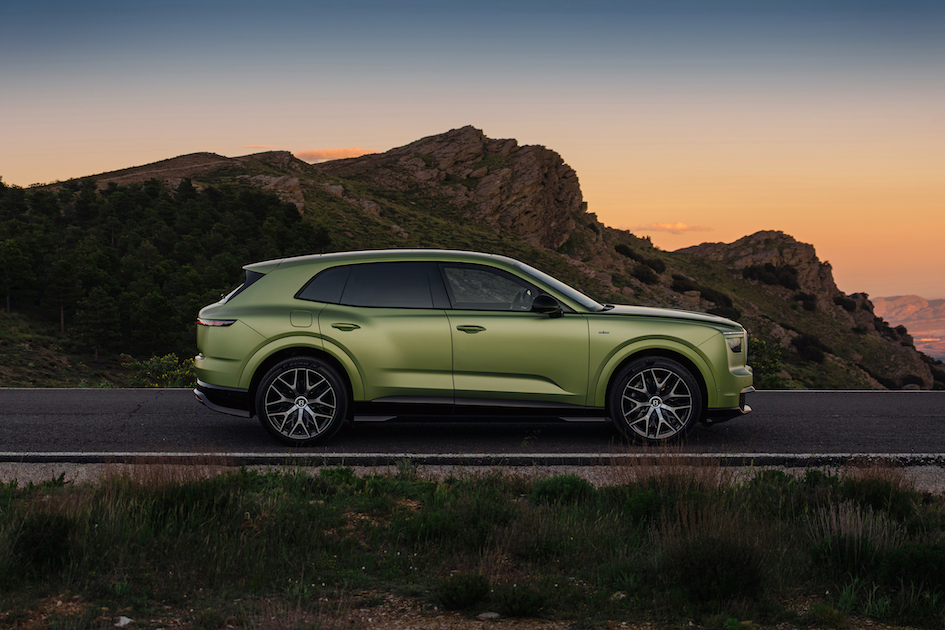
A 113 kWh battery gives up to 375 miles (600 km) WLTP, a 400 kW charger adds roughly 100 miles in seven minutes, and a ten-year, 100,000-mile warranty covers the pack. None of it chases a record, but it suits a car built for long, unhurried distances.
Sound is where Bentley has been most imaginative. It has, in effect, hired a band to play the part of a V8: real musicians on drums, viola and bass guitar interpreted the rhythm of the 6¾-litre engine, imperfections and all. The result rises and falls with torque demand and speed, and can be switched off. It could have been a gimmick, but the feedback is genuinely functional. Better still, the indicator tick is a hammer striking leather in Bentley’s upholstery workshops.
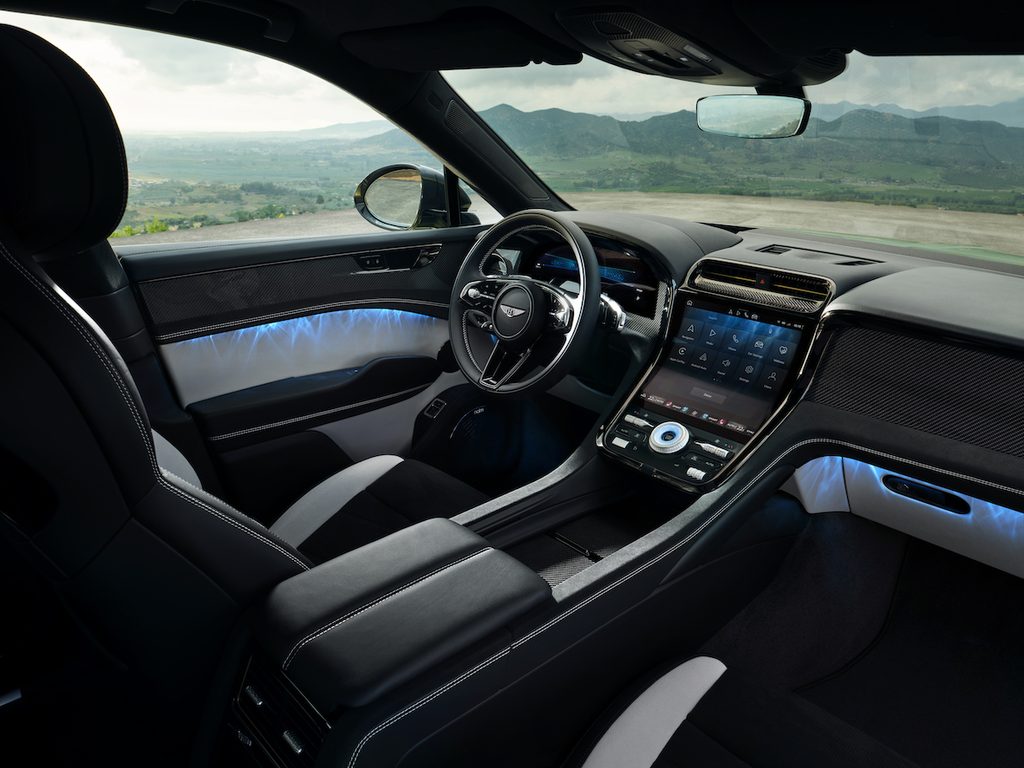
Inside, physical knurled controls survive on the console and wheel, joined by curved OLED screens and an augmented reality head-up display. Of the four Experience Modes, Refresh leans towards wellness marketing, but the digital detox in Comfort is a genuinely good idea. All four doors are powered; the driver closes theirs by pressing the brake pedal, which will likely baffle a valet or two.
The materials convince most. With Fox Brothers, a Somerset mill weaving since the 18th century, Bentley has developed the world’s first 100% Merino wool automotive fabric. Ombré Walnut by Mulliner presses up to 1,000 layers of walnut off-cuts and recycled paper into a veneer, and one of the six piano finishes is called Cricket Ball, which could only have come from Crewe. Sustainability here reads as craftsmanship rather than compromise.
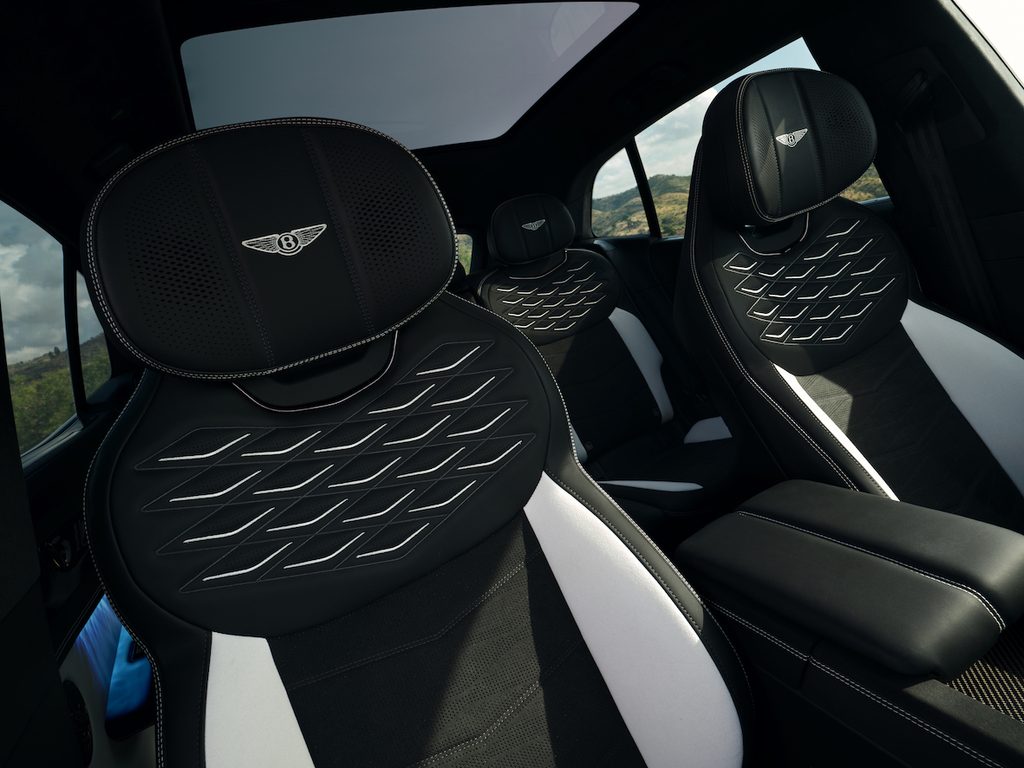
The S adds darker brightware and lamps, a diffuser, red calipers and 22-inch wheels to the core car’s 21s. The release is silent on price and delivery, so the verdict must wait. On paper, though, the Torcal is restrained where restraint is a virtue and ambitious where it counts. We love looking at it: Now we just need to drive it.