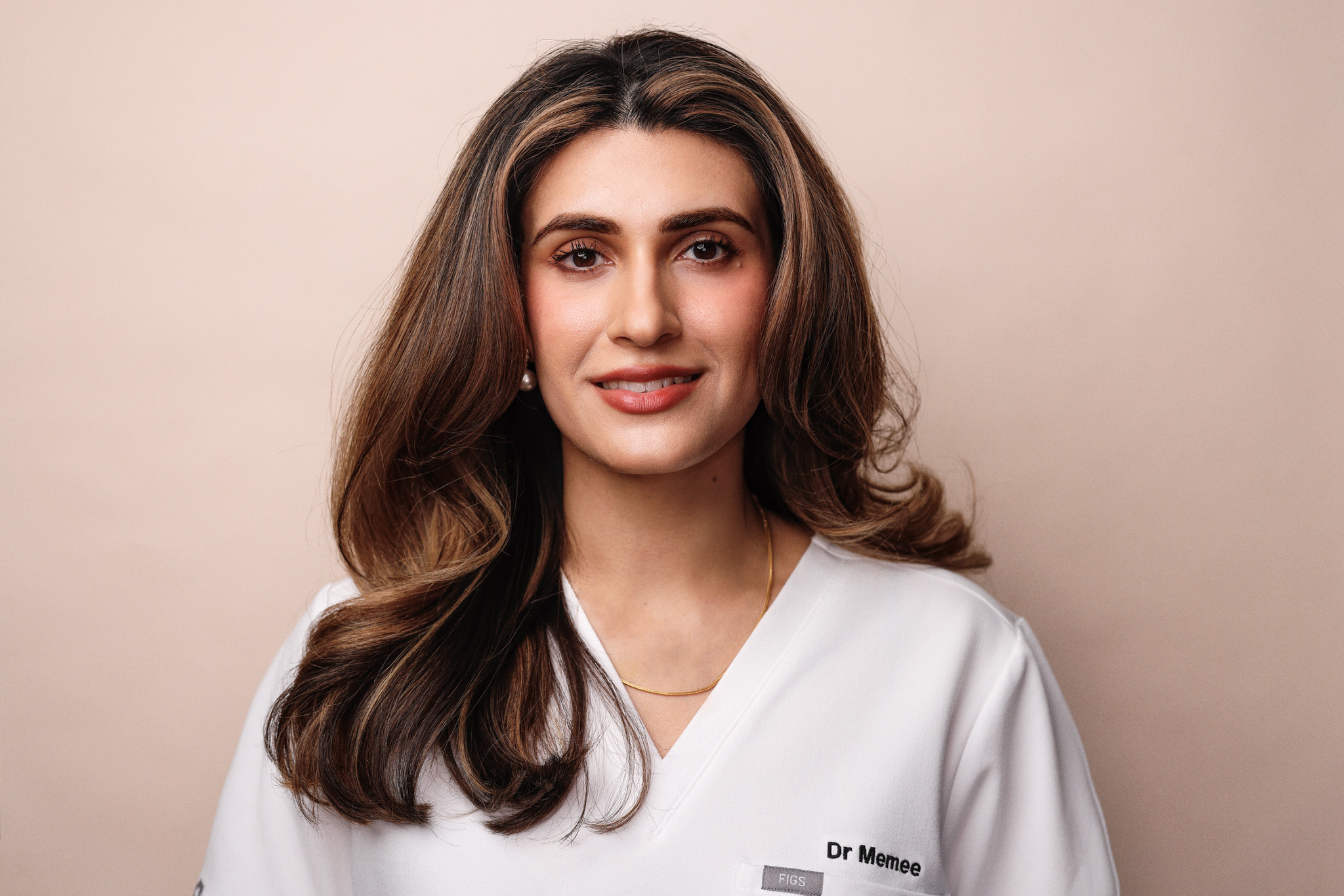
Inspired by South Korea’s treatment-stacking culture, Dr Memee Ahmad is bringing a biology-led approach to London aesthetics at SkinCouture.
A new direction is taking hold in aesthetic medicine. The emphasis is moving beyond changing the shape of the face towards improving the condition of the skin itself, using treatments designed to support collagen, repair and resilience over time. Much of the momentum comes from South Korea, where clinics have long combined energy-based devices with PDRN, polynucleotides, growth factors and other regenerative formulations. Known as treatment stacking, the approach brings several complementary techniques into the same programme, targeting everything from pigmentation and texture to laxity and inflammation. It is now becoming increasingly visible in London, where regenerative aesthetics has moved from a specialist interest to one of beauty’s fastest-growing categories.
Dr Memee Ahmad was pursuing the idea before it became fashionable. The UK-trained doctor has worked exclusively in regenerative aesthetics throughout her career and opened SkinCouture on Pall Mall as a clinic dedicated to treatments that encourage the skin to repair and strengthen itself. “Regenerative was never a big thing,” she tells Robb Report. “In my career, I’ve only ever done regenerative, so I have never injected filler, never had it done to myself, never done it to a client. Pre-Covid, everyone wanted the lips and the cheeks and the jaw, and I had a small group of clients that really loved the idea of regenerative. Then out of nowhere, regenerative became a huge deal.”


Her decision was as much philosophical as medical. “What I never wanted to do is make my ladies look like caricatures of what I thought was beautiful,” she says. Instead, her treatments are designed to retain the individual characteristics of a face while improving skin quality, firmness and hydration.
At SkinCouture, the process starts with a detailed consultation and VISIA complexion analysis, which maps wrinkles, pores, texture, redness, pigmentation and underlying UV damage. Lifestyle, hormones, stress and inflammation may also inform the resulting plan. No two protocols are intended to be identical, with treatments selected according to the condition of the skin and the client’s priorities.
Among the clinic’s most advanced tools is Virtue RF, a Korean-developed radiofrequency microneedling platform that remains available at only a small number of London clinics. Manufactured by Seoul-based ShenB, the device combines ultra-fine needles with controlled radiofrequency energy delivered beneath the surface of the skin. The needles create precise micro-injuries, while heat is introduced into the dermis to stimulate a longer process of collagen and elastin remodelling.
“The skin has, or the body has, its own power to regenerate, just like how you cut yourself and your skin heals itself,” Dr Memee explains. “When we’re talking about skin regeneration and regeneration of the actual collagen, what we’re trying to do is to get your skin to do the work. I’m pushing it in the right direction.”
Virtue RF gives her unusually precise control over that process. Its settings can be adjusted according to the area and concern, allowing more superficial treatment for texture and pigmentation or deeper energy delivery for laxity and scarring. Robotic needle delivery and active cooling are designed to make the procedure more consistent and comfortable than earlier generations of radiofrequency microneedling.
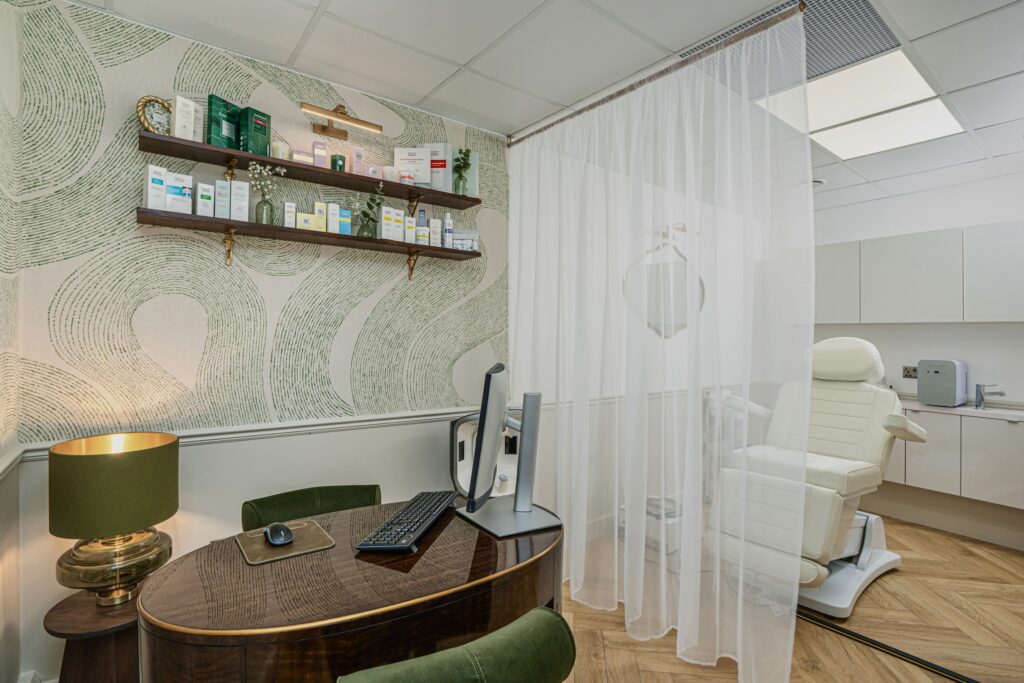
At SkinCouture, the machine is only one part of the treatment. Following the model established in Korean clinics, Dr Memee layers Virtue RF with a personalised selection of regenerative formulations, which may include PDRN, peptides and growth-factor complexes. The temporary channels created by microneedling provide a route into the skin, while the accompanying products are selected to support recovery and address the client’s individual concerns.
This is where SkinCouture’s interpretation of the Korean approach becomes particularly personal. One client may require a protocol focused on pigmentation, another on redness, scarring or early laxity. Treatment may extend across the face and neck—areas Dr Memee considers together rather than as separate concerns. A homecare programme can then support the skin between appointments.
The clinic recommends a course of treatments for the most substantial results, with changes continuing as new collagen develops over the following months. This slower progression is part of the appeal: improvements appear gradually, without one obvious moment of intervention.“It takes time, but you look better and better and better,” Dr Memee says. “People really don’t know what you’ve had done because it’s been six months since you’ve been in the office.”
SkinCouture’s significance lies not in presenting regeneration as a single miracle treatment, but in building an entire clinic around the principle. For Dr Memee, the next era of aesthetics is less concerned with creating a new face than helping the skin become stronger, healthier and recognisably its own.