With quieter cabins and residential-style designs, the private air-travel sector is redefining the art of arrival.
For decades, private aviation has been defined by measurable achievements: faster speeds, longer ranges and greater efficiency. Today, however, the industry’s most significant innovations are increasingly focused on something less tangible—the art of arrival.
Across this year’s most impressive aircraft, the emphasis has shifted from simply transporting passengers to ensuring they arrive feeling better than when they boarded. Whether crossing continents aboard a long-range jet or making shorter regional journeys by helicopter, owners expect an experience that reflects the same standards of comfort they enjoy on the ground.

Cabin environments are becoming quieter and more residential in character, while advances in engineering are being deployed as much in pursuit of well-being as performance. At the same time, luxury brands from beyond aviation are bringing fresh perspectives to aircraft design, reflecting a growing desire for private aircraft to feel like seamless extensions of their owners’ lifestyles.
The result is a new era of private aviation in which success is measured not only by how far or how fast an aircraft can travel, but by how effortlessly it enhances life in the air. The following winners represent the projects leading that evolution—setting new standards for luxury travel at every altitude.
Long-Range Jet: Bombardier Global 8000
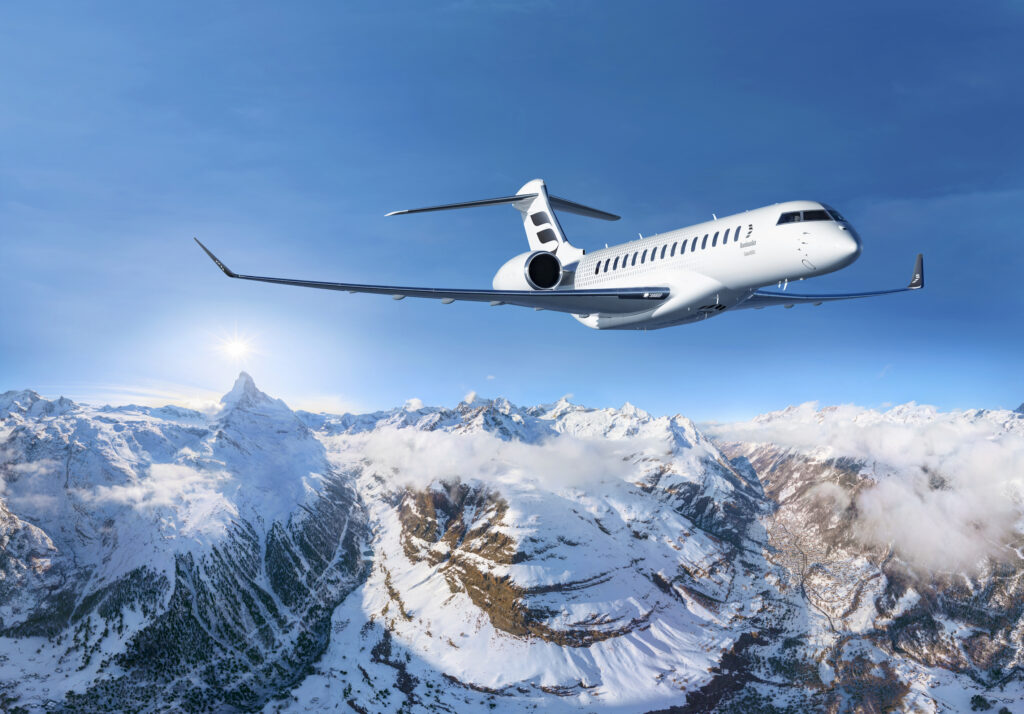
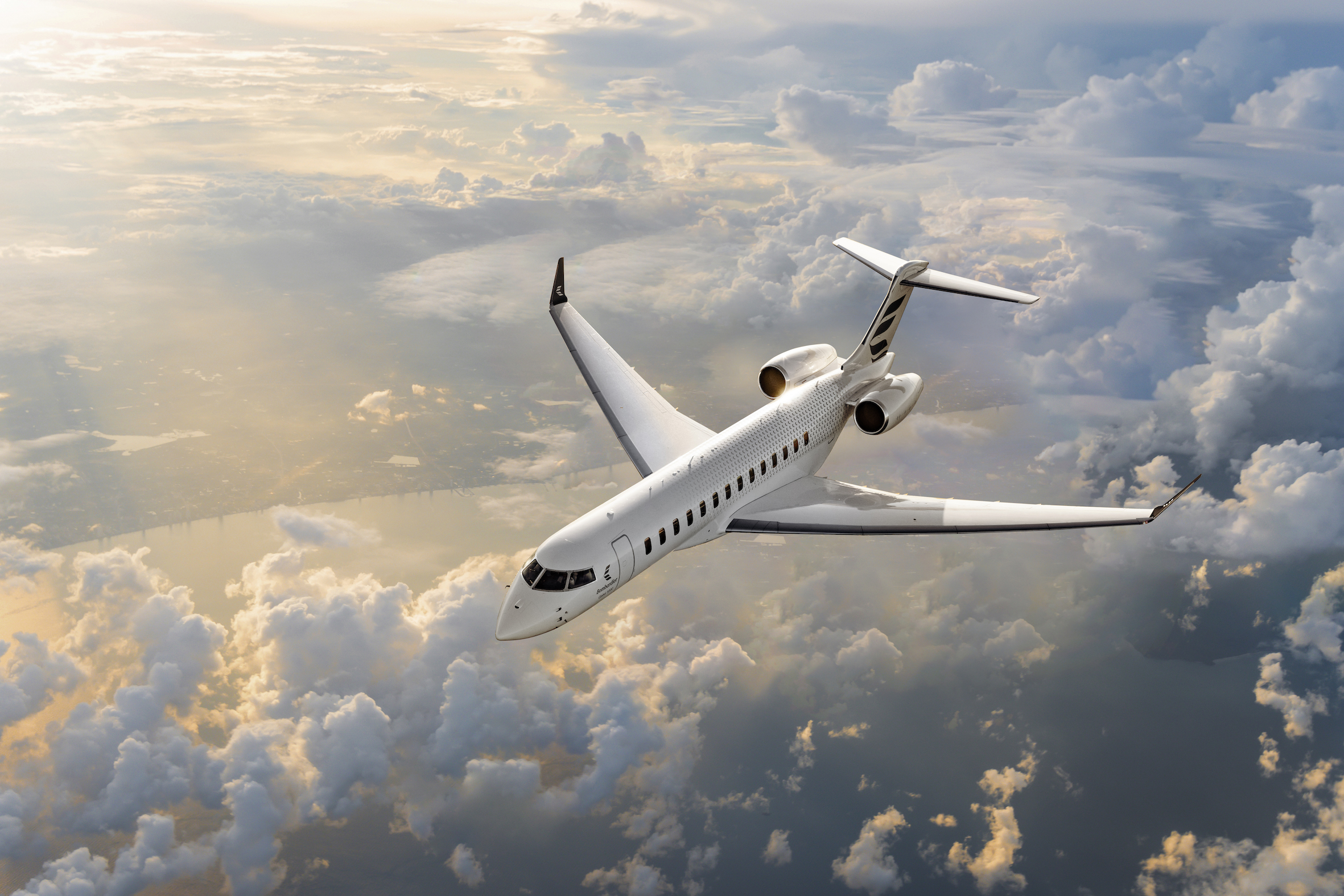
The most impressive achievement of Bombardier’s Global 8000 isn’t its speed—although as the fastest civil aircraft since the Concorde era, it certainly has that covered. Rather, it’s the way the aircraft redefines what long-range travel should feel like. Designed around the philosophy that true luxury is arriving as energised as when you boarded, the Global 8000 sets a new benchmark for passenger well-being at altitude.
Much of its brilliance lies in engineering that passengers never see. The aircraft’s innovative wing acts like a sophisticated suspension system, absorbing turbulence before it reaches the cabin and creating what Bombardier describes as the “smoothest ride” in business aviation. Equally meticulous attention has been paid to acoustics, eliminating the subtle frequencies that quietly contribute to travel fatigue, and ensuring that conversations can carry across the cabin.
Supersized windows—some of the largest in business aviation—bring in natural light, while Bombardier’s Nuage seating and exceptionally low cabin altitude—designed to feel closer to 2,900 ft (884 m) above sea level—enhance comfort on even the longest journeys. The result is an aircraft engineered from the inside out, where every decision supports the passenger experience. It is this emphasis on well-being that ultimately sets the Global 8000 apart.
Midsize Jet: Cessna Citation Ascend
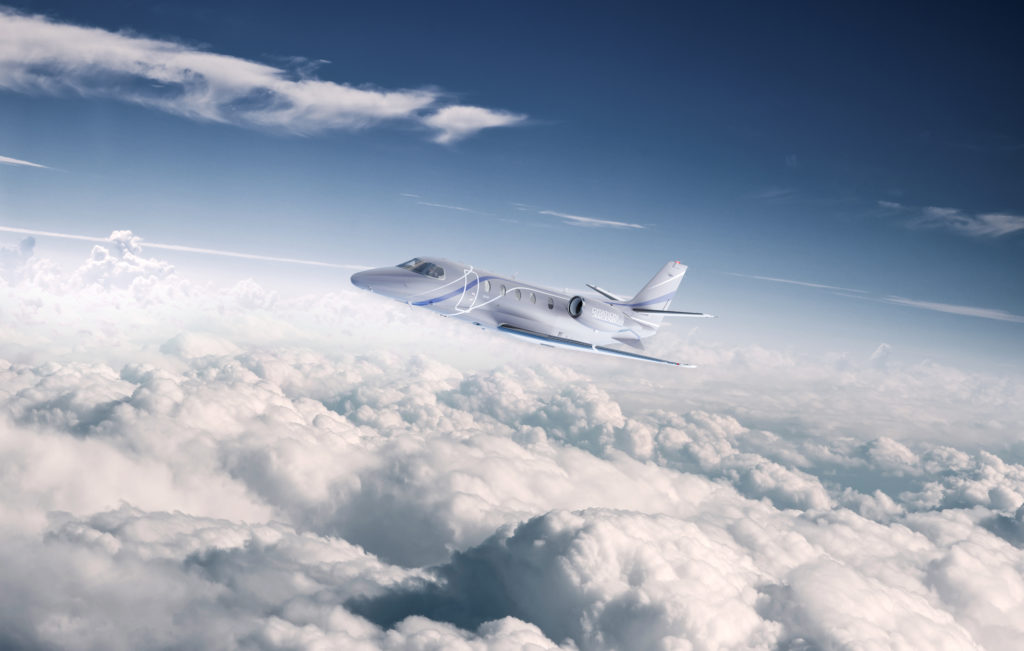
The midsize-jet segment has long occupied aviation’s sweet spot, balancing comfort, efficiency and flexibility. With the Cessna Citation Ascend, Textron Aviation has elevated that formula for a new generation of private flyers. Positioned as the successor to the successful Citation 560XL platform, the Ascend combines advanced avionics, enhanced performance and a thoughtfully redesigned cabin that responds to the evolving expectations of today’s owners.
What distinguishes the aircraft is its passenger-first approach. An expansive flat-floor cabin, larger windows and advanced acoustic treatments create a noticeably brighter, quieter environment. The effect is immediate: a cabin that feels decidedly more spacious and comfortable than its footprint suggests. Integrated technology and seamless connectivity further support a travel experience that can effortlessly transition from productivity to relaxation.
The appeal extends beyond the cabin, with a host of technological and performance enhancements ensuring the Ascend feels every bit a next-generation aircraft. Whether connecting Nice with Helsinki or Cairo, the jet delivers the versatility demanded by modern owners who use their aircraft for both business and leisure. That balance of comfort and capability is what makes the Ascend such a compelling addition to the midsize category.
Interior Innovator: F/LIST
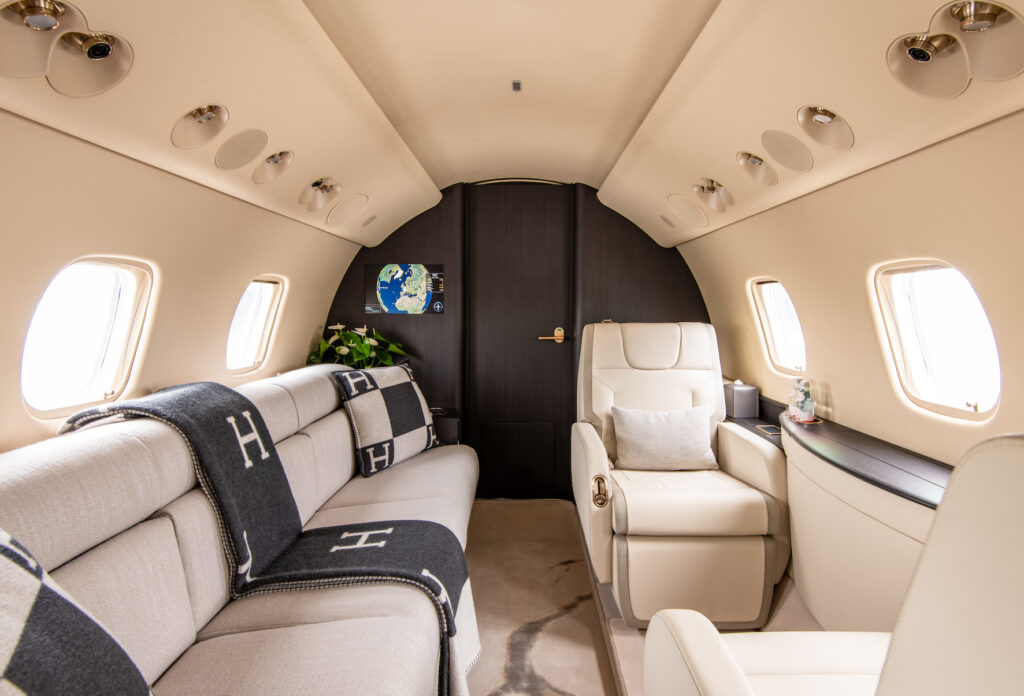
For decades, Austrian interiors specialist F/LIST has been shaping the cabins of some of the world’s most prestigious private aircraft. Working with leading manufacturers including Bombardier and Embraer, the company has built its reputation on combining traditional craftsmanship with material ingenuity, helping define how luxury is experienced in the air. Central to that philosophy is F/LAB, the company’s in-house innovation hub, where designers, engineers and material specialists develop new approaches to aircraft interiors, from advanced surface finishes to lightweight construction techniques.
A recent refurbishment of an Embraer Legacy 650 offers a compelling example of that mindset. Designed to move beyond the highly polished veneers traditionally associated with business aviation, the project embraces a warmer, more residential aesthetic. At its heart is F/LIST’s Natural Oiled Finish, applied for the first time in a business jet on newly installed dark veneer cabinetry. The treatment highlights the natural character of the wood while reducing weight by more than six percent compared with conventional alternatives. Throughout the cabin, redesigned seating, bespoke wool-silk carpeting and carefully selected materials create an environment that feels calm and contemporary.
This year, F/LIST brought its expertise to a new segment of the aerospace market: helicopter interiors. A recent collaboration with Airbus Corporate Helicopters on an ACH140 cabin saw the company devote the same attention to materials, craftsmanship and engineering across both fixed-wing aircraft and rotorcraft. Together with the work being undertaken by F/LAB, it demonstrates how F/LIST continues to push the boundaries of aerospace interior design.
Collaboration: ELIE SAAB
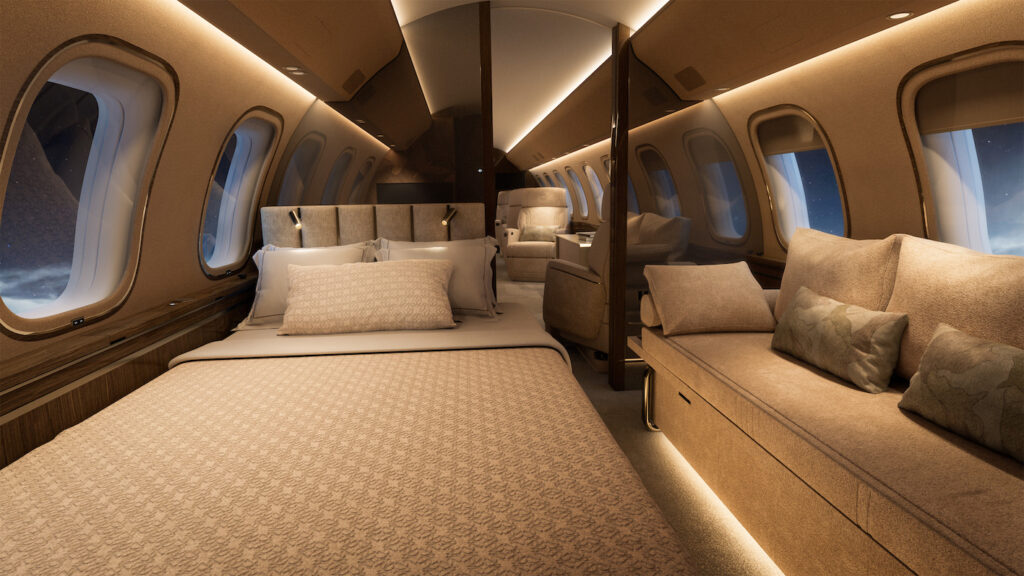
Few partnerships feel as natural— or as ambitious—as the union of Bombardier and ELIE SAAB. Unveiled for the Global 8000, the collaboration brings together one of aviation’s most respected manufacturers and one of luxury’s most influential design houses to create what they describe as the “haute couture of aviation”.
The result is not simply a branded interior, but a fresh interpretation of the private-jet cabin, shaped by ELIE SAAB’s longstanding expertise in fashion and interiors. Clean architectural lines, carefully selected materials and a warm palette create an environment that feels contemporary without sacrificing comfort. Natural light floods the interior, while a generous central lounge serves as the heart of the cabin.
What elevates the project beyond aesthetics is the complexity behind its execution. Bombardier’s engineering teams worked closely with ELIE SAAB to translate couture-inspired concepts into a fully certifiable aircraft interior, balancing design ambition with the practical realities of business aviation.
At a time when private aircraft are increasingly viewed as mirrors of their owners’ tastes and habits, the alliance feels both timely and forwardlooking— offering a glimpse of where luxury aviation may be headed next.
Helicopter: Leonardo AW139
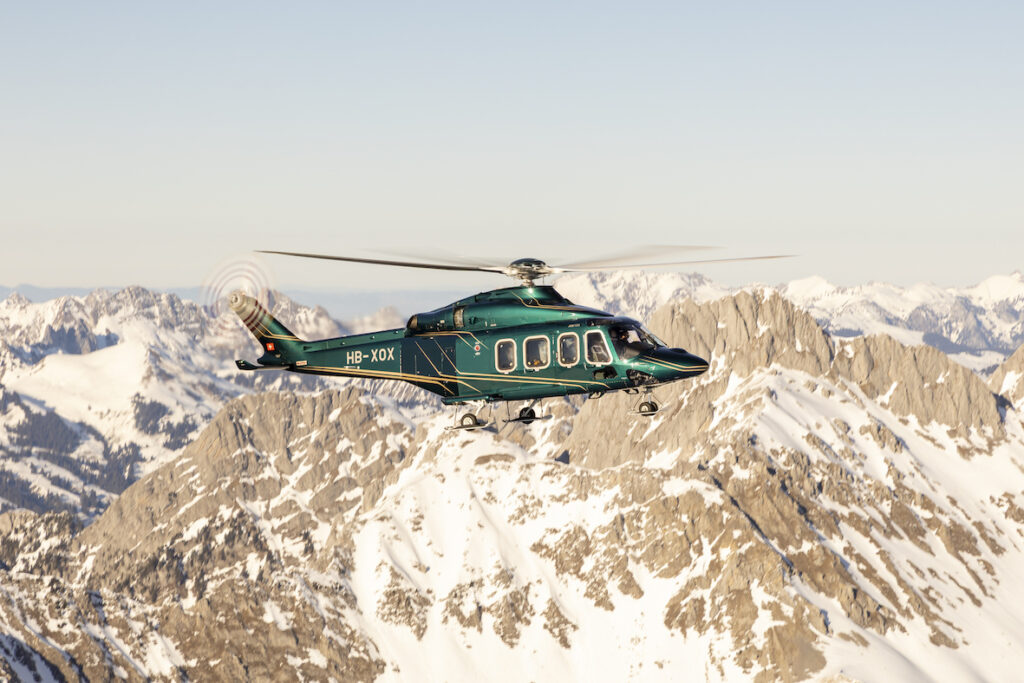
In private aviation, the most persuasive luxury is often the confidence passengers feel without thinking about it. That is the appeal of Leonardo’s AW139. Quiet, smooth and reassuringly capable, it is a helicopter whose credentials rest on a record built across corporate, government, offshore and search-and-rescue flying.
More than 1,500 AW139s are in operation worldwide, of which around 300 are currently in corporate and VIP service. Its adoption by operators of the calibre of The King’s Helicopter Flight in the UK underscores the level of trust this bird commands in the private market.
Inside, the AW139 feels far more refined than its operational pedigree might suggest. The cabin can accommodate up to nine passengers and be configured with individual seating, tables and communications and entertainment systems, while large windows, reduced vibration and low noise create a calmer experience in flight. With a range of up to 570 nautical miles, the AW139 has the reach, in ideal conditions, for journeys on the scale of Nice to London, giving owners the flexibility to connect city centres, yachts, estates and remote airports with ease.
That combination of operational credibility and passenger comfort is what makes the AW139 such a persuasive private-aviation choice.