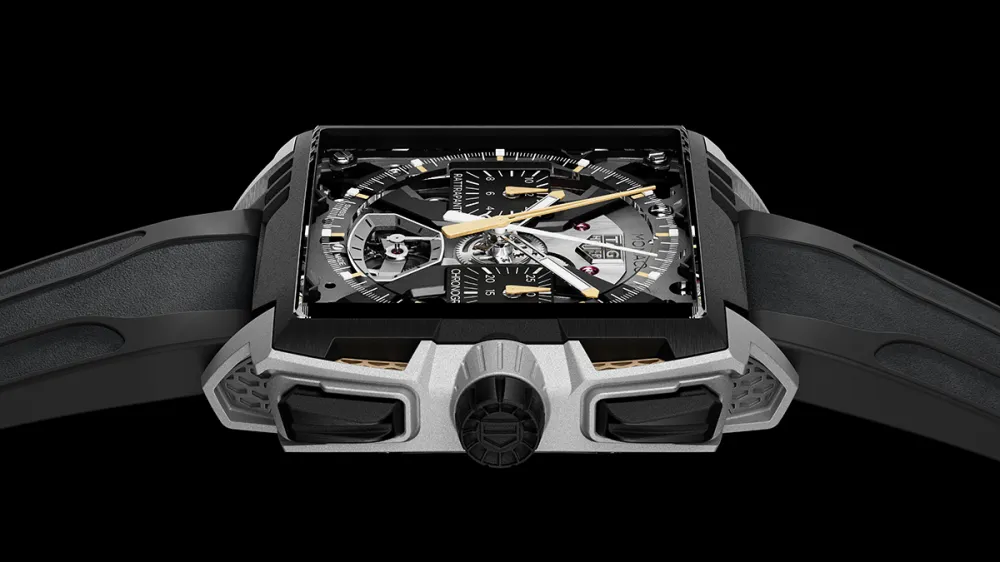
The Swiss watchmaker drives home its link to automotive racing with two chronographs that illustrate the watchmaker’s forward-thinking vision.
To understand where TAG Heuer is going, one must first understand where it has been, and two recently released timepieces from the Swiss watchmaker seem purpose-built to display its heritage and innovation. The company’s ties to the automotive world are brand-defining—beginning long before it became an industry-wide trend in horology to partner with luxury carmakers.
As far back as the early 20th century, when it was known only as Heuer, it supplied dashboard timers and chronographs to cars (as well as boats and aircraft). But it was in the ’60s when the connection would be cemented, thanks to two iconic models: the Monaco, launched in 1969 but made famous by Steve McQueen in Le Mans; and the Carrera, designed for race car drivers and named after the Carrera Panamericana, a grueling race across Mexico. More than a half century later, the Monaco Split-Seconds Chronograph Air 1 and the latest Carrera Glassbox Chronograph show how TAG Heuer is shaping its future by reengineering its past.


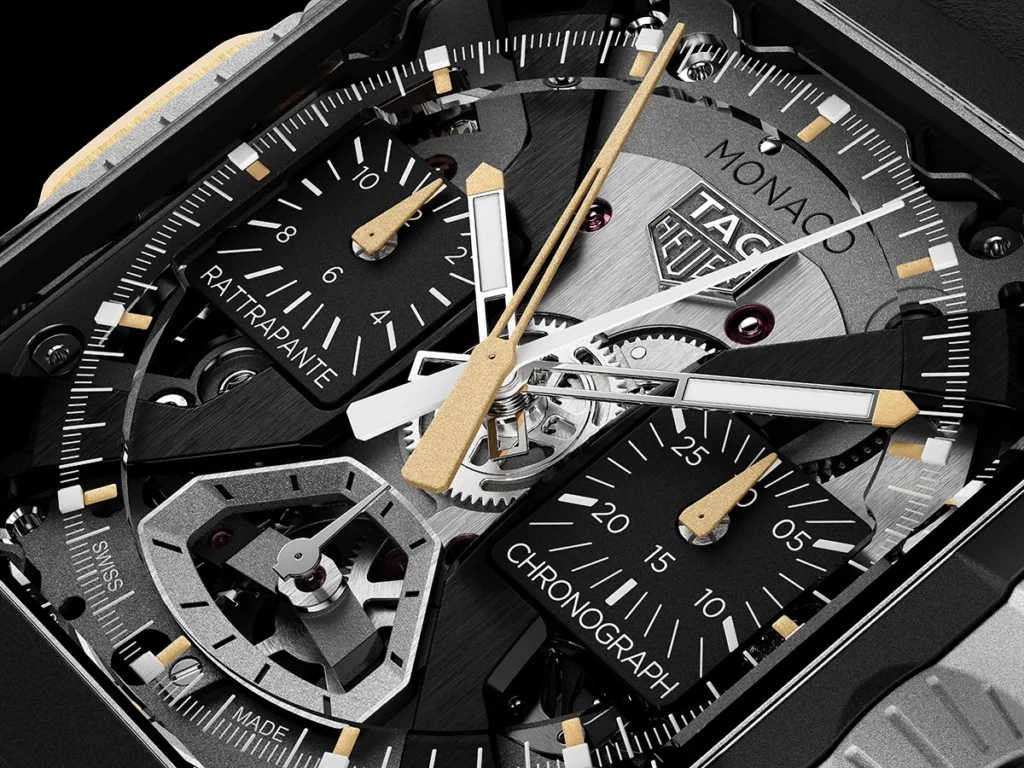
Debuted at Dubai Watch Week, the 41 mm Monaco Split-Seconds Chronograph Air 1 houses the brand’s most complicated movement to date: the skeletonized TH81-00 rattrapante. An automatic caliber with over 550 components, it combines a split-seconds chronograph with ultralight architecture that strips away nonessential material without sacrificing rigidity.
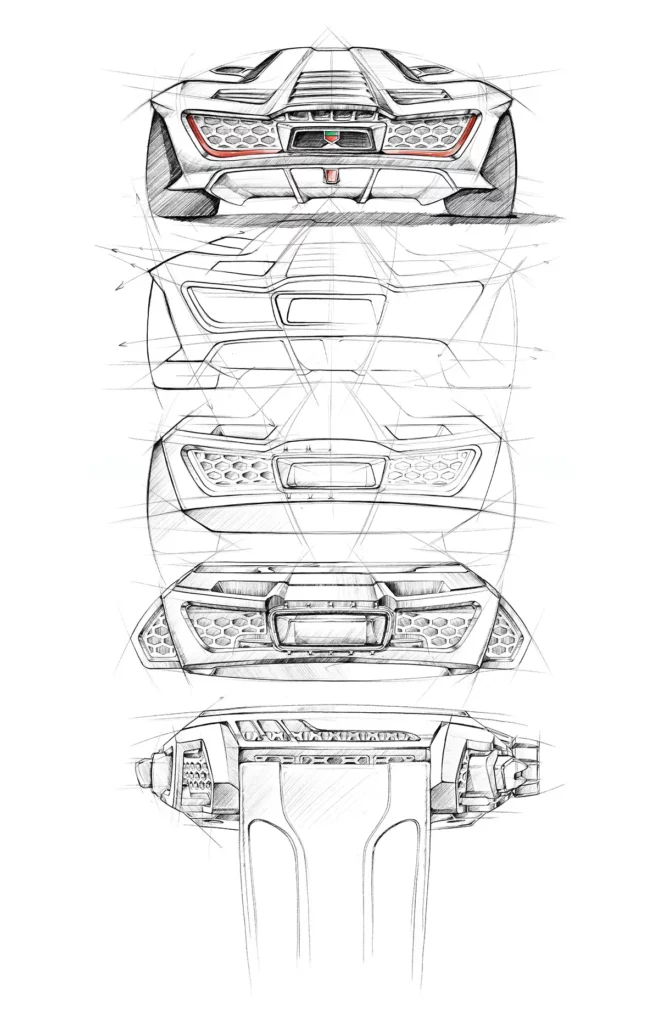
Even its Grade 5 titanium case was engineered for a hollowed-out effect that’s achieved by selective laser melting, or SLM, a process akin to 3-D printing that’s used to construct precision components with complex geometries, including the gold-honeycomb accents inspired by hypercar engine covers. Despite the weight reduction, it maintains its chronometric accuracy due to TAG Heuer’s proprietary carbon hairspring.
But at 150,000 Swiss francs (just over €160,000 at press time), and with only 30 examples being produced, the limited-edition timepiece isn’t for lightweights. The company’s C.E.O., Antoine Pin, tells Robb Report that such elevation is part of the cost of innovation. “I think if you talk about avant-garde and technology, it means investments, and there’s been more than €50 million spent in the lab over 10 years, much more,” he says, adding that TAG Heuer is the only company to master the carbon-hairspring technology. For the client, he says, it means “accuracy, more reliability, and therefore, potentially less service.”
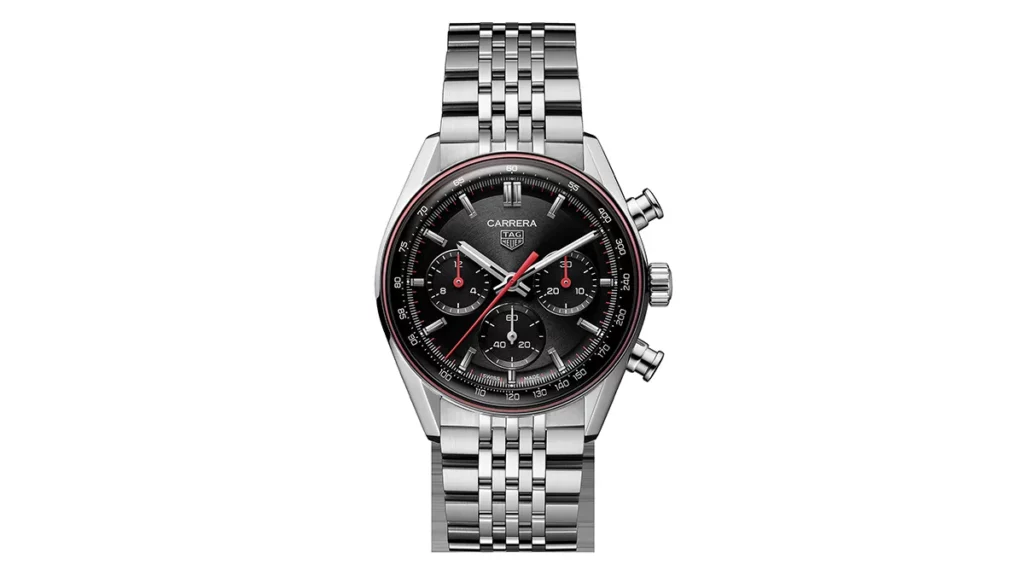
Nevertheless, the company isn’t forgoing accessibility. Enter the new 7,500 Swiss francs (about €8,000) 41 mm Carrera Glassbox Chronograph. Following the 39 mm version that was released in 2023, this model—unveiled last month at the 2026 LVMH Watch Week—offers a more attainable entry into the TAG Heuer universe. It comes in three dial colors: teal green, blue, or black. The latter is distinguished by red-lacquered hands on the central hand and chronograph counters that clearly nod to motorsport. Inside, the TH20-01 is a modern in-house automatic chronograph movement with a column wheel and vertical clutch, delivering an extended 80-hour power reserve.
Both pieces speak to what Pin refers to as the pillars of the brand: the chronograph, sports, and overachievement. “Those elements are not for young or old people, they’re not for ladies or men—that’s the boxes I hate,” he says. “They are not cheap or expensive. They are main values.” As TAG Heuer accelerates into its next era, it’s firing on all cylinders.