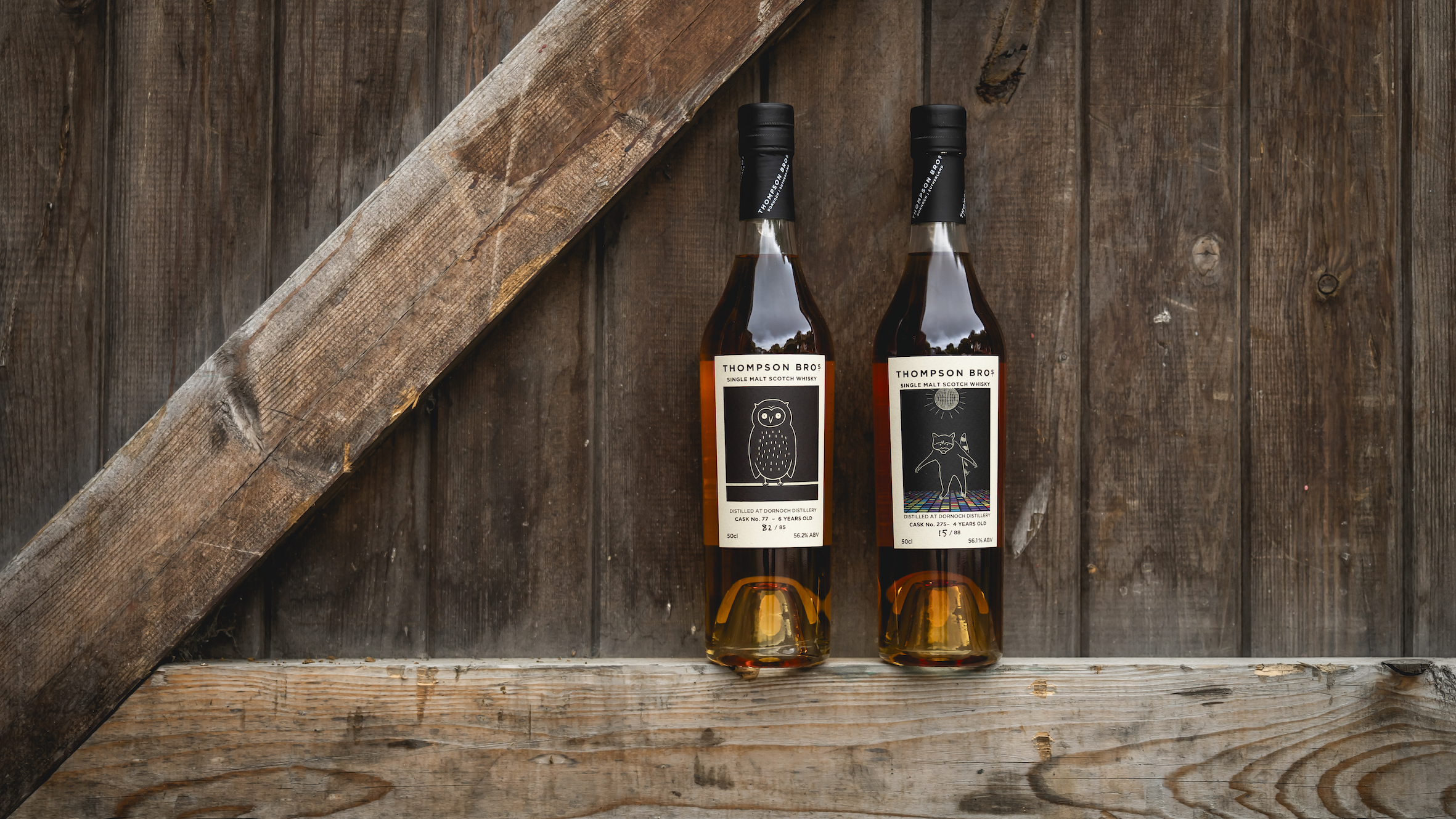
If great whisky is written in liquid form, then at Dornoch, the Thompson Brothers are its authors.
In the wild northern reaches of the Scottish Highlands, where North Sea winds rattle barley fields and ghosts of distillers past seem to linger, two brothers are quietly orchestrating a whisky revolution. Simon and Philip Thompson have, in little more than a decade, turned a local legend into a living experiment—one that has captured the devotion of collectors, connoisseurs and industry insiders alike. Dornoch, and its ambitious offshoot Struie, are not merely distilleries: they are laboratories for flavour, heritage and innovation—stories savoured dram in hand, with the brothers narrating one cask at a time.
Family, Hotel and Heritage
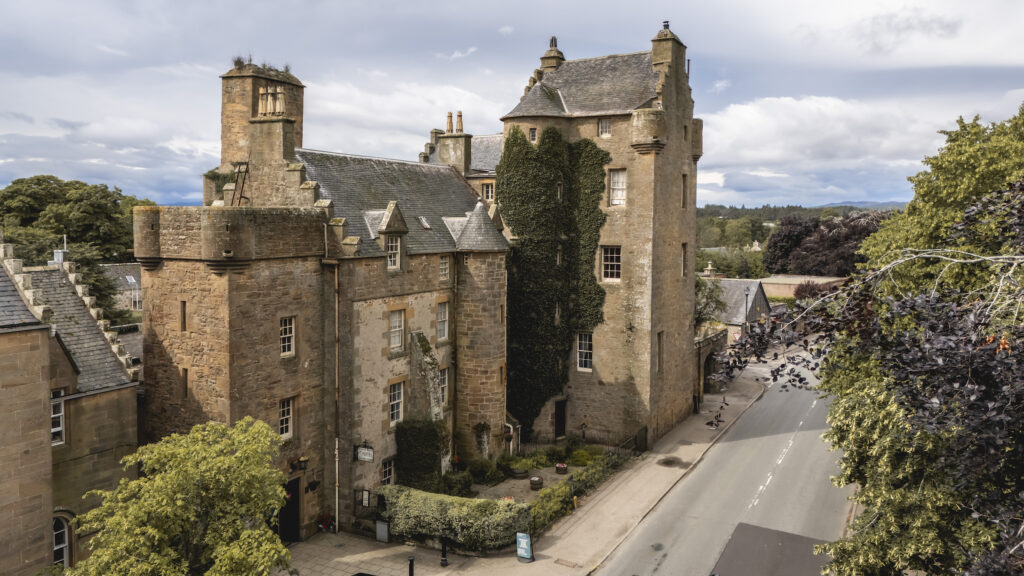
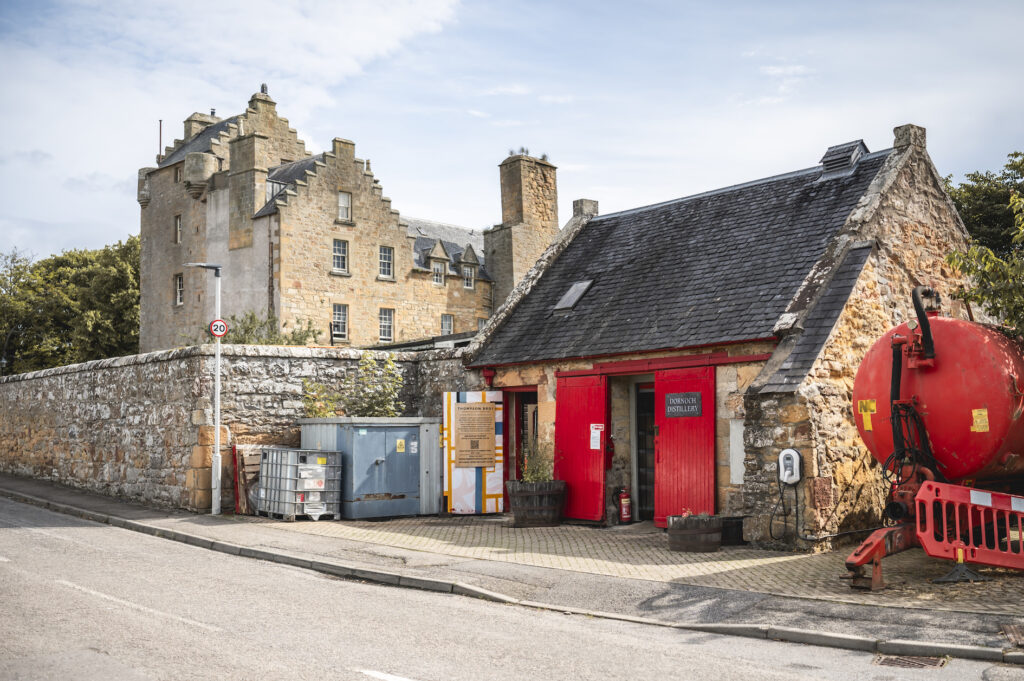
Born on the Black Isle and settled in Dornoch for more than twenty years, Simon (b. 1984) and Phil (b. 1986) are the second act in the Thompson family saga. Their parents, Colin and Ros Thompson, who played a pivotal role in developing the Dornoch Castle Hotel and its renowned medieval-tower bar—now recognised as one of Scotland’s foremost whisky sanctuaries—remain involved in the business, offering guidance and support. From these stone ramparts, the brothers have built a constellation: distillery, independent bottling house, retail shop and award-winning castle bar.

Dornoch Distillery employs nine full‑time staff across its distilling and bottling operations, remaining a family‑scale enterprise stitched with warmth and audacity . As Simon remarks with a grin, “Nepotism worked—we made our own jobs.” On the contrary, it was hard work, a devotion to whisky and a joint decision to carve out a niche distilling business which brought them success.
To take a dram in the castle bar with either brother is to share not only conversation but a story for every cask.
From Crowdfunders to Co‑Conspirators
The journey began not with investors but with enthusiasts. More than two hundred backers from around the world funded what would become one of Scotland’s smallest legal distilleries, formed in 2016 inside a restored 1880s fire station beside the Castle . That belief yielded Dornoch Distillery’s first spirit the same year—a centrepiece of old‑style whisky reborn through modern hands. Many of those early crowdfunders remain allies still, rewarded with allocations of Dornoch’s precious liquid.

Artisan Ethos – Flavour Over Yield
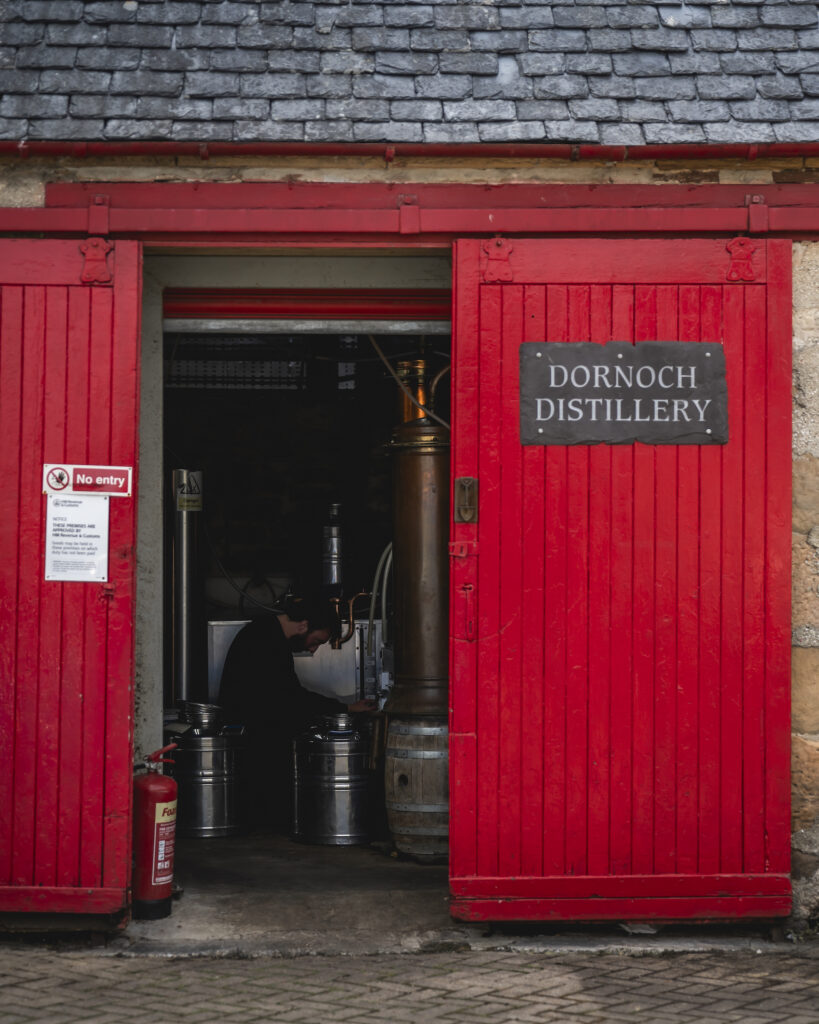
If Dornoch has a dogma, it is flavour before efficiency. Heritage barleys Plumage Archer, Maris Otter, Orkney Bere — are sourced from Scottish farms and floor‑malted. Fermentations stretch a full week or more, enlivened by lactic bacteria and wild yeasts carried over from previous batches. Washbacks are manually cleaned but never sanitised, retaining what the brothers describe as a “living memory” of every yeast strain they’ve cultured.
Distillation is guided by nose and intuition rather than automation. The spirit emerges oily, wax‑textured and florally layered—a sensorial echo of 1960s‑ and 1970s‑era whiskies once cherished at their bar. Production remains minute—roughly a single hogshead each week—but every drop passes the brothers’ hands.
“Floor malting is inefficient and wonderfully inconsistent,” Phil says. “That inconsistency is a positive for flavour creation.”
Personality in Every Bottle – Enhanced Version
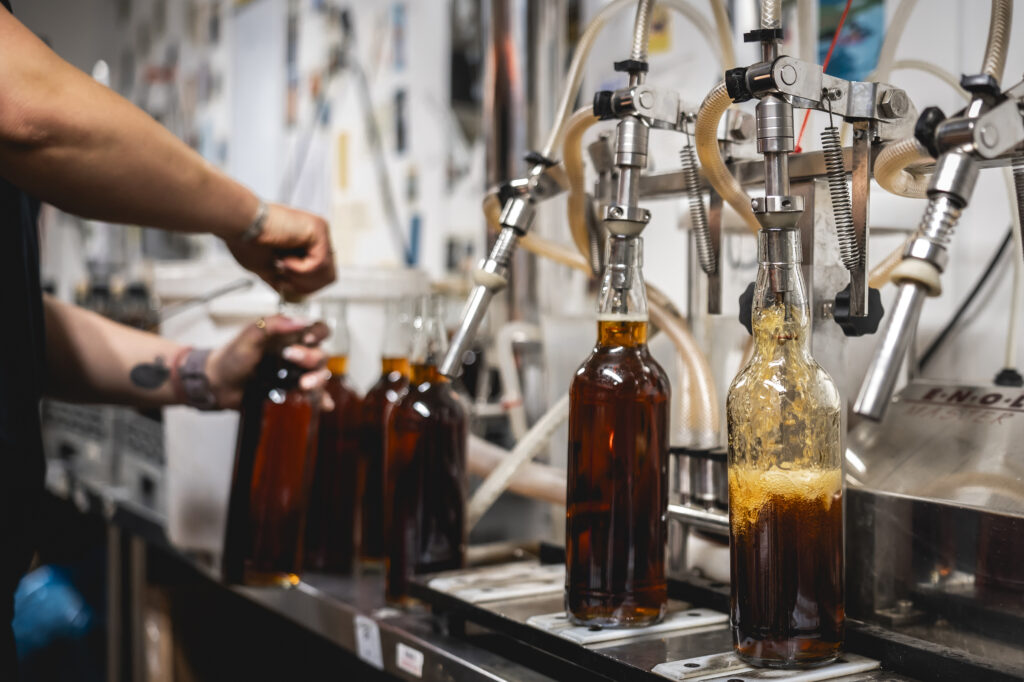
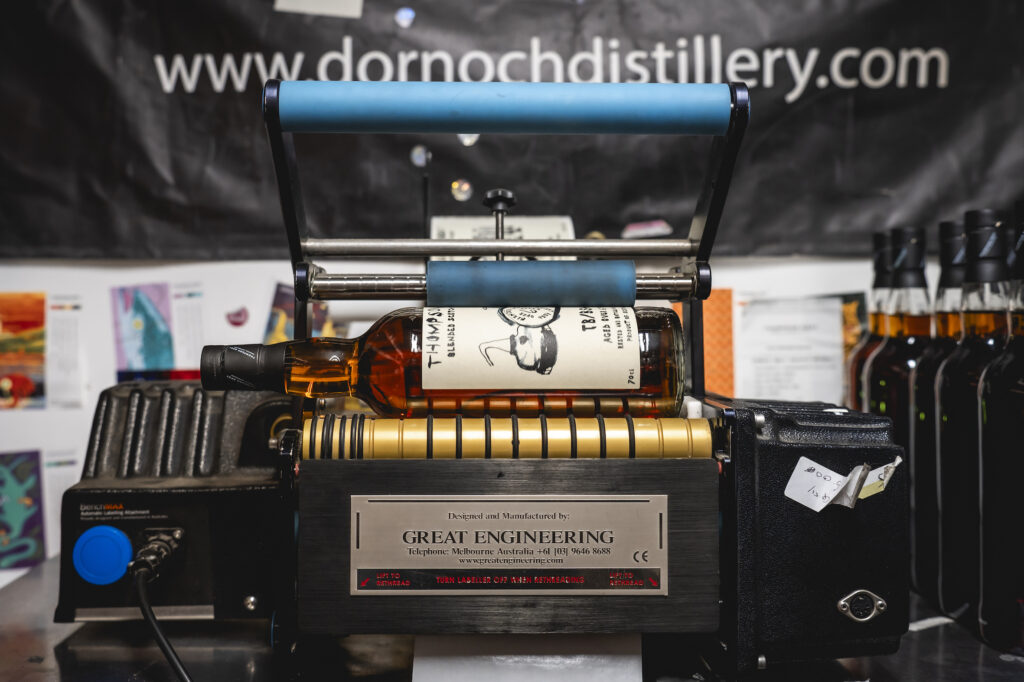
Since 2017, more than 500 independent bottlings and over 100 original Dornoch releases have cemented the Thompson Brothers as cult icons within modern Scotch. Signature ranges include the Mystery Malt blind-bottle series, TBBSW Blended Scotch and SRV5 Vat 5—now regarded as modern benchmarks—and regional expressions such as North Highland and Sutherland Blended Malts.
What truly distinguishes the Thompson Brothers is their deliberate, values-driven approach to pricing and allocations. Their model—in stark contrast to most major houses—prioritises fair, accessible pricing so that their whiskies remain within reach of a much wider circle of enthusiasts. Many single cask bottlings and bespoke blends retail at £65–£100 for 50cl, well below the category norm despite the rarity and craftsmanship involved. Extreme, anti-scalping transparency and ballot allocations favour genuine lovers over profit-seeking speculators or brand-driven hype.
As Phil Thompson puts it, “Even if we lose money on something insanely rare, the overall value given to the consumer and the fair price paid to the supplier is what counts.” This democratic stance, upheld even when bottling precious old distillates, has won Dornoch both collector loyalty and industry goodwill. In their words, whisky is about storytelling, connection, and creating opportunities for more people to experience rare flavour—not just about maximising margins.
Tasting with the Thompson Brothers
Sampling Dornoch whiskies is a seminar in patience and process. During my recent tasting, four bottlings showcased the spectrum of style and innovation at work in the hands of Simon and Philip Thompson:
Cask 137 2019, 5 Year Old, 58.3% ex-Oloroso Octave brings sweet fruit, spice and a silky, creamy texture.
Cask 140 2019, 5 Year Old, 52.2% 100L ex-Pedro Ximénez offers a caramelly, salted caramel vibrancy with balancing herbal seam and a subtle, saline finish.
Cask 113 2018, 6 Year Old, 53.8% Bourbon Octave, aged six years, displays almond and acetone notes, attributed to a deeper heads cut and enhanced by the small 55-litre cask’s influence.
Cask 245 2020, 5 Year Old, 55.7% Bourbon Octave, recalls the beeswaxed structure, furniture polish and complex layered florals of classic, old-style Speyside whisky—a spirit made for slow appreciation.
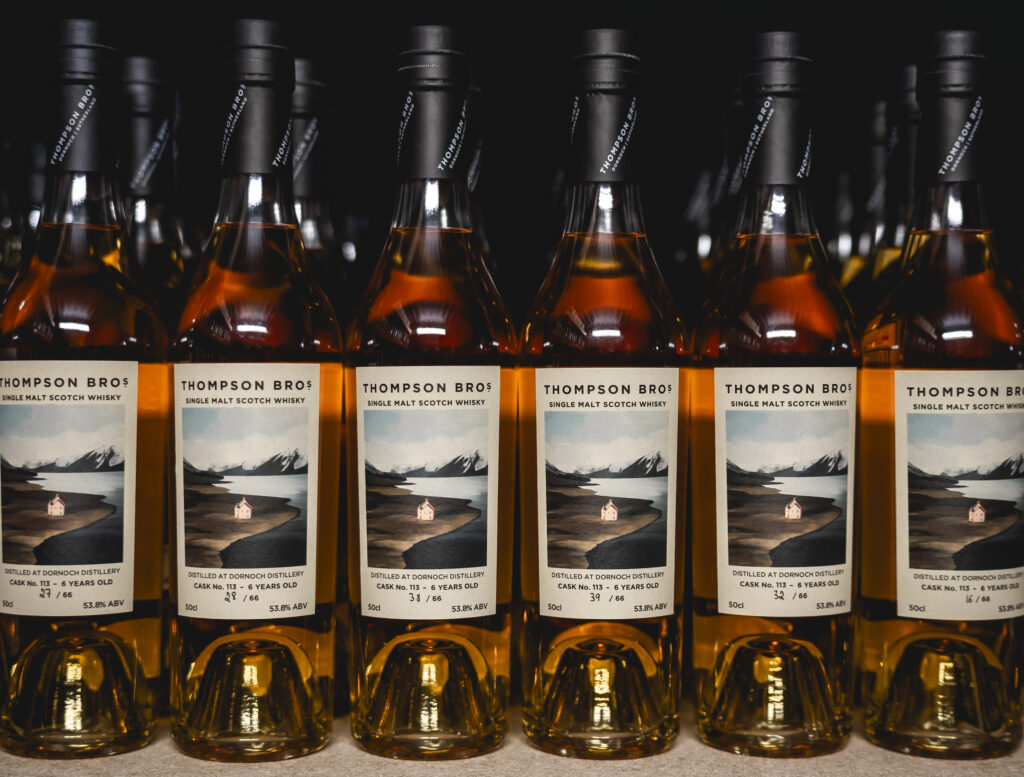
For the Thompson Brothers, the best flavours in whisky lie right on the edge of heads and tails. By narrowing the spirit cuts, “we’d lose that—conservatism misses where the magic happens,” notes Philip. It is a philosophy evident in every dram—a persistent devotion to complexity and the unpredictable joys of heritage spirit.
The Mystery Malt – Innovation That Flies Off Shelves
A standout example of the Thompson Brothers’ inventive approach is the Mystery Malt series—a striking, opaque black bottle emblazoned with a bold question mark, its liquid identity concealed until the seal is broken. This innovative bottling was designed to stimulate curiosity and experimentation among whisky lovers, encouraging them to “risk their luck” at a time when the wider market was subdued and buyers were cautious. Mystery Malt’s format is equally clever for the trade, as it deliberately sidesteps direct brand competition on the shelves; distilleries participating in the programme do not have to see their distillate priced far below their standard expressions.
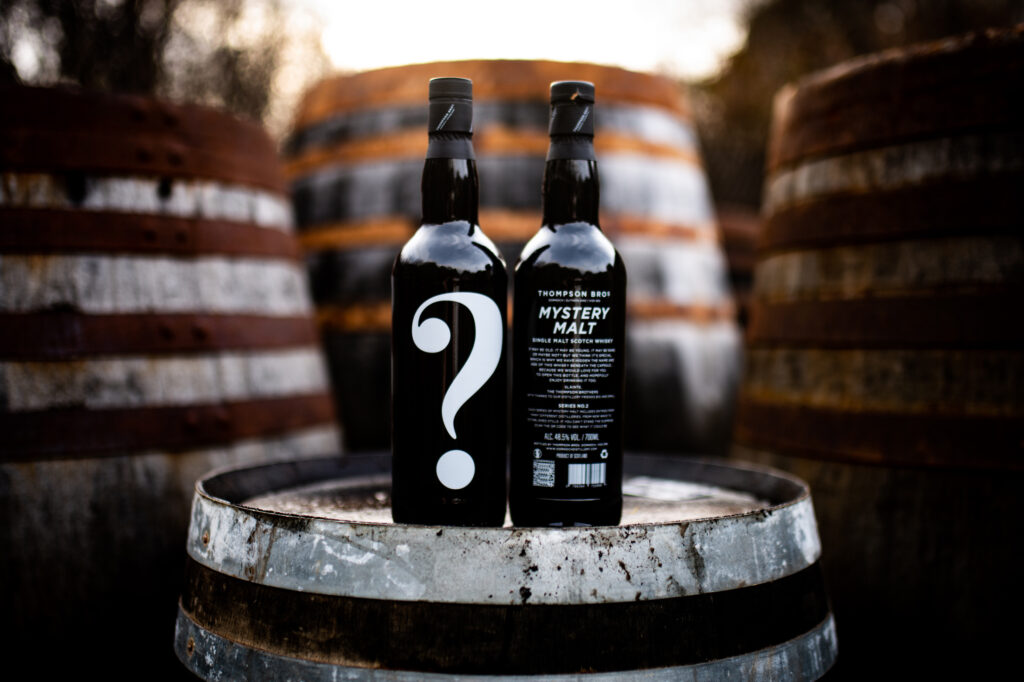
Each release offers buyers a percentage chance of discovering anything from a young, five-year-old Dornoch to an ultra-rare, 33-year-old single malt from distilleries that often never allow independent bottlings at all—including, notably, Wolfburn, Harris, Kingsbarns, and the current Tormore regime. Bottled at 48.5% ABV and typically priced at £65 per bottle, the series has become an instant phenomenon, with recent batches selling out in hours and ongoing demand from buyers worldwide. “Everyone in the chain wins—supplier, bottler, and consumer. That’s why this product has gone a bit wild,” Phil notes, adding that production is scaling fast to keep pace with demand. The Mystery Malt is not just a new bottling—it’s the democratisation of rare whisky, an invitation to experience surprise and value in every pour.
Struie – Scotch’s Net‑Zero Frontier
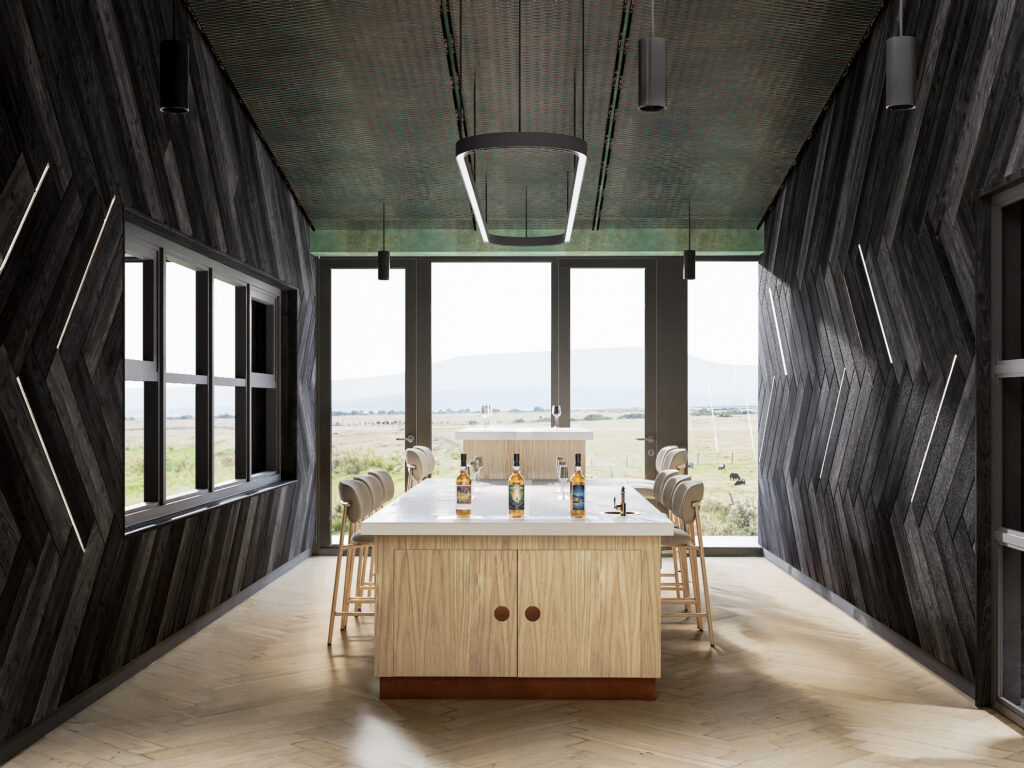
The brothers’ latest venture, Struie Distillery, rises south of the town near the Dornoch Firth next to one of the courses at the famed Royal Dornoch golf club—a blueprint for sustainability and scale . Set close to the soon-to-be restored nineteenth‑century gasworks which is assigned to be the distillery’s future guest centre, Struie blends industrial heritage with environmental science, partly funded by a government grant: solar generation, battery storage, and the latest generation heat pump system with a patent‑pending lynchpin condenser design which should allow the Thompson brothers to break energy consumption records for any distillery worldwide.

Planned capacity is 250,000 litres of alcohol per year, scalable to 400,000 litres, with production due to begin by late 2026 . This ambitious expansion is being underpinned by an ongoing £5 million capital raise designed to secure the full funding required for construction and commissioning. To date, £4 million has been committed toward the round through a combination of private and existing investors, as part of a Series A initiative overseen by the Thompson Independent Traders group—the parent company encompassing Dornoch Distillery, Thompson Bros Independent Bottlers, and Dornoch Castle Hotel. The remaining £1 million is being sought from additional investors to complete the round, which will lay the final foundations for Struie’s distillery infrastructure and visitor facilities.
In parallel, the project has received confirmation of a government-supported green energy grant from Highlands and Islands Enterprise. Combined, these funds will enable the Thompsons to deliver Scotland’s most energy‑efficient and environmentally responsible distilleries—an operation driven as much by innovation as independence, with capital allocation closely tied to sustainability milestones and community benefit.
Simon frames it succinctly: “Our vision is to create a distillery that not only produces exceptional spirits but sets a new standard for environmental responsibility. Everything we’ve done has been building towards that.”
Community and Continuity
Dornoch remains as much a civic mission as a commercial enterprise. Each year a cask is donated to local charities ; employment has expanded in tandem with tourism, and Struie alone is expected to at least double the local workforce. Partnerships with Highland farmers and small‑scale suppliers reinforce a supply chain rooted in proximity and trust.
Transparency, in pricing, provenance and production, endures as their keystone—a ground‑level integrity rare in super‑premium spirits.
Challenge and Balance
Ambition begets its own question: can agility alongside artisanal practice survive growth? By 2025 the Thompsons oversee a portfolio that spans independent bottlings, hospitality and soon to be dual distilleries. What keeps them steady, says Phil, is focus. “If we can’t taste every cask ourselves, we’ve gone too far.”
Philosophy and Dream Drams
For the brothers, meaning matters more than metrics. “Stay independent, keep experimenting, and fill Dornoch with the kind of spirit collectors miss from yesteryear—a whisky as much about heritage as community,” Simon concludes.
Asked for their desert‑island bottles, as trophied whisky collectors, they scarcely hesitate: Laphroaig 10 Bonfant Import (1970s): “Tropical fruit and peat perfection”; 1924 Glenlivet: “Pre‑war flavours—liquid history”; and 1969 Jura (Lord Astor Cask): “Balance and sherry brilliance from another era.”
Step Inside Dornoch
Travel north to Dornoch, wander its castle walls, nose through sleeping casks or watch Struie’s copper stills begin their song, and you discover not just a distillery but a philosophy. Here, craft is heritage reborn; community is currency; and every bottle a story told in liquid.
Where others see limits, the Thompson Brothers find possibility—proof that in Scotch’s next chapter, the bold, the artisan and the agile still win.
Lewis Chester DipWSET is a London-based wine & rare spirit collector and writer, member of the Académie du Champagne and Chevaliers du Tastevin, co-founder of Liquid Icons and, with Sasha Lushnikov, founder of the Golden Vines® Awards. He serves as Honorary President and Head of Fundraising for the Gérard Basset Foundation, supporting diversity and education in wine and hospitality worldwide. Golden Vines® 2025 takes place in Miami from 7–9 November 2025. Register at liquidicons.com/work/golden-vines-awards.
Images © Elliot Roberts